Showing posts with label Manga. Show all posts

How to Be Cool: Golf and Black Coffee

Many books and movies employ a kind of epithet for coolness. Just as Athena is "gray-eyed" in Homer's epics, various books and movies use a kind of short-hand to indicate that the character is, let's say, "the cat's meow."

1. Golf 

Numerous heroes, even Poirot and Columbo!, will suddenly hit a golf ball, a hole in one, to demonstrate that despite their finicky, absent-minded natures, they are just too amazing for words. 

A funny variation on this is that Murdoch cannot get good at golf and when he tries to help an Olympian golfer, he messes up the guy's game.  

But generally, yeah, being able to hit a golf ball is apparently really rad. 

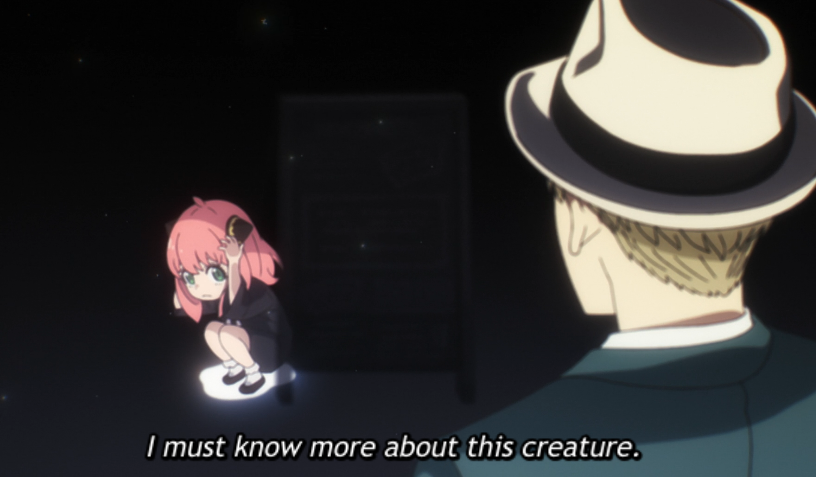
Koichi trying to figure out his boyfriend's tastebuds.
2. Black coffee

This particular marker of awesomeness appears with Peter Wimsey. In addition, various aloof and cool heroes in manga dislike sweets. 

Regarding the later, in some cases, the heroes' love of sweets indicates honesty and self-knowledge, which becomes cool in its own right--

But still, a dislike of sugar remains a mark of grit and endurance--and therefore, coolness.  

Great Human Moment in One Punch Man

is...fine. 

Dorothy Sayers wrote that there is no group of people who can't find common ground complaining about drains. 

In sum, some practical conditions of human mortality crop up again and again--which is where humor comes from.

In One Punch Man, an asteroid--or rather, parts of an asteroid since Saitama prevents the entire rock hitting the planet--takes out areas in a city. Saitama notes that the "supermarket is in ruins...But my old landlord's building is fine? Tch!"

The anime uses this event: Saitama complains that the apartment building that he got evicted from is still standing while everything around it is reduced to rubble!

Anyone can relate to unsatisfactory landlords and the fact that karma honestly doesn't happen according to plan.  

And here's a joke about drains: 


Characters as Society: Yugi Yamada

One of my favorite mangaka (an artist who writes the manga' story and draws its characters) is Yugi Yamada. One reason I like her so much is that the characters come across as real, fleshy, non-abstract. 

Another reason I like Yamada so much is that she gives her characters friends and neighbors and co-workers, who are all different types with differing personalities. That is, they are not all students or all rivals or all co-workers. One series supplies a married couple with a baby; friends who are thinking about dating; friends who are already dating and even an ex-member of the group. 

Moreover, her characters tend to interrelate, so that one character in one manga may make an appearance in another. 

What Yamada does here is quite difficult. So often, "extras" in manga or books or even movies can become confusing or so similar, they simply blur together. I have often started books where the sheer volume of names being thrown at me results in me putting the book down. 

Yamada's triumph is that her social worlds, like her characters, feel real and fleshy, and yet the main story doesn't get lost. Readers see that world through a central conflict/arc. The world was created for the characters, not the other way around. 

 Yamada's characters have full lives, which is quite attractive. 

Montgomery's Anne: Fallible and Fun

I remark in another context that "Anne of Green Gables...is the Western answer [to the fallible female heroine]." 

My point in the other context is that manga is somewhat better these days at creating female heroes who can fail yet remain protagonists. 

Recently, I read a complaint that Eilonwy from Lloyd Alexander's Prydain series wasn't treated more seriously even though she was just as courageous as Taran!! But as a kid, I never found Eilonwy all that enchanting; as an adult, I find her behavior in the early books mostly irritating. It truly isn't okay for someone to crash a military expedition, all for the sake of proving "I'm as good as you!"

In fairness, I don't think Alexander thought so either. Eilonwy is an individual, not a role model or virtue-signaling character type. 

However, Eilonwy never has to come to terms with her behavior in the early books. In the case that I mention, she turns out to be right: they should have let her go on the mission from the beginning! (In real life, her gate-crashing would potentially lead to the entire party being massacred.)

As stated above, I think manga generally handles this type of heroine better. She may do rash things, like Kasahara in Library Wars, but she learns from her mistakes and improves, without losing her joie de vivre. 

Anne of Green Gables is an accomplished product of this approach--one reason, I suggest, she is so beloved. Readers truly don't enjoy slogging through the so-called tribulations of perfect specimens (one reason, earlier children's fables in which well-behaved girls and boys are rewarded and badly behaved girls and boys are punished failed; these plots were successfully mocked by writers like E. Nesbit and Mark Twain). 

Much better to have a raw, lively, risk-taking, joyful character who matures than a character who is right and triumphant again and again and again. 

Accountants as Heroes: The Auditors and The Other World's Books Depend on the Bean Counter

Van Dine famously wrote that murder is the only satisfactory problem for a full-length mystery. And generally speaking, most of the Golden Age mystery writers agreed with him. Sayers challenged the notion with a suicide and a second-degree murder. She also wrote a few short stories--as did others--in which theft was the main mystery.

However, generally speaking, the form relies not only on murderers but on Columbo type murderers who plan meticulously and cover up their acts and even murder again.

And many, many mystery shows follow suit.
 
The Auditors, however, makes accounting malfeasance the dirty secret. There is a murder in the wings and several attempted murders/assaults. But the main issue is people stealing money for their own greedy reasons.

And it works!

It works because the stakes are fairly high. Entire lives can be derailed by the scheming, grifting, and lying carried out by management and employers.

In fact, one of the reasons that I like these heroic accountants so much is that their concern about money is not some manifestation of greed. Quite the opposite! By focusing on how things get paid for, they show a greater concern for real people and real solutions than so-called compassionate and sensitive people who look down on such "penny-pinching." The theme here is one I tackled in my story "Golden Hands," a take on Rumpelstiltskin: why assume that the king doesn't have good reasons to want more money? 

In The Auditors, the main character, Shin Cha II, is a man on a mission. He appears ruthless but is motivated by an exact understanding of the crimes and their cost. His prodigy, Goo Han Soo, is a friendly, kind young man who comes to understand his mentor better. 

*Spoilers.* 

The Auditors also supplies good villains; in fact, the eventual primary villain's  psychology is disturbingly familiar these days: I'm so righteous, my sins are necessary to combat the unrighteous

And The Auditors gives us some ambiguity. The department is semi-pitted against a member of upper management, Hwang Dae-woong, who turns out to be a supporter in the end. 

The tension between Shin Cha II and Hwang Dae-woong is fantastic since Shin Cha II is a "by the book" operator while Hwang Dae-woong doesn't see the harm is some nepotism, some minor grifting, some handouts. To him, that's the oil that keeps business running. However, he is inherently a moral guy: some actions truly are unimaginable. The two characters are frenemies and provide some of the best and funniest scenes in the series.

So The Auditors is well-crafted. And it provides a nice variation on the detective hero! 

Another great accountant character is Seiichirou Kondou from The Other World's Books Depend on the Bean Counter. One of the best scenes in the light novels and manga is when Seiichirou must persuade the court that his ideas about how to handle the miasma will actually save money--a long-term solution as opposed to housing and clothing and rewarding the Holy Maiden. Another great scene is when he persuades the prince to impress the Holy Maiden by using his income to do stuff for her.

Accountants in both series are cool. However, in terms of sheer dramatic entrances, Shin Cha II wins here! 


Animals That Talk and Why the Blogger (Mostly) Doesn't Care for the Trope

Re-post from 2005.

In a recent post about horses, I comment that I prefer books about animals to include humans. 

I'm not a huge fan of books which use animals exclusively (no people). The animals do all the same things humans do and wear the same kinds of clothes and have the same kinds of relationships and the only difference seems to be that they live in burrows or whatnot but otherwise, they are really just humans with furry faces. 

And I don't get it.

I'll leave Watership Down alone since I've never read it and I saw only 1/4 of the movie when I was a kid; I got so scared, my mom took me outside and let me run around the lobby and eye the candy counter. But I have never understood the appeal of Brian Jacques' books (and please don't hate me, Brian Jacques' fans!) As far as I can tell, it makes precious little difference in Brian Jacques' books whether the heroes are mice, rats, frogs, humans, coyotes or whatever.

Let me elaborate.

In Beatrix Potter, the animal-ness of the animals is intrinsic to the plot. They may be temporarily "dressed up" but they always revert to their animal natures, and their animal natures are at the crux of the stories. Peter Rabbit is acting like a rabbit, sneaking into the farmer's garden to steal cabbages. The squirrels in Squirrel Nutkin act like squirrels. Sure, they talk but their animalness is never forgotten. You couldn't replace Peter Rabbit with George Ape. (Speaking of simians, the same is true of the Curious George books.) C.S. Lewis does this in the Narnia books. There's no point in the animals acting human; there are plenty of humans acting like humans (poorly and nicely) to go around. [And I quite enjoyed Zootopia, especially the "naked" animals, since living arrangements are connected to animal-ness.]

Having written the above, though I don't much care for anthropomophized animals overall,  at least with Beatrix Potter and H.A. Rey and Lewis, I get it. 

I still prefer my protagonists to be human. Even that old-time classic The Wind in the Willows didn't change my mind. Really, I'm a humanoid-chauvinist.

After all, why write a book about frogs or moles or rats acting like humans when, voila, you could do a book about humans acting like humans!?

Here's what I think may be the answer. The appeal (and C.S. Lewis says as much in his autobiography and in Out of the Silent Planet) is the idea of animals and people being pals, hanging out. It isn't the biology that people like (a la Gerald Durrell); it's the image of animal-ness (or creature-ness) within the human sphere: something you can buddy up to but won't eat you. Similarly, many people like the idea of conversing with animals, as if animals would say more back than "Mine. Mine. Mine." or "Feed me. Feed me. Feed me NOW." The lion or badger or panda is a friend.

Even as a kid, the idea never appealed to me. I wanted a lion cub, yes, but I never thought it would like me. My attitude was reflected in my reading material. As mentioned, I didn't much care for Wind in the Willows. I love the Narnia books but mostly for the people and their quests. I read Animal Farm and yes, it's great, but I couldn't get into the movie. I adore the movie Babe, but I think Babe is an exception. (The animals are very animalish and the whole sheep-herding thing is necessary to the plot--that is, it isn't pigs and sheep and dogs pretending to be humans; it's pigs and sheep and dogs acting very piggy and sheepy and doggy. Beside, James Cromwell is so very, very great.) As mentioned in the previous post, I read and reread Black Stallion and then Frog when I was younger, and I loved them but never picked up another horse book except Black Beauty, which bored me senseless. I quite enjoy the older BBC version of All Creatures Great and Small but honestly, the thing I like best about it is that the vets actually put animals down.

Let me clarify that.

No, I don't like watching animals get killed, but I like people treating animals like animals and not like people in animal clothing.

As far as I'm concerned, my cats consider me a food bowl and their degree of love ends about two feet past the food bowl. They aren't little people. They're animals. They're kind of dumb; their learning capacity is about the same as a two-day old amoeba. They are more fun to watch than fish and less involved than dogs. But they aren't people. If they were people, I'd want them to get jobs and pay part of the rent. Not to mention the fact that they puke on my rugs and never change the litter box and like to play "I'm on this side of the door/now I'm on this side of the door" twenty times a day. One endures this with toddlers because they grow up. One endures it with pets because they are cuddly enough (and company enough) to pay off the downside. (And you can leave them for long weekends.) With anyone else, the house visit would end very quickly.

Which may explain my complete disinterest in the possibility of me and my cats exchanging views on the universe. [I do love the manga series A Man & His Cat, in part because the cats are treated like animals, not little people, but mostly because the story has expanded to include everything and everyone in the main character's universe!]

Art for Art's Sake: In Defense

The irony here is that twenty or so years ago, if anyone had asked me about "art for art's sake," I would have rolled my eyes and scoffed. The concept--like so many concepts in the humanities--has a history of turning into metaphysical excuse-making. Within this mindset, the artist wasn't merely a creator but a figure of worship. The artist needed to be supported for the sake of improving the human race.

Even with artists who didn't go the philosophical route, "art for art's sake" was being used as a rather childish way to thumb one's nose at the audience. "So everybody hates it?! So I've offended everybody?! Who cares? It's ART!" 

However, the cultural ship has tipped so much away from art for art's sake, I feel that it needs to be defended. 

At my local library, I've been asked a few times to recommend manga titles since I take out so many of them (and interlibrary loan manga as well). I'm hesitant (though I always recommend a few), and the reason is that I go to fiction for story, NOTHING ELSE. 

I don't go for sermons. I don't go for lectures. I don't go for after-school-specials.

So, for instance, the manga My Brother's Husband is a decent 2-volume series. However, I consider that it pales in comparison to What Did You Eat Yesterday? The former is a decent after-school-special about a Canadian who visits his (dead) husband's Japanese brother. The latter is a series of vignettes about two gay men living outside Tokyo and their interactions with friends and family and neighbors and co-workers--alongside cooking scenarios!

Again, the first is okay. But it isn't what I want from fiction. I can get lectures and commentary and lessons and sermons elsewhere, sometimes better, sometimes worse. 

From fiction, I want story. I want art

Consequently, one of the few writing choices that will send me away from a series is not politics. It is the betrayal of a character, a situation where an author establishes a character's motivations and personality and then, for the sake of a sequel or for the sake of a lesson or simply to force an ending to work, completely betrays what was established. 

Yeah, that's just ...

Bad art. 

Adapting Versus Awakening in Fantasy Books

In reviewing past reading choices, I've concluded that I prefer certain types of fantasy.

That is, like with Beauty & the Beast versus Cinderella, I find I am drawn to one plot more than another. 

With fantasy, the categories that I've encountered can be broadly separated into adapting versus awakening. 

Adapting is about the characters arriving in a fantasy place and figuring out how to survive, make do, get along. In The Other World's Books Depend on the Bean Counter, for instance, Kondou ends up in another world, mostly by accident, where he promptly becomes the bureaucratic go-to guy for the government. At first, his role is one of survival (since he insists on drinking the magical equivalent of amphetamines to get his work done). It is also, however, about figuring out why the country has gone so off-the-rails with its accounting methods. And about Kondou managing his work load.

Likewise, the manga series Ascendance of a Bookworm focuses on the main character getting by in a very real, other world. Many of the clever DIY projects she comes up with fail because the world simply doesn't have those tools or resources. She can't turn materials into what she remembers. She has to gain knowledge about them first.

In both the above cases, the premise (the reason for the character showing up somewhere else) takes a backseat to the character getting on with things. 

Awakening is more about "the man behind the curtain" and the immediate impact that such revelations have on the primary protagonists. The Matrix--though ostensibly sci-fi--is a fantasy of this type. Red pill or blue pill? One's true name, role, purpose? What ultimate truth explains everything? 

The difference can be delineated through a common fantasy trope: the Quest. In the quest, the characters are moving towards a denouement which, like a revelation, will upend/change the world. However, how the quest is handled varies between the two fantasy types. In adapting, the focus is on solving immediate impediments: Sam steps outside the Shire; Frodo agrees to take the ring against his inclinations; the Fellowship goes through Moria rather than over Caradhras. In the end, Frodo is unable to adapt to Bag End and the Shire. He can't go home again. But everyone else gets on with the business of life. 

In awakening, the focus is very much on identity or self-revelation: Neo is The One; Dorothy always wanted to go home.

A single book illustrates the difference. The Voyage of the Dawn Treader is supposedly about a final revelation or literal awakening, and the 2010 film threw in an extra revelation/task to try to bolster that aspect of the story. However, in truth, the book is about adapting. The three lost lords are mostly an excuse for people, like Eustace, to adapt to several new environments.

There is a great deal of crossover, of course: the excessively creepy Girl on the Other Side runs full-tilt towards a revelation but the characters have to adapt to different living arrangements along the way. Although the ending is somewhat disappointing and drops a bunch of balls (huh, what about all those set-ups?), the middle volumes are worth the read. For a series with more satisfying endings: Diane Duane's teen magicians have to figure out how to be magicians in the modern world, while the quests they undertake reveal their true selves. 

And I enjoy some awakening/revelation fantasy. The Matrix is a great movie! 

But my reading choices show a consistent veering towards adapting: how do people get by? how do they manage? what do they do to make everything work? I read very little urban fantasy, even a series like Noragami, likely because the "awakening/revelation" theme is much more prevalent, almost by necessity. The fantasy is, to a degree, about what no one else sees/experiences except the protagonists. So...what does that mean that only they see it? 

I think the inescapable religious subtext with awakening plots can be interesting. But I am more interested in HOW the protagonists will feed the fairies or dinosaurs or monsters (or little girls, as in Spy x Family): how they will cope in a specific world or under a particular set of circumstances; how they will manage, how they will solve the next problem. What will they change about themselves to get by? What choices will they make?

Beauty & the Beast after all.

Cats in Manga: The Weirdness of Cats and Cat Owners

One of the reasons I love cats in manga so much is that manga doesn't glorify cats. Yes, it does shower them with an inordinate amount of love. But the love is attached not to cats' mysterious, supposedly worshipable natures but to how freakin' weird they are--

And how weird we are to put up with them. 

Man and His Cat by Umi Sakurai--an alluring series which has turned into a community/family/talent manga--showcases the two elements of cat ownership. I love the cat who is sleeping on the bed and then leaves but the human remains contorted into a weird position: I've done this!


Cats in Manga: Aliens Without Effort

Cats often show up in manga, playing possessed, alien, supernatural, evil or scheming characters.

What is so hilarious is that nothing about them is changed. They behave like...cats. 

A Cat From Our World and the Forgotten Witch by Hiro Kashiwaba is utterly delightful and hilarious. 

And, other than the cat being very large, it behaves exactly like a cat: it curls up on the bed...and breaks it. It bats away the harassing soldiers. It uses the tree that doubles as a home as a scratching post. 

Wonderful stuff. 

Cats Like to Look Cool

One of the most delightful traits of cats is that they try to look cool! 

Despite their sure-footedness, they knock over lamps, push food out of cupboards, scatter stuff like packing peanuts over a wide area, slap down stacks of papers and then roll in them...in a phrase, they cause messes

Except the messes aren't messes--they are, ah, art, interior decorating, intentional rearrangements of one's living room (and yes, I am anthropomorphizing).

The first cat that I took complete responsibility for, Aurora, once ran across my table, slid into the glass doors, got up and sauntered away. It wasn't a mistake. It was a stunt!

The two pictures here illustrate the sheer delight of cats that cause messes and then, like Akihito, claim, "It wasn't me. I didn't do it!" 

In both cases, the human-animal hybrid makes the jokes (even) funnier, like Cat from Red Dwarf.


Chivalry in Assassination Classroom

The "villain" (sort of) in Assassination Classroom is Gakuhō Asano, the principal of the elite school where Koro-sensei teaches. Gakuhō Asano believes in a philosophy of "dog eat dog." One teaches students to be tough by making them targets or sending them after the targets. Life is war. 

The intriguing factor here is that Asano is not the true villain, in the sense that he is the worst person Class E has encountered. In fact, Koro-sensei respects him. When one of the worst villains, the abusive drill sergeant, shows up, Koro-sensei resists the man and Asano ejects him. They both despise the cruel sadist for his hypocrisy, specifically his egotistical belief that he is Mr. Nice Guy who OUGHT to be loved, not because he earned it (through hard work or hard demands) but because he feels entitled: he wants to bully people without giving anything back.  

Asano may not have the most sensitive of human feelings. But he believes in paying one's dues. He is entirely willing to live by the same principles and expectations he foists on his students.

Koro-Sensi doesn't adopt Asano's teaching philosophy and methods, and Asano's own son, Gakushū, challenges them. Father and son are the same personality coming at a problem from two different perspectives. When Gakushū actually gets his urbane, above-it-all dad to actually react, the boy is pleased.

And he begins to meet his father on far more level ground. In Volume 15, the two drive off into the proverbial sunset, threatening lawsuits against each other: "Let's go file complaints together sometimes this week!"

The fight will be fair--okay, they will both use underhanded techniques, but they know it, so the fight will be fair. 

Other posts about chivalry:

Greatest Quote Ever about Spoofs and Satires

The previous post criticizes "collectors" of tales who push moral ideas back onto stories. People don't always see what something "means" until the something is long past. (That problem is also addressed here.)

The "meaning" of a tale consequently becomes reflective of contemporary thoughts and mores, not those of the past. We react to what we know (or think we know).

Satires and spoofs, for instance, require general acceptance of a "norm" before they work.

The following fantastic quote by Assassination Classroom author, Yusei Matsui, explains why: 

I often use current events and parody in my manga, but that's become a lot more difficult than it used to be. One major reason is the lack of subjects everyone has in common due to the decline in TV viewership. Parodies aren't funny if you use subjects that only a handful of people can relate to.

The diversity of culture is a fine thing, but every now and again, I would like to see the outbreak of a social phenomenon that every Tom, Dick and Harry knows about. For that to happen, I believe TV needs to make a comeback.

Yusei Matsui is too hard on himself. Assassination Classroom depends on--and successfully plays off of--the "norms" of high school, which still exist, thankfully (what would Whedon have done if that wasn't true?!), and which "norms" impressively cross cultural boundaries, despite differences in details. School sports are remarkably consistent. Events like school trips vary but the subsequent expectations, behaviors, and complaints remain relatable.  

People who like to act superior and contemptuous about the mere existence of cultural "norms" should consider, If there is no contextual norm in the first place, nobody is going to care what offends you. 

Or even know.

Interview with the Translator: Twelve Kingdoms, Women & Pregnancy

Kate: I previously taught a course about working women in America. The impact of biology—the reality of bearing children, giving birth and raising children—greatly influenced women’s work (when, how, what) historically and now.

Ono seems far more aware of the connection between work and childbearing than many Westerners. Many laws in the United States directly address many of these issues, but the reality of childbirth—perhaps as it loses its inherent risks—seems to be admitted with a shrug rather than an appraisal of its impact.

Does that awareness exist in Japanese culture? Does it arise from the culture's inherent conservatism?

Eugene: There are several long-standing aspects of Japanese culture that do address the inherent problems here in unique ways. First of all, especially among the aristocracy, well into the 20th century, legitimacy was readily conferred upon the offspring of mistresses. The current imperial line descends from one of Emperor Meiji's concubines, not his legal wife (Meiji was the last emperor to have concubines). 

The second is muko-iri marriage, according to which the husband is adopted into the wife's family. This is still relatively common today. "You can't choose your sons but you can choose your sons-in-law." In some cases, sans any children, a family business will adopt a loyal employee to keep the family name alive. The connection between work and childbearing thus becomes a negotiable arrangement.

Japan's current low birth rate and high female employment rate (above the OECD average) suggests that working and childbearing continue to be seen in mutually exclusive terms.Though it should also be pointed out that helicopter parenting is not a thing in Japan, which shifts the burdens of childrearing around. Nobody freaks out about unattended kids out and about in public.

So while contemporary Japanese society has evolved more slowly away from "traditional marriage" as the ideal model for organizing society, the real world is a lot more complicated, and the fictional world has taken full advantage. The working mother and the single mother in melodrama and comedy are ubiquitous at this point, and the single dad has become of late a favored protagonist.

After the Rain features the teenage daughter of a single mom and a divorced dad. The Way of the Househusband is about a stay-at-home dad (who happens to be a former yakuza). No children yet. Speaking of which, Ryuji in Toradora often gets mistaken for a yakuza (like his father), but he's a good kid who looks after his single mom (who works in a nightclub) more than she looks after him.

The responsible kid with the irresponsible single mom (who nonetheless has a heart of gold) is an established trope. Hanasaku Iroha begins with Ohana's mom sending her to her grandmother's country inn while she runs off with her latest boyfriend. In Beyond the Boundary, Akihito would prefer that his mom stay out of his life as she's a demon (not a terrifying demon, a total goofball of a demon).

Of course, you can count on manga and anime to push a concept to its logical extreme, so the preternaturally competent Kotaru in Kotaru Lives Alone is all of five years old.

At least in the fictional realm, raising independent children who can raise themselves is one sort-of solution. 

Interview with the Translator: Japanese News and Conspiracy Theories

Kate:
Several manga that I read have characters who work for gossip rags. There's no stigma attached to this career beyond the problematic lifestyle of having to stalk people and compete for the best pics. (In American entertainment, paparazzi are always sleazebags; of course, Hollywood has its reasons for being anti-paparazzi.)

So does Japan have more gossip magazines than us free-wheeling Americans? Are their gossip magazines more like European/British paparazzi-fed productions? Or are they more like People?
Eugene: The tabloid newspaper culture is alive and well in metropolitan Japan. The population size and density of greater Tokyo, together with mass transportation, makes the newsstand economy very viable. The comparison to the British press is spot on. Maybe there's an inverse relationship between how reserved a population is on an individual basis and how much sensationalism it tolerates in the press.

However, the Japanese press does catch (deserved) criticism for moderating its fire when it comes to powerful and popular political figures and institutions on their side of the ideological aisle. In this respect, they're more like the FDR-through-JFK era press. As the Christian Science Monitor states:
The most secretive agency in Japan is not its intelligence organization. It is the Imperial Household Agency . . . . The agency tightly controls the flow of information about Japan's monarchy, not only to the public but to the rest of the government.
At the same time, the press doesn't pretend it's standing on some high ground of impartiality. As you've noticed, there's not the same stigma attached to such professions. The same goes for "gravure idols," who rarely have difficulty transitioning into more "respectable" occupations. The past president of the Democratic Party of Japan is a former model. (Just don't get caught in the company of yakuza, doing illegal drugs, cheating on your taxes, or taking illegal campaign contributions.)

Kate: I admit to being thrown when I found out the leader of World Order also went into politics! Americans are incredibly snide about Reagan and Sonny Bono's pasts as entertainers, but in Japan, moving between entertainment and civic duty almost seems to be expected!

The respect-for-institutions element might explain something I've noticed with the manga news reporting scenarios. It is not unusual for an article/set of pictures to not get published because it would offend somebody "higher up." The reporters and photographers complain, but they rarely (as in never) say stuff like, "Man, freedom of speech is under attack!" or "The editor is so corrupt; he lets anyone pay him off!" Sometimes they ask each other, "Hey, why did that particular set of pictures not run? Who's behind it?" And the hero may suffer personal, individual ethical qualms, especially if he knows who squelched the pictures.

But the event almost never turns into a theme about the culture at large. It's just this thing that happens in that industry. Oh, well.

Which made me wonder—how do the Japanese treat conspiracy theories? It seems to me that conspiracy theories rather depend on people getting riled up as a group when it comes to a particular unethical action, no matter how innocuous or unrelated to anything else. If the entire population has decided that an unethical action isn't really all that important CAN a conspiracy theory even get off the ground!?

Or maybe the whole population IS the conspiracy!
Eugene: That's a good way of putting it: being Japanese is the conspiracy. A whole philosophy evolved to rationalize it called Nihonjinron. Or as Leslie Pincus puts it, "One might say that Japanese travelers reappropriated Japan from Europe as an exoticized object." In other words, the biggest Orientalists are Orientals, just as the biggest Occidentalists are Occidentals.

Unless and until a fringe element goes nuts (and when a fringe element goes nuts, it really goes off-the-wall serial killer nuts), most Japanese treat the whole thing with a shrug and get on with their lives. Repeat after me: Shikata ga nai.

This attitude is not without historical validity. The Edo period could be described as a web of interlocking conspiracies by the powers that be. The Meiji Restoration was merely the new conspirators fighting against the old bunch. It wasn't a populist revolt. WWII is commonly cast in those terms too.

One creative reaction of the urban masses during the mid-19th century was to throw up their hands and go full hippie.

Even today, the concentration of power and money in Tokyo means that national politics is treated as a stage play performed for the news. It does make good material for fiction.

If The X-Files collided with Star Wars (while confining the setting to this solar system), and then giant robots showed up in battles spawned by insanely intricate political conflicts, you'd get Mobile Suit Gundam. Like Star Wars, Gundam has a supernatural element in the "Newtypes," genetically advanced humans with psychic abilities who are or aren't part of the conspiracy depending on what side you're on.

The Gundam universe created by Yoshiyuki Tomino is so complex that I lose track of who is conspiring with whom and why after about two episodes of any series. There are a minimum of three sides to every conflict and everybody has issues. My recourse is to just follow the protagonist and go where he's going for whatever reasons he comes up with.

Mobile Suit Gundam debuted in 1979 and the franchise is still going strong. Having spun off dozens of movies, novels, manga, and television series, and a huge model toy business, Gundam is deeply embedded in Japanese popular culture. A Japanese remake of Big Bang Theory would retool most of the Star Wars and Star Trek references to Gundam. (Netflix has the original series and several recent iterations.)

Interview with the Translator: The Life of a Salaryman

Kate
: So I've always assumed that "salaryman" was the equivalent of "white collar worker." However, in What Did You Eat Yesterday? Shiro relates that he became a lawyer because he knew he wouldn't be able to live up to the lifestyle expectations of a salaryman.

I gather that a salaryman is specifically a "businessman" and, moreover, that it really means "yuppie businessman." That is, a salaryman is, well, Alex P. Keaton along with the dress, the moderately conservative politics, the dedication to the corporate culture, the fairly traditional marital arrangements, and so on and so forth.

Is this correct? It seems so . . . 1950s!

But it does make World Order even funnier.
Eugene:
I would sub-categorize the term "white collar" into "salaryman" and "professional," the latter often carrying the title "sensei."

Before interviewing for the job, our salaryman-to-be submitted a resume based on the JIS resume form. Yes, there is a JIS (Japanese Industrial Standards) form for resumes. That right there tells you a lot. Even if he's applying for a part-time job at 7-11, he'll probably use that standard form.

The salaryman is the man in the gray flannel suit (well, black). He interviewed in that suit during the early spring or late summer hiring seasons and now commutes to work every day wearing the same uniform (white shirt, dark suit, and tie). He is very much a "suit" and his life henceforth belongs to the company.

If he does as he's told competently enough, he can expect raises on a regular timetable. The professional at the other end of the scale is promoted based on skill. There are a lot of gradations between pure seniority promotion and pure merit promotion, with the emphasis slowly shifting from the former to the latter.
Japanese companies still offer (in principle) lifetime employment. Though the old practices of parking an unproductive employee in a "window seat" (madogiwa zoku) or transferring him to the boonies are slowly fading away, both employers and employees continue to emphasize job security over remuneration.

But unlike the "good old days" (the second half of the 20th century), firings and layoffs are more common now during economic downturns.

As socioeconomic slang, "salaryman" refers to the middle-aged man with a mortgage and a car and 1.5 kids who accepts his station in life in exchange for job security. Shall We Dance is about a man who's hit all the milestones and doesn't know what to do next.

Especially these days, it'll take an Alex P. Keaton about ten years to get there.
Kate: Moving to one of those sub-categories, lawyers pop up in many manga. In What Did You Eat Yesterday, Shiro works at a firm run by a mother and son. The son, “junior sensei,” actually can't take the lead in a trial, so Shiro--who is "A" listed, not "B" listed--has to help him out. Very British, yes?
Eugene: Unlike Great Britain and like the U.S., Japan has a "unified" system (no distinction between barristers and solicitors). However, because trials are so rare, trial lawyers are more comparable to appellate lawyers in the U.S. And Japan allows professionals to work in specialized areas like tax and patent law without being lawyers.

Because the bar exam is so tough, many students graduate from law school without ever intending or attempting to become members of the bar. However, it is hypothetically possible to pass the bar exam and become a lawyer without going to law school or even to college. That's the premise of Hero.
Kate: Although Shiro doesn't live the life of a salaryman, he is still expected to adhere to certain social expectations! In one volume, Shiro has to attend the wedding of a fellow lawyer. She comes from a good family and is marrying someone from a wealthy family. Shiro and his cooking friend, a married woman who buys food on sale and splits it with Shiro, commiserate on what a pain this all is. Shiro MUST contribute a large amount of "gift money" simply because of who these people are and where they are getting married. He and his friend have this exchange:

Shiro: For an instructor at a training institution, the rule of thumb is that "2" suffices, but I'm not an instructor, just her senior at a workplace.

Kayoko: So that means this much (she holds up all five fingers of one hand).

Eugene: Gift giving is one of those customs that makes you happy to be a foreigner when in Japan. It's an arcane and socially complex minefield that is still going strong. Here’s a handy guide: Japan Gift Giving Customs
Kate: Yikes! The whole gift-giving pressure reminds me of numerous baby showers I've been invited to attend. I finally stopped since I couldn’t afford to keep buying so many gifts.
 
But suppose my ability to keep my job was tied into these baby showers? I would be scraping the bottom of my paycheck on a continual basis! Is this fair? Do the Japanese ever complain about this? In a noisier fashion than Shiro? (He goes to the wedding, but he and Kenji plan to eat lots of mackerel to keep within their monthly budget.)
Eugene: Yes, Japanese gripe about the pressures and obligations. Politicians and doctors (yes, doctors) get into trouble when the gift giving strays over the line into bribery, though where that line is can be hard to tell, and thus becomes an unending source of scandals.


Interview with the Translator: Trauma in Manga

Kate: Speaking of outlier behavior, another “taboo” topic is mental illness. In Otomen, Asuka has a tendency to find or be found by other Otomen, supposedly tough guys who secretly like make-up and flowers and the equivalent of Michael Bolton music. One of these guys calls himself the Flower Evangelist because he loves flowers so much. He meets a girl who was stung by a bee from a bouquet when she was young and hates flowers, so he decides to cure her. One of his approaches is subliminal treatment (flowers keep popping up and disappearing from her environment). Finally, the manga artist, Junta, points out that this approach could take YEARS; why not try something quicker?

How prevalent are plots/jokes about “trauma?” It does supply plot conflict! I encounter many troubled heroes and heroines in several series (though they rarely end up in therapy). And “trauma” occasionally supplies humor that is not that different from the many jokes made by Niles on Frasier about his group therapy patients.

Eugene: Trauma has been supplying plot lines and defining character arcs going back to the beginning with Shigeru Mizuki and Tezuka Osamu, so much so it could stand as a genre or literary category all on its own.

Ever since the Magical Girl genre went dark with Magical Girl Lyrical Nanoha and reached near perfection with Puella Magi Madoka Magica (Netflix Crunchyroll), practically every new anime season supplies at least one traumatized magical girl. But Hideki Anno deserves a lot of credit for pushing trauma to the narrative limits with Neon Genesis Evangelion(Netflix).

Anno himself described the directorial process as a way for him to work through his bouts of depression. It debuted in 1995 and Anno has been spinning off sequels and reboots in what has become a billion-dollar franchise. Frankly, I gave up on the series halfway through the first season. Mecha series start with two strikes against them in my book and the whole thing got to be too much of a downer.

Netflix recently acquired the streaming rights so I should give it another go.

I previously mentioned A Silent Voice. There’s trauma by the truckload. But as you mention, the first recourse is not to ship everybody off to a therapist. If I were to come up with a general theory, it would be that trauma shapes a character. It is not supposed to define them. The challenge for the protagonists in A Silent Voice and a series like March Comes in like a Lion is to move beyond their pasts.

As with Tohru in Fruits Basket (Crunchyroll Funimation), Rei in March Comes in like a Lion is a strong contender for having the world’s worst childhood. Well, no, Chise in The Ancient Magus’ Bride wins that award. Anyway, Tohru has already moved on when the series starts. March Comes in like a Lion is about how Rei finally does.

The Souma clan in Fruits Basket may be the most screwed up extended family in existence, not only shaped by a tragic past, but magically bound to it as well. That is why Tohru is the one person who can save the Soumas from themselves. She’s been there and done that, so she can identify, but she got over it.

Kate: In Mars, the semi-delinquet Rei, turns out to have had a twin brother, who died (or committed suicide) after his girlfriend tried to leave him for Rei. If I remember correctly, the twin brother was not entirely sane.

Rei’s traumatic childhood gives him a kind of princely cache (the family is wealthy) as well as, I suppose, an explanation of why Rei is not a team player. One of the volumes arcs deals with him walking away from the hold his dead brother has on him. His hero status is underscored by his ability to move on.

Eugene: As best I can tell, the premise of Durarara!! is that having a tortured past gives you superpowers. Now, the characters in Durarara!! are basically comic book superheroes and supervillains in a comic book world of Russian gangs, yakuza, mad scientists, and a bike-riding Dullahan (though it takes place in Ikebukuro and everybody looks mostly normal). But, again, what shapes these characters is distinct from what defines them.

So you were a serial killer (as Harry says in True Lies, “Yeah, but they were all bad”)? Okay, but what are you now?

Durarara!! revels in its non-linear narratives and never takes itself too seriously, much like the puckish Bond films from a generation ago. Fruits Basket starts out as a by-the-numbers rom-com with a pollyannish female lead and a touch of magical realism, before plunging into the dark recesses of the human (and not quite so human) psyche. 
 

Interview with the Translator: Gender Wars

Kate:
I’m reading a quite funny manga series called Otomen by Aya Kanno, which is set in the modern day. The main character is Asuka, the epitome of the stern, male Samurai-in-training—except he secretly loves cute things like shojo manga and sewing and cooking. His girlfriend is Ryo whose cop father has brought her up to wrestle grizzly bears and fight crime and who can’t bake a cake to save her life (Asuka eats what she cooks anyway). Their friend, Junta, is—unbeknownst to them—a shojo manga writer/illustrator desperate for inspiration. He is using Asuka and Ryo in his series, only in his series, Asuka is the girl and Ryo is the boy.

Despite this rather broad, almost slap-stick premise, many of the stories are downright hilarious and do (mostly) translate—it’s rather like reading a version of Die Hard where John McClane knits and pets bunnies between karate-chopping people.

But I’m not sure the entire cultural construct translates. On the one hand, the manga series I read are far more flexible in general about gender appearance than American literature (mostly because nobody cares whether a character runs around looking androgynous; American teen literature would get all serious about it and start talking about tolerance). On the other hand, the gender roles are about a billion times more conservative than anything in American literature—except fundamentalist Christian romances and those tend to be a tad defensive on the issue.

In sum, I’m beginning to think that Japanese manga might be a better introduction to the 1950’s mindset re: gender roles than the average American textbook. Has the series referenced above exaggerated Japanese culture? Are gender wars a big deal in Japan (who stays home? who cooks? who works?)?

Eugene: The series is certainly exaggerating for effect, but not without substance. Japan really is conservative in the sense of holding onto whatever worked in the past (Chesterton’s Fence), and at the same time radically post-modern in its willingness to fuse the past with the present without abandoning either.

Not only the deep past, but the recent past. Hence the line in Fox & Wolf, “Teenage rebellion in Japan still hadn’t left James Dean and the bobbysoxers behind.”

The big difference is, while the subject is certainly debated and hands are wrung, there aren’t serious “gender wars” about it, not in the western activist sense. More like little skirmishes here and there that the press seizes on and blows out of proportion.

Rather, Japanese culture in this regard is like a rubber band, stretching out to pick up foreign influences here and there, and then springing back. Inching forward each time, but if you only pay attention to the “spring forward,” you’ll totally misjudge the direction and magnitude of the actual results.

Japanese rarely fight the status quo head-on; they augment it little by little. In the wake of the Meiji Restoration, impatient political leaders on several occasions imposed significant social changes by fiat. The disastrous unintended consequences reverberated for decades.

Kate: One romance manga series I encountered, Harlequin Pink, uses American Harlequins with Japanese illustrators. The Harlequins are from 1980! They are available on Amazon.co.jp in English.

The first time I read one, I thought, “Why didn’t they pick something more modern or at least modernize the characters/plot?” After reading several other manga series, I thought, “Ohhhhh, that’s why.” The characters follow classic Harlequin tropes: the demure heroine; the domineering and protective hero. 

These tropes appear throughout many manga series. They are often challenged in manga series, but they are not belittled as they often are in American culture. For instance, I encountered a scene in The World’s Greatest First Love: The Case of Ritsu Onodera--which is mostly about the shojo publishing world--in which a female character states in a very forceful manner, “I’m going to make my husband, not my next bestseller, the cornerstone of my life.” The volume was published in 2011.

Eugene: As Peter Payne puts it:
One reality that’s hard for “enlightened” Westerners to accept is that much of the time, Japan is the way it is because both men and women prefer it this way. When a woman reaches a certain age, it’s nearly a foregone conclusion that she will quit her job to get married, no matter how intelligent or highly trained she might be. As the owner of a company in Japan, I’ve lost many a talented female employee to the evil specter of kekkon intai or “retirement due to marriage.”
Perhaps these gender roles being deeply—but not rigidly—embedded in the culture makes for such a rich trove of comedic material.

Kate:
In terms of gendered comedic material, there is a very funny scene in Mr. Baseball, which involves manga reading habits! Tom Selleck’s character, Jack, is on a train seated next to a middle-class, respectable-looking woman who is reading a manga. Jack spots that the manga has extremely explicit illustrations. Yet the woman is not embarrassed.

She is reading the equivalent of a Harlequin, only in America, these “grocery store” romances are safely packaged as novels. There’s a kind of blithe assumption that romance novels for women are “erotic” but not in any way “pornographic.” The scene challenges that notion.