Showing posts with label Contemporary Life. Show all posts

Big Bang Theory: Comic Books and the Unintentional Sexism of Amy

One of the ongoing jokes of Big Bang Theory's early seasons is that the comic book shop is devoid of girls. Not even Lucy comes to the comic book shop on purpose--she stepped in because she saw the lonely hearts party sign. 

The joke is self-mocking. The men are lampooning interests that appear to isolate them from others. 

Later, Amy states that more women would visit the comic book shop if more comics had strong female superheroes, beyond just Wonder Woman, presumably. Stuart concurs, stating that he sees more and more women in his store due apparently to changes in comics. 

I don't hold Amy's belief against her--it is entirely in keeping with the character and with someone who isn't that interested in comic books to begin with. 

But the belief implies NOT that women might be more interested in shojo manga--which is a plausible argument regarding female versus male tastes overall (Stuart could branch out to manga)--but that the only thing keeping women from superhero comics is a lack of strong female role models. 

As if women aren't interested in story and art. 

I went to comic book stores in the 1990s. I did not walk in and exclaim, "Where are my female role models?!" I went because I have always been drawn to the combination of text and art. When I was in high school, a few of my friends got into the Elf Quest comics, and  I read the initial volumes. Post-high school, I encountered Miller's Batman graphic novels. I never found the X-Men particularly engaging (despite, shocker of shockers, the series having MORE female role models than Batman!). In any case, my tastes tend to run more to standalone comics/graphic novels--such as Kurt Busiek's fantastic Superman: Secret Identity--than to series. But in the 1990s, I happened across a comic called The Next Nexus and wanted to find more volumes. 

What is interesting about Amy and The Big Bang Theory writers is that Amy's viewpoint is a credible part of her character, not necessarily a political point of the show. Not only does Leonard meet a very cool woman at the comic book store--who is there to collect, not simply there by accident--Stuart later dates a woman, Denise, who loves sci-fi and fantasy and is so well-versed in graphic novels, she helps Sheldon (by giving him a Busiek suggestion!). So the possibility of women caring about story and art and genre is there. 

In addition, the series' underlying theme is that everyone collects something (such as Hello Kitty), which theme applies to Amy. Her primary "collecting" interest is Little House on the Prairie, which comes with its own level of unreality (of which she is aware). Sheldon touchingly supports her interest--though part of his support leads them both to get very realistic food poisoning. 

Amy is a well-rounded character who does, in fact, face sexism in her profession--however, she draws the wrong (though common) conclusion about comic books and women. 

People Don't Change: The Individual Within the Community

Timothy Tackett is an accomplished author of the French Revolution. I recommend his book When the King Took Flight as well as The Glory and the Sorrow

The second book is based on the letters of a thoroughly middle-class man who lived in a non-affluent (but not poverty-stricken) part of Paris--what we moderns might refer to as blue-collar. Tackett tells the story of the French Revolution up to The Terror where Tackett must, by necessity, summarize. The man of the book, Adrien-Joseph Colson, wrote fewer letters during The Terror, likely because ordinary citizens' homes were raided and correspondence read during this time. 

Colson was a supporter of the Revolution--but not in the all-or-nothing way often presented by fiction writers, historians, and social media watchdogs. Rather, Colson reacted in line with how people actually do react to events. 

Colson was a supporter of the Revolution in a non-streamlined way. He was drawn in more by events and circulars than by the seminal works that NOW students of history would point to as important: writings by Voltaire and company. Colson certainly didn't follow the Revoluton as laid out in history books. Tackett points out, "One must constantly keep in mind that Colson and his neighbors had no foreknowledge of what was happening, of where things were leading, or of what it all meant" (80). To a great extent, Colson and others didn't become interested in the Revolution until political meetings occurred before the eyes of the world. 

Like all human beings, Colson selected what he valued and what he didn't from the Revolution. That makes him sound inconsistent, but human beings don't operate according to textbooks. They operate according to their interests, integrity, choices, and opportunities. 

It does help to realize--since Colson continued to work for a noble family as basically an estate lawyer--that many nobles, including the king, adopted Revolutionary parlance early on. It was the popular thing to do! Colson apparently harbored no resentment towards people born into the Second Estate. Like many French people, including Parisians, he had a positive attitude towards the king up until the king's flight. 

Remains of local church
destroyed at The Terror.
Nor did he harbor resentment--as did later revolutionaries--towards the First Estate, the clergy. He remained a devoted Catholic, likely even through The Terror. As with some nobles (including the vocabulary adopted by members of all the Estates), the clergy in Paris were initially quite supportive of the revolution. 

In fact, the later attack on Catholic institutions reminded me less of Henry VIII (who just wanted the money) and more of the fortunate circumstances of the American Revolution: no king on the premises to have to bother about (let him stay in England!) plus an acknowledgment from the start that religion and government cannot share power. The ancient world combined religion and government and nobody batted an eye--but early moderns struggled with the problem since the two roles, by their nature, are divisive. The British solved the issue by making the religious arm merely ceremonial. The Americans acknowledged the reality and made government secular. 

Colson's neighborhood
In any case, Colson did not look upon the Revolution in absolutist, either/or terms. And like Roman soldiers who converted from Mithraism to Christianity yet retained their Mithraic rituals, Colson's reactions to the Revolution were formed in part by his personality and in part by the environment in which he lived (Roman soldiers were mostly converted by their families who lived in towns--Christianity was initially an urban phenomenon). 

Colson separated "good" poor (the poor artisans who shared his neighborhood) from all the other poor. He attended the church in his neighborhood with his neighbors. He believed in some of the many conspiracy rumors that characterize the French Revolution and distrusted others. He supported some events and not others and was relatively powerless to stop the others (he had no power over what happened to the king). That is, he was to a huge extent (without his free will being overridden) impacted by his immediately community, and he valued--as did his neighbors--the immediate benefits of the Revolution, such as better street lights.

Arguably, we are the same today--despite social media. People operate, still, within social communities. I am not the product of my surroundings but my understanding of the world around me is influenced by what I hear and see, by what others value, by what others support. Even if I disagree, I remain a member of at least three different communities (work, church, neighborhood) and my disagreements will occur within those communities. A car, free press, easier communication, and increased options due to increased rights give me more flexibility than Colson--nevertheless, I'm not living in the 19th century or the 22nd. I'm not living in a different country or on a different planet. Here and now is what I deal with--just as he did. 

How to Be Cool: Golf and Black Coffee

Many books and movies employ a kind of epithet for coolness. Just as Athena is "gray-eyed" in Homer's epics, various books and movies use a kind of short-hand to indicate that the character is, let's say, "the cat's meow."

1. Golf 

Numerous heroes, even Poirot and Columbo!, will suddenly hit a golf ball, a hole in one, to demonstrate that despite their finicky, absent-minded natures, they are just too amazing for words. 

A funny variation on this is that Murdoch cannot get good at golf and when he tries to help an Olympian golfer, he messes up the guy's game.  

But generally, yeah, being able to hit a golf ball is apparently really rad. 

Koichi trying to figure out his boyfriend's tastebuds.
2. Black coffee

This particular marker of awesomeness appears with Peter Wimsey. In addition, various aloof and cool heroes in manga dislike sweets. 

Regarding the later, in some cases, the heroes' love of sweets indicates honesty and self-knowledge, which becomes cool in its own right--

But still, a dislike of sugar remains a mark of grit and endurance--and therefore, coolness.  

People Don't Change: Invention Doesn't Equal Replication

Murdoch Mysteries brings home a point made in Josephine Tey's Daughter of Time. Although humans tend to compartmentalize history to make it easier to learn, it doesn't unwind that way. Although Thomas More "belongs" to the Tudors, he was in fact approximately 7 when Henry VII was crowned. 

Likewise, Murdoch Mysteries makes clear how many inventors--from Edison and Tesla to the Wrights and Graham Bell overlapped. 

Again and again, usually when Pendrick shows up, the point is made that ideas or technology that we take for granted existed before now. The workability of these creations is often exaggerated but--as with Murdoch's "headset phones"--two points are underscored: 

The invention can't go anywhere without (1) smaller sizes; (2) replicability. 

People have come up with ideas, lots of ideas, before those ideas became commonplace. Probably humans from the earliest times were saying, "Wouldn't it be easier if I could call you with something more than my cupped hands? Hey, how about you invent that?!" 

Human inventiveness doesn't change. The actual available technology and the ability to easily use/handle that technology does. 

Which is the same point that Mike Rowe makes in his TedTalk!  (See minute 16:27: "Innovation without imitation is a complete waste of time.") 

All the Ms: Lack of Trigger Warnings, Thank Goodness

I was about fifteen. I was standing in my parents' kitchen talking about something--school or drama club or something--to an adult who had asked me a question. She suddenly broke in and said, "My, you have such a large vocabulary!" 

I was completely stymied. I didn't think of my vocabulary as large--it was simply the way I talked. 

Granted, several older siblings, discussions at the dinner table, being read to for part of my life, being well-versed in the scriptures, and being a dedicated reader meant that I had a high vocabulary for my age. But I had never deliberately acquired words (I didn't have a Word of the Day calendar). It was entirely natural. 

The conversation didn't resume. 

In retrospect, I surmise that the adult woman was uncomfortable or thought she was being nice or was trying to shut me up--but the event underscored two outcomes in my life. For a long time, I would stammer even while teaching because I would get self-conscious about my "vocabulary." (I now have the habit of defining words while I talk, and I care far less what people think.) 

And second, I hated social media before social media existed. 

Exegesis or hermeneutics is the study of the study of texts. That is, rather than reading Shakespeare and trying to figure out what he meant or reading Shakespeare and discussing how he wrote, exegesis or hermeneutics would examine what people have said about Shakespeare. (Hermeneutics is mostly focused on the scriptures--but not automatically.) 

It's not a completely horrible line of study. But it seems like it has taken over...everything. The entire world has turned into the adult who rather than responding to the thing I said is commenting on my character or behavior. 

Rather than read a text, students have AI tell them what it said. Rather than respond to a point, social media imbibers label the point or argument and the point-maker. Rather than read a book, readers are warned of the book's content. 

I'm aware that people who write or like trigger warnings believe they demonstrate sensitivity for others' experiences. Unfortunately, my experience is not taken into account. 

I perceive trigger warnings as one more bullying "explanation" (lecture, chastisement, headache, hectoring) between me and the text, another way to push away direct experiences or ideas, another way to corral the unknown or uncomfortable, another way to shut down the conversation, another way to assume what I need to be told.  

I'm not one for avant-garde, edgy, "challenging" literature. But I'm entirely capable of forming my own opinions about whether I will keep reading something or not. And I can handle discomfort with language. 

One of the pleasant aspects of my current reading challenge (All the Ms) is how few trigger warnings I've encountered. Granted, I don't spend much time on the pages before the prologue or first chapter (as mentioned earlier, I'm not even reading the jacket blurbs). So I may miss such warnings. But they are often hard to miss. And I've come across very few so far. 

It's a relief. As I try out different books by M authors, I can have a real conversation with the author, not a conversation where someone holds up a hand and says, "Oh, my, I know what you need to be told. I know what you're supposed to think about others or yourself or these characters. In any case, it's best that there are no surprises. On top of which, watch out that you don't actually get immersed or enjoy yourself...not until I've told you have you will likely react to everything. After all, I've got a label all-prepared!"  

In sum, there's no sign at the beginning of the book stating, "You shouldn't continue unless you are THIS TALL."  


Della Street and Betty Jones: Attitudes Don't Work on a Timeline

One of the more irritating attitudes that occurs in every age is the chronocentric insistence that everything has led up to now (us). There is consequently, an insistence on streamlined history which moves from Point A to Point B to Point C to where-things-are-now.

It was the best of the times. It was the worst of times. 

The fallout is an inability to perceive or acknowledge that things are not automatically better or worse just because of the year or theory. 

One common story, for instance, is that women once upon a time were so hemmed in and exploited and powerless than anything post-1950 must be better. 

I recently watched Perry Mason (1957-1966) and Barnaby Jones (1973-1980). What struck me is that Della Street, played by Barbara Hale, is a much more put-together and independent character than Betty Jones, played by Lee Merriweather. 

Della from Day 1 is direct, outspoken, involved with the investigations. She discovers dead bodies and copes without screaming or dropping stuff. She leaves the office to find witnesses. She occasionally confronts bad guys (though she rarely fights them). She is down-to-earth, uncowed: a great role model! 

In the first season of Barnaby Jones, Betty Jones takes messages, gets worried, falls for a conman, and gets kidnapped. 

Seriously? 

Maybe she does more later on.

But the difference here indicates that a tough, no-nonsense woman is not the product of an increase in years or "modernism." Good grief, Portia from Shakespeare has more oomph to her than Betty Jones!

I won't say that nothing every improves over time--such as medical understanding of the human body or legal rights in certain contexts. 

Only, most things don't work to a pattern, what with changing politics, changing religious beliefs, changing opportunities, black swans, changing stigmas, and so on. Things can change in one area but not in another. They can change and then revert. They can change, then have entirely unintended consequences. 

Even with medical advances, people should be humble enough to think, Maybe things are more complicated. Real life doesn't work according to trends.

Complaint: Microsoft is Currently Run on the Principle of *Cut Off One's Nose to Spite One's Face*

Rather than buy a new computer, I recently downloaded Windows 11 onto my computer.

Before I continue, I will note that generally speaking, I think Microsoft programs work well and prove useful. I have no desire to own a Mac. I prefer the flexibility of (I will now date myself) IBM products. 

Okay...

Unfortunately, Windows 11, while it remarkably preserved just about everything I had already done on the computer, downloaded a tremendous amount of TOTAL CRAP that I couldn't simply turn off. It downloaded the news feed, for instance, and this is not real news. This is tabloid, gossipy, AOL-looking, full ads with malicious software, embarrassing to the human race and to critical-thought garbage. It's idiotic and horrible. 

I eventually figured out, I think, how to get rid of it  (I got rid of the Search bar initially and then, with help, went into settings and turned some stuff off), but I was amazed at how non-right-click that process was. I couldn't just say, "Stop forcing me to look at crap." I had to practically beg Windows 11 not to overload my computer with crap. 

It then insisted on saving everything to One Drive. Not Word documents, thank goodness, since I lost material years ago when syncs didn't work, so I'd already defaulted Word to my computer. But everything else. Constantly. 

So I tried to remove the One Drive icon from my File Explorer. 

I couldn't. 

So I edited the Registry--and that worked temporarily. 

Except one morning, the little icon was back! 

So I removed One Drive from my computer with help

My point here is that I honestly have no problem with One Drive--or I didn't. I was perfectly willing to let it sit there. In fact, there were a great many apps that came with Windows 11 that I probably would have left running--I wouldn't have cared--except they slowed down my computer so much, I felt like I was back in the days of dial-up.

I do very little on my computer other than occasionally stream Brit Box and Crunchyroll, check online courses, and work on Word.

So if I think the computer is slow (I'm not video gaming, not conferencing, not even Zooming these days)...that's SLOW! 

Over and over in the last few weeks, I have found that the only ultimate choice I can make is to uninstall apps entirely. 

Microsoft isn't just being unethical (use our product--get exposed to grifters and scam artists who try to take your money!) and less than efficient (your computer now runs slower than ever!). Microsoft is also being STUPID. Because, again, ultimately, one must get rid of stuff entirely rather than just let it run quietly or simply turn it off (with the possibility of turning it on in the future).

I will likely stop using One Drive for my personal needs (I have to use it at work), not even going in directly from a browser. I think back-ups are important, but the app isn't worth the manipulative, thoughtless, inefficient, messing-up-my files accompanying hassle.  

I continue to miss Windows 7.  

Complaint Regarding Businesses & False Promises: USPS, Amazon Third Party Vendors, and a New Community College System

Lately, I've gotten very fed up with businesses that lie. 

Recently, USPS failed to deliver a package to me on the date the package was supposed to be delivered. The excuse? The driveway was blocked. I get my mail in a cluster mailbox. The driveway was not blocked

USPS again: USPS stated that a priority package was delivered to my friend when actually the package was scanned as delivered but hasn't shown up at the house. 

Amazon, 3rd Partner Vendor (this event happened twice): I ordered a semi-rare item. The vendor then tried to get me to cancel my order rather than cancelling themselves. 

Here's what annoys me. It isn't, in fact, the delay in delivery or even the item being unavailable. With the second USPS issue, I'm somewhat irritated that I paid for priority shipping that didn't come through. But hey, delays happen! Life is life. 

With Amazon, sure I'm upset at not getting items I was looking forward to--but again, that kind of thing happens all the time on eBay. Life is life. 

What makes me grind my teeth is acting as if the consumer is at fault, did something wrong

Here's an analogy: 

I go to the local grocery store. The deli counter is advertising fried chicken at 1/2 price. I get my number, I put in an order, and I wait. 

It turns out the deli counter doesn't have any more fried chicken. Maybe, the counter legitimately ran out. Maybe, the sign is a day old. Maybe, the counter put up the sign deliberately to lure in customers. 

That is, perhaps the deli counter is honestly overworked. But maybe it is also incompetent. And maybe it is actually maliciously deceitful.  

In the moment, the reason hardly matters. All the deli counter has to say to me is, "We don't have any more fried chicken. We'll take down the sign. Sorry." And, if the business is a decent one, "Would you like salmon at 1/2 price?"

That's not what is happening. USPS actually called me the first time and told me, in sum, that I should be more understanding of how difficult things are for USPS right now. I didn't care. I wasn't upset by the late delivery. I thought USPS shouldn't make untrue claims about delivery conditions. Or charge me for a service it can't deliver on. 

With Amazon third-party vendors, the matter is worse. Wanting me to cancel for their failure (non-deliberate or deliberate) is the equivalent of the deli counter saying, "Rescind that order! Take it back! No, no, no, no, you can't ask for that. Really, you ought to apologize for asking." 

Seriously? Seriously!? 

If a business can't do something, simply stating, "We can't do that right now" is less horrible to me than claiming it can be done, not following through, and then behaving as if I messed up in some way because I requested what the business offered

I can be civil about mistakes. Everybody makes mistakes! But I do expect businesses not to lie. 

As Mike states on Last Man Standing, "The Free Market is the greatest thing that happened to this planet. But it only works if there's some moral compass to it."   

I'm not currently going to name the horrible intranet system that my employer bought that has not only failed to deliver but is causing ongoing problems with time, privacy, efficiency, retention, and money (the list is longer but I will stop here) for staff, students, and everyone else. (Prior systems, even the new online course system, caused momentary difficulties but not continual and wide-ranging ones.) 

I am going to reference a statement from a higher-up, which statement (sent out this fall) suggests that the issue is not the new system but the implementation

"As colleges strengthen their understanding of the PRODUCT'S environment, they are modifying configurations and identifying issues that have slowed operations. PRODUCT itself is also working to update the program and improve functionality." 

In other words, the community colleges bought a bad product but employees should stop complaining and understand that the product needs time to improve itself--on someone else's dime. Various departments have already reacted with letters to the board. I think there is a real fear that subsequent financial repercussions could dribble down to harm employees and students--in which case, a lawsuit may follow.   

It is events like these that make me wonder if we live in an Age of Bullies--not because bullies haven't always existed but because our social-media-impacted cultural climate gives them so many ways to excuse themselves. (I guess I should be relieved USPS, Amazon, and the higher-up didn't try to blame AI, but that kind of excuse is coming...)  

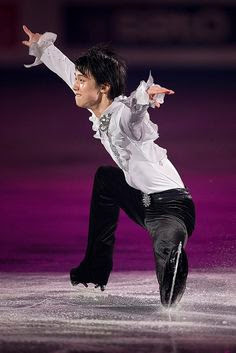
Yuzuru Hanyu's Gift or Extravaganza as a True Gift

"If less is more, just imagine how much more more would be," Frasier tells Niles.

It's a hilarious line. It also has a grain of truth. 

In the series The (Weird) Director Who Buys Me Dinner, the character Min Yum Dam states at one point, "If we're going to charge more for tickets [to a pop idol's concert], we need to do more, so people get their money's worth."

Yuzuru Hanyu's Gift is a great example of making something worth more. I wondered at first how Hanyu had managed 12 programs over 2+ hours without getting worn out (and, in truth, he does get worn out, but his final programs are as impressive as the earlier ones). 

I ordered the DVD from Japan. The version I ordered has no subtitles. However, I had little trouble following the show's concept, which is an emotional autobiography of Hanyu or, rather, his different personas. Between programs, while Hanyu changes and recovers, the arena offers movies with voiceovers, dancers, the Tokyo Philharmonic Orchestra and a separate band that appears to include the composer of works made specifically for Hanyu as well as a number of seriously skilled rock-n-roll guitarists. 

In addition, every program--aside from Hanyu's recreation of a set piece from one of his competitions--uses different costumes, different music, different lighting, different backdrops, and Hanyu's frankly more physical style of skating than what one sees in the official competitions. 

I like it! One reason I wanted to own Gift is because I've often felt, watching the more official pieces, that Hanyu is more captivating--and is having more fun--when he seems to embrace the ice, to sweep low and brush his fingers along it, to almost play with his performances. 

The result with Gift is intense emotional self-disclosure coupled with genius proficiency and high production values, a combination in Japanese art that never fails to slightly unnerve me. (When Americans "disclose," they tend to "disclose" for the Protestant purpose of being personally saved--I told you stuff and now I will go home and cook dinner; the British do it with loads of irony--I told you stuff but don't take any of it seriously; I'm sure Japanese "disclosure" follows its own form, but it always catches me by surprise.) 

In any case, Yuzuru Hanyu's Gift is a gift of MORE! And worth the cost of the DVD. 

Celebrating Eugene Woodbury

My oldest brother Eugene died at the beginning of this year. Today, June 8th, is his birthday. 

Tributes to Eugene can be found on his blog:

As I mention on his blog, I intend to republish his novel about his mission--Tokyo South--and several of his translations, which original works reside in the public domain. The republished novels will become available through his blog.

The photos are Eugene; Eugene and Kate; Eugene at the center with his siblings. 

Employee Appreciation Day: Office Work Deserves More Recognition

Employee Appreciation Day is today, March 1st. Granted, I think these holidays are often used to make token noises of appreciation and move on. However, I wanted to use the opportunity to write in praise of office work.

In a Monk episode, Monk gives Natalie flowers for "Secretary's Day." Natalie is offended. Lots of people tell Monk that he messed up since Natalie is more than a secretary.

The episode really bugs me. I was a secretary for 10 years (receptionist, secretary, office manager) before I went into teaching. I worked with women who had less education than I did and were far, far, far better secretaries than I was. It is a skill.

To this day, I assign my ability to complete administrative work to my stint as a secretary. 

It annoys me to see it dismissed the way it is dismissed on Monk. I understand the underlying point (Monk doesn't appreciate how much Natalie does for him) but I hate how the script ties the lack of appreciation to the term "secretary." (Not to the flowers--Natalie is initially pleased by the flowers.) 

"Innovation without imitation
is a complete waste of time."
The subplot brings home how seldom books and movies "do" secretary or office work correctly. Sure, there are shows like The Office. But they are almost always only about drudgery and offer a kind of nihilistic view of the kind of work that Mike Rowe, at least, appreciates: someone has to keep the toner stockpiled and someone has to know where things are filed and someone has to have client numbers on hand for quick communication.

I'm not advocating Dilbert as a lifestyle. I worked (for less than a week) for a company that apparently thought Dilbert was a serious guide to a way of life. (They missed the irony.) 

I am advocating that the people who know how to change the toner and order supplies and proofread and file documents and locate those documents and answer phones and summarize phone conversations and handle complaints and direct people to the proper departments and bind proposals and go through mail and send mail/packages and transcribe recordings and update systems, including electronic systems, and handle invoices and plan conferences/reserve conference & hotel rooms and maintain digital and paper calendars and deliver documents in-person as well as digitally and contact customers/patients...

Deserve applause. It may look easy. It isn't. For Natalie or anyone else.

AI is a Gimmick

In his article "Some Say AI is the Greatest Invention in the World. I Don't Get It," Freddie deBoer skewers those who think that AI can out-do plumbing...or the bowl! 

He states, 

The conversation about artificial intelligence remains absurd, hype-ridden, and utterly out of touch with actual material reality. I could have written that sentence in 2024, 2023, or 2022, and it would have also been true.

I concur. I have not changed my mind about AI since the first email within the college environment that proclaimed, "It can write as good as a student!" 

I looked at the provided example and went..."Not!" 

Sure, if the student is a student using AI. Or a Harvard professor. (They write about the same.) But not if the writer is actually trying to communicate anything to anyone with a brain. 

AI remains repetitive, full of logical fallacies, and a conveyor of generic and often inacccurate information. My librarian friends--some of them--and Ted Chiang at The New York Times continue to point out the damage to community. 

And I have noted, as an instructor, a growing inability for students to problem solve truly basic issues, precisely because they are relying on AI to do their thinking for them. Students in English 100 are not "closing the gap" when they use AI. They are falling further behind their peers who don't use it.

What has amazed me the most is the lack of fundamental skepticism. Skepticism, which professors and students and textbook companies demonstrated (correctly) when Wikipedia came into being (I'm a fan of Wikipedia but it is a tertiary source), seems to fly out the window when AI is placed on the table. 

From a critical thinking perspective--and a rational commonsense perspective--information should always be checked. If one source claims that safe and ethical human cloning is possible within 6 months, it is wise to check that claim against other sources/experts. If my mechanic keeps telling me things about my car that result in $1000 bills, it is a wise for me to get a second opinion

When googling these days, I negative out AI. Why waste my time? Seriously! I would check the information against multiple other sources anyway. Why start at a dead end? 

Especially after AI told me that Samuel Richardson wrote Uncle Tom's Cabin

But even if AI's information was correct, I wouldn't bother. It's white-noise: blah, blah, blah. 

And then the grown-ups go and actually learn and test things.

AI is the equivalent of Ouija boards. 

Lessons from All the Ms: Good versus Bad Dust Jackets

For this list (the opening of every book by an M author in adult fiction), since I'm going to read the beginning of a book no matter what, I don't always read the dust jacket. Occasionally, after reading the first chapter or first 10 pages, I turn back to the dust jacket to confirm what the book is about.

And I've noted a distinct difference between dust jacket blurbs that prepare me, however persuasively and enthusiastically, for the plot--"an adventurous tale in which Peter the Rabbit takes out zombies alongside Jane Austen!"--versus the dust jacket that informs me HOW I'm supposed to react to the book.

The second type is not all that different from the way Hollywood declares a movie a "cultural phenomenon" before the movie has even come out. That is, the description is more about forcing a label--and a reaction--onto the viewer/reader rather than persuading the viewer/reader to try something out.

So a dust jacket that informs me that the book is "a story for the ages that addresses life-changing and important themes, moving readers to great heights of enlightenment" is...

A BIG RED FLAG.

It is the same reason trigger warnings are part and parcel of the worst aspects of social media--the tendency to keep life carefully under control and non-threatening by labeling anything possibly ambiguous or personal or individual: responses to the work are already determined. 

If you wonder why people who watch movies warning us against AI would embrace it anyway...the above is one possible answer. Apparently, we are supposed to hate AI in one context but be grateful to it in another (I think it's tacky, across the board).

Real life isn't always safe. And fiction is inherently threatening. In Reading Lolita in Tehran, the author Azar Nafisi remarks that simply encountering Pride & Prejudice--with its multiple voices and perspectives and existences--is deemed a threat to a dictatorship.

The answer to art is not trigger warnings. The answer is harder and braver:

Read the stuff. Form an opinion. Who cares what the dust jacket says?

Do Murders Truly Increase in December?

A common mystery trope is that murders increase in December due to forced family togetherness. It is similar to the Halloween myth that insists that more accidents and murders occur around Halloween, when in fact, Halloween is not any more or less dangerous--in outcomes--than any other time of the year. (I'm reminded of the irritated evil vampires in Buffy who consider Halloween so tacky, they stay indoors.) 

The Halloween myth came about in part due to newsworthy poisonings that occurred on Halloween. In both cases, the death was due to family members adding poison to the candy AFTER the child returned home. So the connection between forced family togetherness and crime could have merit. 

One Thanksgiving, another time of forced family togetherness, my father had to go the emergency room for a cut on his hand. The place was practically deserted. Remarkable, how suddenly everybody was slightly too well not to need emergency care (I did wonder what the day AFTER Thanksgiving was like). As for family togetherness, my dad and Mom and I all went together!

Since personal observations are useful but not enough, I decided to check out the numbers.

Would crime statistics reveal that Christmas is a homicidal time of year? O a relatively safe one? 

According to the Council on Criminal Justice, homicides in 29 U.S. cities in 2023 in December were by no-means low, but July and August were FAR higher. 

I guess it's a lot easier to kill people when one doesn't have to perform the escape plan of putting on the long-johns and snow pants and boots and mittens and ear muffs and a winter jacket...

November is also quite low. So forced family togetherness is not the culprit but isolation or lack of options may be. 

The circled area is homicides in Nov. 2019-Jan. 2020.
Homicides did increase in several cities during lock downs.


The Violence of Back to the Future

As many people doubtless remember, one of the objections to the first Back to the Future was that it teaches violence as a solution. I've always considered this a rather petulant objection.

1. The movie isn't about violence. It is about assertiveness. Marty's dad is a wimpy guy who gets some spine and voila, it changes his future. Spielberg carries the theme into the next two films, although he changes it slightly (possibly in answer to the objectors) by making Marty's assertiveness a matter of "Just saying, 'No'." But it's the same idea in different form.

2. However, let's suppose that the film is a kind of Hamlet meets Rambo declaration regarding the uses of violence to improve life...what is the answer? When the bully starts harassing the girl is Marty's dad suppose to call the police, lecture Biff on his non-PC behavior, write a strongly worded article, try a diplomatic solution? And when Biff starts wrenching on his arm, should Marty's dad have called a cease-fire and asked the UN to get involved?

Now, granted, movies set up their own problems or strawmen. Which is why evil capitalist businessmen abound in droves in Hollywood. Set 'em up, kick 'em down, shake your finger a lot. And Biff is an over-the-top villain.

But the basic problem remains. This guy is a bully who pushes people around. A martyr would take it. A Rambo would shoot his head off. In a fantasy, he would be turned into a frog. In a Disney movie, he would fall on his own sword or off a cliff. In an Anne Perry novel, he would suddenly confess and tell you all about his bad relationship with his evil father. Jean Luc Picard would lecture him about free will before blowing up his ship. The Vulcan would have nerve-pinched him. 

But the easiest solution is just to hit the guy. Yet the objectors never seem to stop to think about the problem as an actual problem. Here's a situation: what do you do about it? Which question is, I think, one purpose of fiction.

I suppose what the objectors dislike is that Marty's family benefits from this punch, which, as I've noted in my (1) response kind of misses the point of the punch, or what the punch represents. It's a kind of weird literalness which insists on taking the action literally but subjectifying the result to a bizarre degree. So, the movie was JUST about the punch, but the viewers won't understand that it's JUST about the punch; they will extrapolate the punch for use in their own lives. So viewers are too left-brained to see the punch as symbolic but too right-brained to say, "Hey, this is just a movie."

When, the fact is, standing up for yourself violently can make a difference in the future, good or bad. The whole point of turning the other cheek isn't that the Rambo approach doesn't work. Jesus Christ was advocating an alternative for entirely separate reasons from the effectiveness of violence. He was saying, "Let it go, even though you could take the guy's head off." Which is very different from saying, "Hey, this doesn't work." The Romans believed bulldozing Palestine would solve their problems in that area, and it did (temporarily). It didn't solve them for anybody else, but it certainly solved them for the Romans. (Their particular end-of-the-line came from an entirely different direction.) On the more positive side, the Revolutionary War worked too. Of course, the French Revolution didn't, but Waterloo certainly worked for the British.

I will agree that protestors behaving violently is pointless and chilling. But again, it isn't because violence doesn't work as a statement. A number of academics have complete bought into it, much as they bought into riots during the lockdowns. The question is, Should violence be used? and Is it effective in the long-run? But those questions can only be asked if violence is realistically addressed, not turned into something entirely metaphysical (bad for you but good for me).

Regarding the Futures, I will admit, I think the truck is a bit much. I can well believe that Marty's dad learning to stand up for himself and not get pushed around could result in a slightly nicer home and a better relationship between the parents, a writing career for the dad, and more motivated kids. I don't see how any of that translates into a new truck. After all, a more assertive father might decide that Marty shouldn't have any kind of car ("Pay for it yourself, son. I did when I was your age.").

I will also admit that there is value in Marty's final insight--when faced with Old West Biff, instead of reacting with a gun fight, he throws up his hands and goes, "Are you kidding me?" 

But suppose he had needed to face off Biff in a high-noon situation? Hey, Star Trek: TNG solved that problem with technology! But Worf still shot his gun. 

Sometimes, one does have to handle a physical confrontation. Better to do it well than not. 

Humans Connect Emotion to Everything

Humans have the capacity to anthropomorphize EVERYTHING and ANYTHING. Years ago, when I worked at the University of Maine Law School as a receptionist/copy monkey, instructors would swear to me that the huge copier in the building disliked them. It chose THAT moment--THAT moment 5 minutes before class--to stop working. And I came to believe that the machine could sense rush (the logic side of my brain pointed out that rushing led instructors to do dumb things like not remove staples from pages about to be copied). 

The Baskerville robot dog in Elementary--that falls through a tarp and injures its leg--always makes me very, very sad. Poor killing machine! Poor, limping, killing machine! Someone take it home, fix it up, and give it a bath...in motor oil, of course. 


Blame It on the Large Hadron Collider Day

Yup! That's today, September 10th. 

Blame It on the Large Hadron Collider Day is actually about blaming the LHC for lost items...not, necessarily, the end of life as we know it. 

I think the day is hilarious. I think the larger fear that rose up when the LHC was started is just sad.

A few semesters ago, one of my students polled the class: Who would go into space if offered?

The amazing result was...very few. 

Now, granted, I might not if the opportunity actually arose. I could travel and rarely do. But the idea that I would be entirely uninterested, indifferent, or just opposed astonishes me. 

What has happened to the desire to explore?! 

I feel the same way about the Hadron Collider. Okay, so it could rip apart the universe and send us all to destruction. So what? It's trying to discover the secrets of the universe! Woo-hoo!!

It's a little sad that the woo-hoo is so absent these days. Do people really just want to fuss about politics, throw around labels, and ask AI what to think? 

Wow, that was crotchety-sounding. I must be getting old. 

Of course, that means I'm still here.

Liking Versus Criticism or, Updated Title, Stop Caring What Other People Think About Art

I advocate people stop 
enjoying art based on ratings.
Try stuff out! 

I have reached "N" on A-Z List 8 (Books to Movies), which selections are drawn from A-Z List 2. On A-Z List 2, I mention that I have never gotten into Andre Norton, which I regret since there are so many books by Norton out there. 

The issue here dovetails with another series of posts: books I like even though nobody else does. Books I don't like even though they are popular or critically acclaimed.

Norton is an excellent example of the ultimate failure of literary criticism: liking has little to do with what the supposed-people-in-charge say. 

Far too many times, critics insist, "If I don't like something personally, it must be because it is no good." Reasoning from the personal to the general is a survival mechanism. It is also unreliable.

Yet we humans remain perfect little Victorians, insisting that today, right now, in us, is the objective best of times and worst of times; in the latter case, we become subject, as Eugene states, to "the near-universal idea, especially beloved on the academic left, that there existed a point in [the past] when All Was Good"

The fascinating mural from Criminal Minds contains
overlapping elements of a single person's life.
One Summer by Bill Bryson captures the reality: dig into history at any one point in time--1927, 1803, 321 BCE--and thousand of events begin to crowd themselves onto the stage of one's brain. Prohibition, Babe Ruth, Mount Rushmore, Herbert Hoover, Mississippi Floods, President Coleridge, Lindbergh, Al Capone. Murder cases. Political rallies. Political backstabbing. Boxers. Random people sitting on flagpoles. Model A Fords. Eventually, there's too much. Even Bill Bryson can't handle it all.

Humans (not just historians) smooth it all out, highlight the important stuff, slide names into biographies, and move on. How else could we cope with life's complications? (It is unfortunate that the result of this necessary leveling is a belief that "life really was like that.")

Back to literary criticism:

Likewise, although a case can be made for a book being "good" or "bad" (and I am advocate of making the case)--the unreliable habits of readers indicate how little that literary criticism matters in people's personal lives. On Amazon, beloved popular series almost all have 4/5 stars. And on IMDB, over time, everything eventually rates a "B" (with a few outliers on either side), no matter how popular (or personally beloved).

One of my favorite books growing up.
The book has 27 other fans on Amazon.
It was out of print for many years.
There are plenty of books that I love that other people happen to love too. There are also plenty of books that I love without any expectation that they will be beloved by anyone else. Along the same lines, Andre Norton isn't my cup of tea but is for plenty of other people. Good for her!

As far as literary enjoyment is concerned, "taste" rather than "good/bad" seems to determine not what lasts (gets streamlined) but what matters in everyday life. In one of his tomes, Stephen Pinker argues that evolutionary psychology (examining the rise and fall of civilizations from a macro point of view) explains the world overall and would appear to wipe out the need for free will. But he argues (I am paraphrasing), Isn't it better for us in our day to day lives to behave as if free-will exists?

I would add--because, after all, that's what going to happen anyway. 

In the day-to-day, people make choices--career choices, marriage choices, housing choices, pet choices, reading choices, viewing choices--that belong to them alone. Hence everything--from literature to civilizations--remains messy. The macros only appears after enough time has passed: the rough edges get smoothed out, and the important events (or books) rise to the surface.

But thinking that we know the macro while we are living in the micro--that's where the little Victorian in all of us insists on taking a nosedive into the void.

Better to make the best choices you can, live by the moral code you've selected, and read what you want. The macro will take care of itself. 

Lawyers Speak the Same Language: Literally and Figuratively

In To Kill a Mockingbird, Scout mentions the following about her father's profession:

I've heard that lawyers' children, on seeing their parents in court in the heat of argument...think opposing counsel to be the personal enemies of their parents...and are surprised to see them often go out arm-in-arm with their tormentors during the first recess. This was not true of Jem and me...Mr. Gilmer was doing his job, as Atticus was doing his. [Mr. Gilmer's witness] had no business being rude to him of all people.

Despite Danny's arguments with Erin at the family dinner table, opposing counsel are generally quite civil to each other. Matlock's easy relationship with the police and (usually) with the other lawyers is more the norm than not. 

In one of Major Crimes's Christmas episodes, when the defense attorney says to his client, "I'm trying to think of an explanation for a dead body stuffed in a cello case under your bed--and it's just not coming," he is speaking on the same wavelength as Captain Raydor and Lieutenant Provenza.

The mother then produces a justifying speech about how she had to carry out a bank robbery and kill her accomplices so her son--a nice, friendly, average boy--could get into a private music school. "I did it for the world," she proclaims. 

Her lawyer looks at Raydor and Provenza. 

"You did say life," he says wearily. 

Everyone in that room--and the watching D.A.--thinks the mother is a psychopath. Why not the death penalty? 

But hey, the lawyer did his job!