Showing posts with label Illustration. Show all posts

Great Human Moment in One Punch Man

is...fine. 

Dorothy Sayers wrote that there is no group of people who can't find common ground complaining about drains. 

In sum, some practical conditions of human mortality crop up again and again--which is where humor comes from.

In One Punch Man, an asteroid--or rather, parts of an asteroid since Saitama prevents the entire rock hitting the planet--takes out areas in a city. Saitama notes that the "supermarket is in ruins...But my old landlord's building is fine? Tch!"

The anime uses this event: Saitama complains that the apartment building that he got evicted from is still standing while everything around it is reduced to rubble!

Anyone can relate to unsatisfactory landlords and the fact that karma honestly doesn't happen according to plan.  

And here's a joke about drains: 


Alice in Wonderland: Tenniel's Timeless Achievement

The fascinating aspect of Alice to me is that I think of her, almost entirely, as Tenniel's illustration.

Before I continue--

My mother read to me growing up. Impressively enough, she never had any trouble understanding that I could draw and do other stuff while listening to her read. She read me everything, from Tolkien to Frances Hodgson Burnett. 

She did not enjoy reading Dr. Seuss to me, however, or the Alice in Wonderland books. The reason weren't political. It was about taste.

My dad read me Alice in Wonderland and Alice Through the Looking Glass. One year, we performed the Father Williams' poem at a church pageant. Another, we performed the Knight's poem.

I enjoyed having my dad read to me, but I must confess, my tastes are in closer alignment to my mom's. I have rarely reread the first Alice book. 

I have reread the second a few times. The first seems...well, nuts, I guess. A true dream with people getting smaller, then taller, and cats disappearing, and everybody being kinda rude.

Through the Looking Glass seems mellower to me, kinder, gentler. The characters seem less obnoxious. 

And yet, in both, the main character, Alice remains...every-girl, I guess. I don't remember her as anything much, except she is straight-forward in her conversations. 

But those images! 

Sometimes the illustration is what everyone remembers.


Cats Like to Look Cool

One of the most delightful traits of cats is that they try to look cool! 

Despite their sure-footedness, they knock over lamps, push food out of cupboards, scatter stuff like packing peanuts over a wide area, slap down stacks of papers and then roll in them...in a phrase, they cause messes. 

Except the messes aren't messes--they are, ah, art, interior decorating, intentional rearrangements of one's living room (and yes, I am anthropomorphizing).

The first cat that I took complete responsibility for, Aurora, once ran across my table, slid into the glass doors, got up and sauntered away. It wasn't a mistake. It was a stunt!

The two pictures here illustrate the sheer delight of cats that cause messes and then, like Akihito, claim, "It wasn't me. I didn't do it!" 

In both cases, the human-animal hybrid makes the jokes (even) funnier, like Cat from Red Dwarf.


Fairy Tales: P is for Piles of Pyle as well as Perception and Parodies

Howard Pyle should have come up earlier when I reviewed King Arthur. Howard Pyle wrote a number of what would classically be called "boy's adventure legends"--The Story of King Arthur and His Knights, A Modern Aladdin, and--his first popular book--The Merry Adventures of Robin Hood.

As mentioned in early posts, it is questionable whether these tales fall into the 398.2 fairy tale category. I decided to focus on Pepper and Salt, written and illustrated by Howard Pyle.
 
Pepper and Salt is best described as original tales that pretend not to be original--not quite the same as tales that use tropes and go off in their own directions or even retold tales that add in details. 

In truth, I'm not entirely sure what Pyle the Writer was doing with Pepper and Salt though it is clear how and why Pyle the Artist influenced a generation of artists, including N.C. Wyeth. In any case, the tales are an easy, fun read if less than demanding even for small children--which brings up the next point.
 
The frame story or preface addresses children directly ("my little man"). Pepper and Salt was published in 1885. By this point, fairy tales are entered the realm of childhood when a hundred years earlier they were published for and read by adults. In fact, earlier nineteenth-century collectors, such as a Lang, were still searching for a national or cultural "identity" that would supposedly reveal itself through folktales. Yet by 1889, Lang's Fairy Books of Many Colors were aimed specifically at children. 
 
It took nearly another 50 years for fairy tales to creep back into the adult world, helped, of course, by C.S. Lewis, Tolkien, McKinley, and Sondheim. These days, fairy tale riffs (which depend on fairy tale knowledge) are fairly standard, so Drew Carey's Whose Line is It Anyway can set up a talk show stocked with "let's have a fist fight!" fairytale characters. 

What does the witch think about Hansel & Gretel? 

"You don't eat an abode!"
 

Fairy Tales: Picturesque & Pleasing Pinkney

Jerry Pinkney, 1939-2021, is an acclaimed fairy tale author/illustrator. 

Interesting enough, unlike a few other well-known author/illustrators on this list, his work resides almost exclusively (though not entirely) in the 398 call number, from The Adventures of Spider: West African Folk Tales by Joyce Cooper Arkhurst, 1964, to Further Tales of Uncle Remus and John Henry by Lester Julius, 1990 and 1994, to the celebrated The Lion and the Mouse, 2009 (Caldecott Winner). 

In fact, Pinkney pulls together this list in a fascinating way since his books include folk tales, historical events, personal reminiscences--see Patricia C. McKissack's work--and Aesop's fables! Everything in fact that may end up in the 398 section!

The Lion and the Mouse, of course, is the celebrated tale of the mouse who promises to help the lion and later successfully frees him from the hunter's snare.

The illustrations for all Pinkney's books are lush and engaging. They fill the page, a point that my artist mother likes to make about fresh art versus somewhat studied art. The joyful art of Pinkney doesn't stint on communication.

The video is a reading of The Three Billy Goats Gruff--which print book I recommend since it has fold-out pages. The child reader for the video is fantastic, very impressive!


Fairy Tales: The Multifaceted Mother Goose

Mother Goose in the fairy tale section usually refers to well-known rhymes filled with classic characters: Little Jack Horner, Old Dr. Forster, Little Miss Muffet, Simple Simon, Old Mother Hubbard, Jack being nimble, Humpty Dumpty, Old King Cole, Little Bo-peep, Mary and her lamb, the King in his counting house, Georgie Porgie, Jack and Jill climbing the hill, Three Blind Mice, Jack Sprat and his wife, the rocking baby...and many more. 

Mother Goose may refer to an American woman, Elizabeth Goose--but it's unlikely. The term--Mere Oye--was common in France in the seventeenth century as a reference to a well-known tale or, rather, a well-known tale-bearer. Within context, the term resembles "urban legend," a tale that is told and retold so often, it takes on a life of its own.

The fascinating aspect of Mother Goose is how often the rhymes are presented in an unusual fashion. Of the books, I checked out, the most traditional is nevertheless presented in an atypical format: The Tall Book of Mother Goose.

The Charles Addams Mother Goose, praised by Stephen King, presents the tales with  dark twists. My favorite is the spoof of American Gothic. The rhyme is "Three Blind Mice."

And Jon Scieszka has created the deconstructionist version, The Real Dada Mother Goose, in which a single rhyme is presented in multiple ways. "Jack Be Nimble" is presented in Esperanto and then with Bad Libs. "Hey Diddle Diddle" has a news article, recipe, and haiku version. "Twinkle Twinkle" presents a scientific version: 

Twinkle, twinkle, little star. Now we know just what you are. A luminous ball of gas, mostly hydrogen and helium, held together by your own gravity, producing light and heat from nuclear fusion reactions in your core. Twinkle, twinkle, little star. Now we know just what you are.

My favorite is "Old Mother Hubbard," the "Re-Verb" version: "Old Mother Hubbard moseyed/progressed/skipped/hightailed it/took a hike to the cupboard." 

And, of course, there is a "Censored" Humpty Dumpty version. 

Interestingly enough, such takeoffs with Mother Goose, including the darker versions, are entirely appropriate to the original poems. The Annotated Mother Goose, "arranged and explained" by William S. Baring-Gould and Ceil Baring-Gould, while dismissing the more arcane and implausible "historical" interpretations of the rhymes, points out that the list includes "8 allusions to murder...21 cases of death...12 cases of torment...15 allusions to maimed human beings and animals...23 cases of physical violence." 

By their nature, the rhymes belong to the darker tradition of fairy tales. Agatha Christie used a number either as titles or as both titles and clues. A Pocketful of Rye kills off the "king," "queen," and literal maid in a matter of days. 

Children are morbid creatures.

Fairy Tales: Trailblazing George McDonald

George MacDonald impacted a generation of British fantasy writers. C.S. Lewis references him quite often, maintaining that MacDonald "baptized" his imagination long before C.S. Lewis returned to the Anglican Church. 

I determined to finally read Phantastes, the book that inspired C.S. Lewis and others. 

I now understand what it is MacDonald did. 

In truth, the book isn't much in terms of plot. The narrator enters Fairy Land, where he encounters a number of people and monsters and locations and stories told within stories. There is no clear narrative arc--that is, certain encounters never seem (on the surface) to be paid off. 

On the other hand, for someone familiar with C.S. Lewis and Lewis's opinion of MacDonald--and MacDonald's biography--the religious themes are clear; in many ways, the book resembles Pilgrim's Progress, being the tale of a man undertaking a journey that will fundamentally change his moral character and enlighten his mind. 

However, MacDonald is far less heavy-handed. He is also entirely unapologetic. MacDonald doesn't attempt to explain the link between Fairy Land and God (as C.S. Lewis did). All things are God's creations. End of argument. 

What makes MacDonald so entirely extraordinary is (1) the effortless description. Fantasy readers will recognize the people and locations and tropes and motifs. Like C.S. Lewis and Tolkien--and the Romantic poets--MacDonald knows his fairy tales so well, he can use them with entire unself-consciousness. The scenes roll off the page, becoming more and more solid while growing more and more fantastical. 

(2) The lack of ickiness. 

The book has a surreal quality shared by dreams and fantasy art, yet it is not icky, as dreams and Surrealism (for instance) can be: Dali without the gross aspect. 

I don't know how MacDonald does this--he utilizes horror in his writing with the same ease as fantasy, dream states, tragedy, and realism. MacDonald is one of the few writers to provide a death (one of the stories within a story) that uplifted me rather than leaving me vaguely unsettled, depressed, or, even, deliberately spiritual. Simply, "Ah, yes, of course." 

Phantastes is a bit dense on the exposition side and, as mentioned above, there isn't much of a narrative arc (that I could figure out). To experience what MacDonald does in Phantastes without the long passages, I recommend The Golden Key: A Victorian Fairy Tale by George MacDonald, illustrated by Ruth Sanderson. 

The combination of text and illustrations is impressive. Even more impressive is that the illustrations are entirely in black & white and yet, combined with the text, they exude color. 

A beautiful volume and a testament to the key or light that MacDonald provided so many writers. 


Fairy Tales: Great Illustrators

Almost from their inception, fairy tales have been paired with great illustrators. I cannot possible cover all illustrators here, so I'm focusing on a few of the classics:

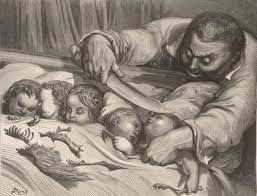
Gustave Dore: Classic, evocative. No one did Red Riding Hood and the wolf better.

Pre-Raphaelites: Technically, the Pre-Raphaelite were not book illustrators. However, they produced works based on stories, especially stories from myth and folklore. King Arthur crops up quite often. I've always liked the Pre-Raphaelites, even their tacky work, for their reliance on story. They influenced a generation of painters and illustrators, such as Rackham.

Arthur Rackham
: In truth, I'm not a huge fan. The "spidery" look doesn't appeal. 

However, the book about Rackham, Arthur Rackham: His Life and His Work by Derek Hudson, first printed in 1960, reprinted in 2022 is superb. 

Rackham was a level-headed bloke who knew very well the difficulties of being an artist. In a letter to a fan and young artist, he advocates sticking to a job that pays while building up a portfolio. He also suggests that the young artist will one day have to choose between art for enjoyment and art at the behest of others. And he warns that it is difficult to make a living.

Rackham was lucky. He was extremely popular in his lifetime and made a very good living. But it was a job, however enjoyed. Hudson states, "[A]n analysis of 'symbolism' in Rackham's drawings, or a psychological interpretation of his work--not many of his commissions, be it remembered, were entirely of his own choosing--would be unlikely to reveal interesting repressions or afford valuable insights into Rackham's character" (44). If only all analysts of art were so level-headed!

Rackham also had a wonderful wife, who was a painter in her own right. 

Jan Pienkowski: Like Rackham, Pienkowski create silhouette illustrations (see above). I loved these illustrations when I was younger. Like the next two illustrators, Pienkowski's work appeared in Cricket magazine!

Trina Schart Hyman: One of my favorites from the early days of Cricket Magazine. Her illustrations are detailed and clever. They are more homey than cartoonish though she also drew cartoons. Her "feel" is closer to Calvin & Hobbs than comic book, especially the clever wink-wink at the edges.

Hyman, of course, illustrated just about everything--from picture books set in contemporary times to classics to fairy tales. I also discuss Hyman here and here.

Quentin Blake: Quentin Blake, another Cricket alumnus, illustrated a great many of Roald Dahl's books. Roald Dahl is rather like the 20th century's answer to Hans Christian Andersen. Quentin Blake captured Dahl's texts in a quintessential fashion, rather like Tenniel captured Carroll's Alice. 

Mercer Mayer: I love Mayer's lush illustrations. When I started searching for old, used books from my childhood online, Mrs. Beggs and the Wizard was one of the books I hunted up.

And many more...

Trina Schart Hyman and Eric Kimmel: Fairy Tale Regulars

Trina Schart Hyman graced a previous A-Z post. As I state in that post, "I will return to Trina Schart Hyman when I review fairy tales/folklore. I have to give her credit here for the number of books she illustrated in all genres, from American history to contemporary drama."

Eric Kimmel has a similar resume: he has written picture books in multiple genres. Like Hyman, he tends to concentrate in certain areas, such as the Anansi series. 

They come together with Hanukkah. In fact, delightfully enough, Hershel and the Hanukkah Goblins was initially published in Cricket magazine--the great children's magazine of my childhood--when Marianne Carus was looking for a holiday story. 

As with Saint Francis & the Wolf, Caldecott Honor book Hershel and the Hanukkah Goblins is located in fiction rather than in non-fiction--in this case, it was organized under general "Holiday Books." 

I selected it for A-Z List 7 because the Kimmel/Hyman picture book The Adventures of Hershel of Ostropol pops up in my local library's 398 section.  

And Hershel of Ostropol is a good introduction to the Jack archetype, who will come up in a future post. Hershel is a cross between a trickster and Daniel Webster, as he outwits even goblins. 

Powerfully enough, in Hershel and the Hanukkah Goblins, he outwits them despite the synagogue being destroyed. The menorah remains lit. It is a testament to the Jewish experience: the ability to carry belief and culture with the group beyond temporary structures to wherever that group may end up. 

The text and illustrations together are magnificent. The 25th Anniversary Edition also includes a touching Afterword. When Hyman illustrated the story for Cricket, she sent Kimmel a letter: 

"I think you are a wonderful writer. One of the reasons I enjoyed working on this book--aside from the fact that it's a great story--is that you know how to write for the artist...what a pleasure it is to work on a manuscript that implies great visual stuff...you're among the greats...I think I drew [Hershel] just right. I may have even fall in love with him." 

For the Afterword, Kimmel states, "This is what she wrote to me when I was nobody from nowhere and she was one of the gods." 

Fairy Tales: Grimm Horror Tales

When I was younger, my mother refused to read me Grimm fairy tales because, she said, they gave me nightmares. 

I don't doubt her. For Mother's Day or her birthday, my mother received a set of the The Juniper Tree and Other Tales from Grimm translated by Lore Segal and Randall Jarrell, illustrated by Maurice Sendak. The set sat on her writing desk in the living room. Whenever I passed the desk and saw the set, I shivered. 

The tales are truly dark--and a lesson in how folklore does not necessarily offer moral tales of courage and wit and goodness overcoming all. From that set, in the first tale, "Three Feathers" the princely brother who wins the kingdom is an idiot (simpleton is the term used) who does little more than go where directed. His beastly consort is a toad who turns into a lovely princess. 

The final tale, which gives its name to the set, involves a murderous stepmother who (I'm not making up any of the following) chops off her stepson's head, then ties his head back on his body, so his stepsister, her daughter, will think she killed him. The stepmother then chops up the boy and feeds him in stew to his biological father. The daughter collects the bones and buries them. A bird shows up and flies around town, basically reporting on the event to the townspeople. It finally returns to the house, rewards the father and daughter and kills the stepmother with a millstone.

So the villainess gets it in the end. However, the tale contains zero moral reflection. The father, daughter, and restored son don't rejoice or issue regrets. They express neither sadness nor pleasure in the stepmother's end. They go inside and eat! 

So--horror movie worthy. Tons of people bite the dust but in the end, the resolution applauds revenge and restitution rather than any "legal" or "moral" wrap-up. 

I recommend the above anthology, in part because the translations are excellent--they move at a good clip, avoid the later moral additions (the Grimm brothers felt bad because parents rather than scholars were buying their collections--the editions got increasingly "clean" with each edit), and have a storytelling cadence. 

I also recommend them because although I'm not a huge fan of Sendak's illustrations, I think they perfectly fit the surreal, half-dream state of the tales. 

I may have avoided Grimm tales as a child--and they still aren't my favorites--but they do deserve a read by fairy tale lovers. I'm not one to think they are the only acceptable versions. I feel absolutely no need to place fairy tales in some kind of hierarchy where Disney is excised while Perrault is allowed or vice versa. I want it all! 

Including Grimm. 

Fairy Tales: Dragons! (With the Exclamation Mark)

I wrote previously that during a workshop class several years ago, some of my students tried to convince me to watch Game of Thrones.

I have less than zero interest in Game of Thrones. If something below Absolute Zero was a possibility, I would take it here. Soap opera doesn't interest me. Nihilism bores me to--not to tears. I don't cry. I just thoroughly don't care (ironically enough). Raunch without affection and relevance makes my brain melt (and I read erotica). Dumb politics (I'm not referring to the books since I haven't read them--but everything I've read about the series indicates...dumb politics) send me screaming back to non-fiction history tomes and the everyday, non-melodramatic, mundane complications of human nature. 

See link.
However, I remember that conversation because when I balked (in a far more mild way--I did not say, "I would rather stick needles in my eyes and cat food down my ears than indulge in that show"), a student exclaimed with utter earnestness, "But it has dragons!" 

Any discussion of fairy tales must include a discussion of dragons.

The fascinating element here is that in the world of fairy tale monsters, dragons are almost always cool--hence, Benedict Cumberbatch as Smaug and Jabberwocky (that voice!). Werewolves can be cool but they are also often angsty with troubling family/pack lives. Vampires can be cool but they are also often campy, very angsty, and all over the place (can endure sunlight, can't endure sunlight; can barely endure indirect sunlight, sparkle in sunlight). 

Dragons are just awesome. Good or bad, they are thoroughly awesome. 

Hence, the number of picture books that focus on the wonder of dragons: Everyone Knows What a Dragon Looks Like by Jay Williams and Mercer Mayer; Dragons Rules and Girls Drool by Courtney Pippin-Mathur, in which, ultimately, the princesses and dragons team up against the knight.

More to come!

Snow Day!

 Below are some links to one of the best books about snow days:

 With music and animation:


Friendly reading:


A quiet version (good for watching the snow fall while sipping a cup of hot chocolate):

Fairy Tales: Asbjornsen and the Numinous North

The importance of Northern tales echoes through C.S. Lewis and Tolkien's lives and works. As they pointed out again and again, these tales arrived in England relatively "late." Norske Folkeeventyr, for instance, was collected in 1842-43 and translated into English by Sir George Dasent in 1859.

Western classics focused for many generations--going back to the Middle Ages--on antiquity. When Harvard and Yale came into being, its students studied Latin and Greek. Those myths thread through Western medieval tales and updated versions by writers like Hawthorne. When Shakespeare went classic, he went to Rome. When he went local, he went to Midsummer Night's Dream. 

Then the Grimm brothers made their collection followed by Andrew Lang with the English and Asbjornsen and others with the North. 

Although the collectors operated in the mid-nineteenth-century, for Lewis and Tolkien in the early to mid-twentieth century, the academic world still lingered in antiquity. They and others attempted to change that approach by doing really out-there stuff, like teaching Canterbury Tales and Beowulf. (I fail to understand why anyone considers higher academe "edgy" about anything--if it isn't "cool" and acceptable, it isn't going to show up in any "forward-thinking" professor's in-box until it is cool and acceptable. Lewis and Tolkien were considered outliers.)

Northern tales did begin to make themselves felt, most interestingly, in Disney. In the making of Snow White, Disney was influenced by illustrators such as Gustave Dore. He was influenced with Fantasia by Kay Nielsen (see book image above), specifically in the final two pieces, "Night on Bald Mountain" and "Ave Maria"--in which one can see both influences.

C.S. Lewis and Tolkien, of course, took everyone the final distance with unique classic tales steeped in Northern climes. 

My personal favorite picture book here is P.J. Lynch's East of the Sun, West of the Moon. In truth, I don't find the quest itself all that enthralling. It has all the requisite tropes and motifs--animal bridegroom, bargains with trolls, sleeping prince, resolute heroine. Its greatest strength, of course, is the winds, which mark the story's place much in the same way Beowulf's Grendel marks its tale by arriving from a boggy marsh in a cold climate. 

I adore Lynch's illustrations. 

Fairy Tales: Unappealing and Ubiquitous Andersen

When I first started A-Z List 7, I knew I would need to tackle Hans Christian Andersen eventually. I was not looking forward to the experience. 

Turns out, I am not as averse to Hans Christian Andersen's fairy tales as I initially assumed. I realized, looking over his bibliography, that a number of tales I didn't associate with Andersen, such as "The Wild Swans," are his. I will address some of those tales in a later post.

Unfortunately, the Andersen tales I really dislike, I really dislike.  

As I mention in an earlier post, I'm not automatically opposed to Disney's sweetness-and-light approach to fairy tales. For that matter, I don't care if Disney wants to use its movies as vehicles for a particular philosophy. Welcome to capitalism! The company can produce all the stuff it wants. I can watch it or not as I please. 

"The Little Mermaid" is one place where I greatly appreciated Disney not going down the maudlin, depressing angst corridor (if you don't know whereof I speak, read the original tale). 

Don't get me wrong: Andersen is a skilled storyteller.  "Ugly Duckling," "Little Match Girl," "The Tin Soldier," not to forget "The Little Mermaid" are all memorable because they capture a zeitgeist exceedingly well. 

But doing something well is not the same as doing something everybody wants to read, just as disliking something personally doesn't mean there isn't another audience out there for it. 

I find many of Andersen's tales unbelievably depressing. Even the "Ugly Duckling," which ostensibly has a happy ending, rests on a desperate and unnerving desire for approval by others. And the sad deaths of so many of Andersen's characters begin often with rejection by others. 

I can appreciate that the tales reflect the author--I can even appreciate that they despondently zero in on part of the human condition. It's like every emo Goth in the universe got together to grouch, "Life is so depressing, you know, a dark pit of despair and nothingness. Yeah, yeah, like that."

I chose "The Snow Queen" for this post because it is more chilling--ha ha--than down-in-the-dumps. And has impacted our culture greatly, from Frozen to ballets to literary references. 

In "The Snow Queen," Gerda joins a notable pantheon of heroines searching for lovers, suitors, brothers, and other male missing persons. The trope has a long history.

Note: Regarding folklore, a trope is a narrative element that shows up in more than one tale. A motif is a singular element (in literary analysis, the motif is often connected to theme). Gathering helpers to search for a lover is a trope. A magical ring or object is a motif.

Kay is rescued from the Snow Queen--or, rather, from the shards of a broken mirror that turned him into a posturing jerk ("I'd like to know if you deserve to have someone running to the end of the world after you," says the robber girl to Kay). The Snow Queen is never specifically punished. Rather, like mermaids, the Snow Queen exists at a remove: untouchable, indifferent, ruthless, snow itself. Punishing her would be pointless (especially if you live in Northern Europe).    

Kay is rescued from the allure of perfection and returned to the warmth and complications and oddities of everyday life, including all the good, imperfect helpers Gerda met along her journey: "Kay and Gerda looked into each other's eyes. There they stood, grown up and yet children--children at heart--and it was summer, warm and delightful summer." 

Vladyslav Yerko's version of the tale is gorgeously illustrated. I rather wish the final picture corresponded to the text--all the main characters remain children except the queen. But the gap between image and text is easy to overlook, the book is so beautiful. 

"The Snow Queen" is not only one of Andersen's (ultimately) more positive tales, it seems to present an answer from Andersen to Andersen about the double-edged sword of pursuing the unattainable. As a writer, rather than a collector, of fairy tales, Andersen created cultural phenomenons, memorable tales whose tropes and motifs touch on the human condition. They add to it. They complicate it. They make it whole. They don't need to be perfect to be valuable.

They may not have made their creator very happy. But his feat is worthy of Gerda's search. 

Animals: Dead Dogs

Speaking of animals...

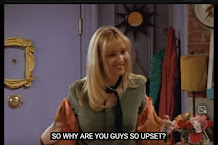
A surprising number of children's books end with dead animals, dead dogs in particular. As the Friends' clip indicates, Phoebe's well-meaning but ultimately unhelpful mother switched off films before the horrible endings. Phoebe is utterly shocked at Old Yeller's fate!

Maybe, instead, her mother should have put the movie in the freezer.

One children's book with a dead animal that works is L.M. Boston's The Stranger at Green Knowe. Hanno, the gorilla, escapes the zoo and ends up at Green Knowe where his presence is temporarily protected by Ping. The writer pulls no punches. Hanno's capture is detailed. The zoo's inefficiences are clearly presented. The keeper is portrayed as intelligent, kindly, and well-meaning. He knows Hanno's limitations in captivity but there is only so much he can do. The risk to Ping is clear--Hanno is not some cutesy, tamed pet. He may love Ping. He could also easily kill him.

Consequently, as the story moved towards its climax, I was at a loss for how it could possibly be resolved to any degree of satisfaction. 

And yet, the end is satisfactory. 

Finally, yes, yes, it's Cosby. And the clip is fantastic! (Dogs occur at the beginning; gorillas occur at the end.)


Fairy Tales: King Arthur & Trina Schart Hyman

I mention in A-Z List 5 (about picture books) that I am a fan of Trina Schart Hyman to whom "I will return when I review fairy tales/folklore."

And here I am! 

Trina Schart Hyman did multiple Arthur picture books with Margaret Hodges. Although I love the illustrations, I'm not a big fan of the books as picture books. There's far too much exposition, which passages frankly have a "dumped in the middle of gorgeous illustrations" feel to them. 

However, there is one Hodges/Hyman picture book that I like as itself. 

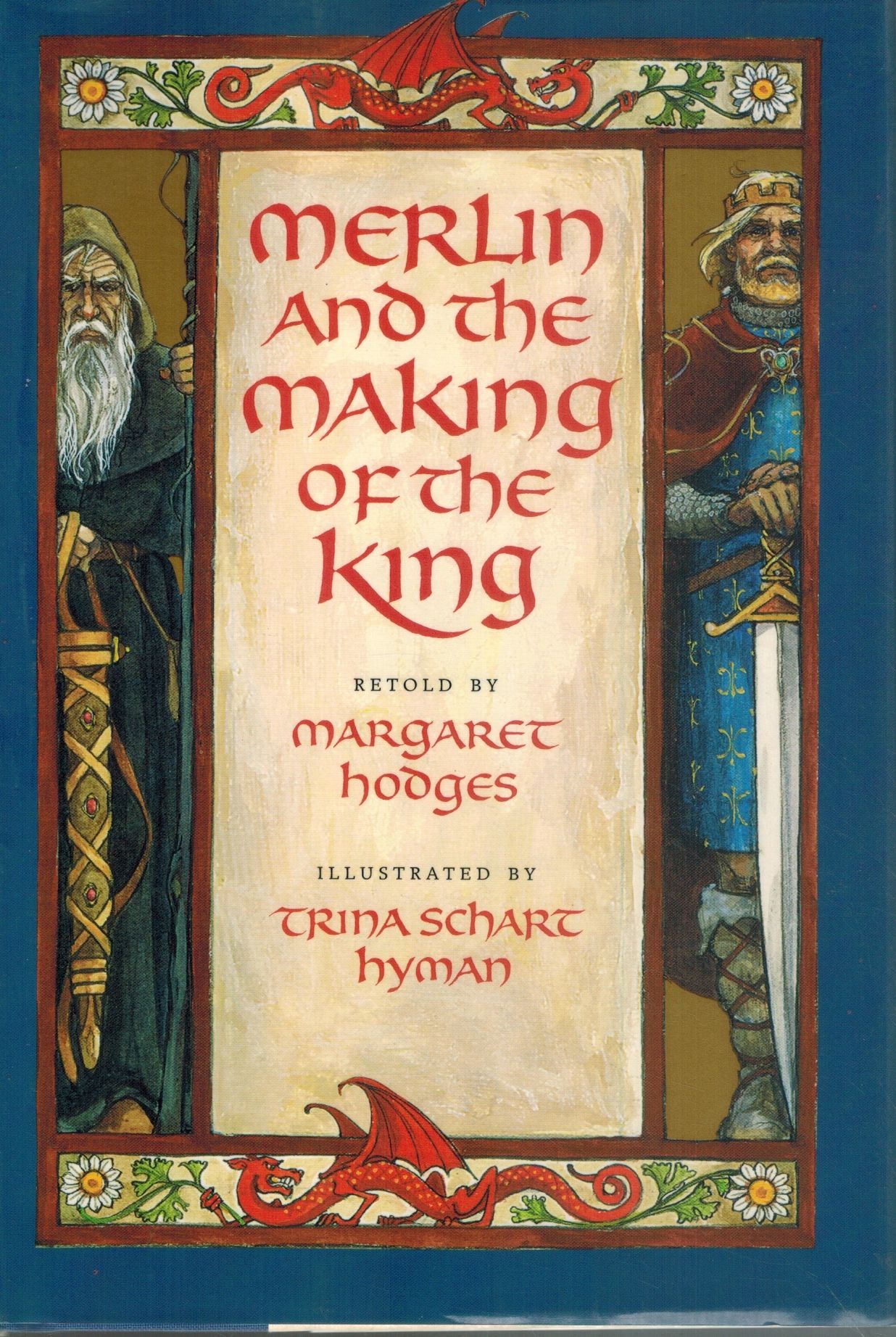
Merlin and the Making of the King, retold by Margaret Hodges, illustrated by Trina Schart Hyman

The book is actually an easy reader. There is an illustration about every 2 to 3 pages. The illustrations are appropriate to the text and medium.

Similar to Hodge's and Hyman's St. George and the Dragon, the pages and illustrations use borders reminiscent of medieval manuscripts. The text is straight-forward. I'm not overly fond of Malory's version of King Arthur; Hodges does a decent job honing in on the salient points without cloaking the darker aspects.

There are fewer opportunities for Hyman's dragons and other fierce beasts. (Hodges and Hyman may have won the Caldecott Medal for St. George on the strength of the dragon alone--see below.) However, the images run from quiet settings to red-sky conflict to Arthur's death.  The result is a lush production that holds together rather than an uneven production that comes off as cobbled together.

One fascinating point about Hyman is that although she sticks to Celts and Anglo-Saxons in her books with Hodges, in later ones, her cast of characters are far more heterogeneous. I quite like it. I should mention that I do think that people who wanted the live-action Little Mermaid to be the Little Mermaid they knew from the animated feature had valid artistic reasons for their opinion: visualization is a huge part of art. 

However, I think fairy tales and folk tales are about trying out stories in different ways, from strict retellings to fantastical/surreal approaches to "how about" experiments. My position isn't political. I've felt this way from the moment I started experimenting with fairy tale roles as a kid. When I was a teen, I saw a outdoor production of Romeo & Juliet with my family. The Juliet was Asian; her parents very much weren't. The lack of continuity bothered people in my family entirely for continuity reasons. I didn't care. At all. (I didn't think it was jarring; I didn't think it was forward-thinking. I really didn't care.) She was Juliet because the program said so and that's how her character behaved. I'd figure out the backstory myself later.  

My open-mindedness here goes both ways. So, yes, I think white people can play Asian characters and vice versa.

Picture Books: Z is for Zippy Zion

Gene Zion with illustrator Margaret Bloy Graham produced the Harry dog books, as in Harry, the Dirty Dog. 

I remembered the book. Rereading it didn't bring back any feelings of nostalgia. It's cute, and Harry is very doggy. But I don't remember the book being a favorite. I simply remember it existing.

What I did think about was how the machinations of dogs flow through our culture, rather like Godfather jokes, only somewhat more relatable.

Take the Marmaduke jokes in Monk. Monk loves Marmaduke and even starts an interview with a Marmaduke joke. 

In appreciation of the prolific nature of dogs, here are a few more picture books about dogs (A-Z), some by previous names on the list:

  • Shark Dog by Ged Adamson
  • Madeline's Rescue by Ludwig Bemelmans
  • Why Dogs Are Better Than Kids by Jennifer Berman
  • Pig the Pug by Aaron Blabey
  • Clifford the Big Red Dog by Norman Bridwell
  • Doggies by Sandra Boynton
  • Dr. Dog by Babette Cole
  • Not Afraid of Dogs by Susanna Pitzer, illustrated by Larry Day
  • Go, Dog, Go by P.D. Eastman
  • Bark, George by Jules Feiffer
  • Nothing at All by Wanda Gag
  • Dog on a Frog by Kes Gray
  • Snow Dog, Go Dog by Deborah Heiligman
  • Spot books by Eric Hill
  • Black & White by Dahlov Ipcar
  • The Most Obedient Dog in the World by Anita Jeram
  • Whistle for Willie by Ezra John Keats
  • Give the Dog a Bone by Steven Kellogg
  • Noodle by Munro Leaf
  • A Boy, a Dog, and Frog by Mercer Mayer
  • If You Give a Dog a Donut by Laura Numeroff
  • The Church Mice and the Ring by Graham Oakley (which showcases a dog)
  • Bill Peet is responsible for 101 Dalmatians
  • Old Mother Hubbard's Dog Takes Up Sport by John Yeoman, illustrated by Quentin Blake
  • Pretzel by Margaret Rey
  • Bone Dog by Eric Rohmann
  • Frank and Laverne by Dave Whamod and Jennifer Stokes, illustrations by Dave Whamod
  • Corgiville Fair by Tasha Tudor
  • Hachiko by Pamela Turner
  • Walking with Katy by Fran Ulmer
  • Dogs by Matthew Van Fleet, a novelty book (I own the cat version) 
  • The exceptionally odd William Wegman books
  • 100 Dogs by William Waite
  • A Dog Named Doug by Karma Wilson
  • Getting A Dog: Tips & Tricks by Sophia Xu, et al. 
  • Dog Loves Books by Louise Yates
  • Interrupting Cow: New Tricks for the Old Dog by Jane Yolen
  • Harry, the Dirty Dog by Gene Zion

and, because I'm a cat person...

  • Bad Dog by Mike Boldt 


Picture Books: Y is for Jolly Jane Yolen

Jane Yolen will likely come up again when I tackle the next A-Z list, Books Based on Fairy Tales. 

This time around, I concentrated on her non-fantasy/non-fairy tales (technically).

She has a series of books with illustrator Mark Teague, How Do Dinosaurs...

They fall into the Bernstein Bears genre. Dinosaurs get mad, learn to share, memorize colors and numbers, go to school, celebrate holidays...

They are completely amusing. Like any good children's series, the books spend more time on the set-up than the pay-off.

For instance, in How Do Dinosaurs Show Good Manners, the text lists all the ways dinosaurs can misbehave, including, "Does she yell and toss books off the library shelf/then grab all the dinosaur books for herself?" 

"No, dinosaurs don't," the text informs us primly. But the primness is completely undermined by pictures of very large reptiles showing people the door and vacuuming. 

It's like Victorian tales for Good Children told with a serious purpose and...

The tongue planted firmly in the cheek.   

The picture with the appalled-looking cat comes from How Do Dinosaurs Say I'm Mad?  

They shouldn't throw things at the cat! (Or slap people.)