Showing posts with label Religion. Show all posts

A-Z Characters & Transformation: Jean Valjean

Jean Valjean is one of the best known transformed characters for my generation...and not because we read the book. The reason is the 10th Anniversary Concert.

The 10th Anniversary Concert fully deserves all the praise it gets--in fact, I prefer that type of "musical" to the full stage production. I also consider Colm Wilkinson to be one of the best Valjeans on record. 

In the book and in the concert, Jean Valjean, an escaped convict, steals from a bishop. The bishop not only forgives him but gives him voluntarily the candlesticks that Valjean stole. After this event, Valjean is a changed man. He saves Fontine, saves Cosette, saves Marius. And his change is more than surface deep. He isn't doing good things on a checklist. He has become a certain type of man. 

This inner change is demonstrated, interestingly enough, when he refuses to abandon Marius when confronted by Javert. That is, he places his obligation to a fellow human above his obligation to Javert. In the book, he is somewhat more respectful but since he has already let Javert go once, he has gained a kind of ascendancy with Javert that Javert, as the ending proves, does not understand.   


My question was: Could the man undergo such a change? 

I posed the same question with Scrooge. Valjean is infinitely more believable, in part because of the timeframe. Valjean may not have changed all at once. He saves Cosette and spends a lifetime doing good--all leading up to the moment int he sewers with Javert. 

Still--he changes from one direction to another. 

In the musical, Valjean performs a soliloquy.  

What have I done? Sweet Jesus, what have I done?
Become a thief in the night, become a dog on the run
Have I fallen so far and is the hour so late
That nothing remains but the cry of my hate?
The cries in the dark that nobody hears
Here where I stand at the turning of the years

Nevertheless, I went to the book, at which point I became seriously impressed by the musical's writers. 

In the book, Valjean is stunned by the bishop's behavior. He ends up in a lane where he encounters a young boy from whom he inadvertently takes a sous--he also scares the lad. When he realizes what he has done, he is swamped with remorse. He tries to find the boy but fails. He then goes and prayers at the bishop's door. 

It's remarkable because it is small event--nothing as large as stealing a bishop's candlesticks. But it brings home to Valjean the type of person he has become. In other words, it echoes the lyrics. One can believe that this guy is fully aware of what it means to change, not at a superficial level (I simply won't get caught the next time!) or a rule level (Let's see: who can I get the most blessings from and how?) but at the human level (That boy didn't deserve to be scared.)

Shortly after the 10th anniversary special, every sermon at church seemed to make reference to Valjean, Valjean and the bishop, and so on. And honestly, the tribute is well-deserved and certainly preferable to people quoting from other people's sermons!  

A-Z Characters & Transformation: Ruth and Rahab, Radical External Change

My current A-Z List tackles characters who transform. I mention in my post about Kate from Taming of the Shrew, 

I use "transform" throughout this list from its narrowest to its broadest sense. That is, a character may transform internally or externally, for good or for bad, slightly or to an extreme, beneath a mask or without a mask. 

Ruth and Rahab from the Old Testament undergo external transformation. They also represent the point of view of Jews within the Jewish diaspora. As parts of what became the Old Testament were being collected, Jewish populations were debating various perspectives. Ruth and Rahab represent a particular position on marriage--namely, that marriage of "foreigners" is acceptable (Ezra represents an opposing position).

As transformative characters, Ruth and Rahab are remarkable. They don't simply change location and group identity--they do it in ways that leave a lasting impression. 

They make these changes without giving up their selves. Ruth debates Naomi (another powerhouse) kindly yet confidently. Rahab is utterly unapologetic. They are not even vaguely victims, despite desperate circumstances (dead husband, besieged city). They are level-headed women who make decisions and accept the consequences--in both cases while protecting others (mother-in-law, entire household). 

I wrote stories about both Ruth and Rahab, one sci-fi, one historical. These woman are tough enough to survive any context.  

1 Nephi: Scripture Reading from Reformation to Enlightenment

Bible literalism is a relatively late development in the production, collection, and canonization of scriptures. It popped up throughout the Middle Ages (and earlier), of course, but didn't take off until the eighteenth and nineteenth centuries.

The Reformation

Martin Luther was
quite argumentative.
Luther et al. challenged Rome's authority based on the belief that the scriptures were the only reliable source of God's truth. The matter was instantly made more complicated by not everyone understanding what the scriptures actually said (translations into everyday language were being made but not all translators had the same background in Greek, Hebrew, and Latin). Luther and Calvin believed that scripture was the ultimate authority--and were no more enthused than Catholic authorities at the variety of interpretations. 

The variety of interpretation happened anyway. For instance, some Protestants insisted on literalism regarding Christ's whereabouts ("right hand of God") while some insisted that the reference was only figurative. 

The Enlightenment

The Enlightenment—a highly varied movement itself—underscored the concept of a rational and reasonable deity. The associated assumptions have impacted everything from church organization to charity work to scripture reading. Many things we take for granted—such as forensics as evidence—are both older than the Enlightenment and were encouraged by the Enlightenment. (Theology, likewise, has always focused on producing a coherent explanation of God and God's acts.)

One of the Enlightenment's ideas was “evidential” religion, the idea that the natural world and rational argument could prove philosophical and, if necessary, religious truths. The idea influenced generations of believers, from literalists using the natural world and the Bible to prove the equivalent of Creationism to near-atheists using the natural world and Bible studies (coming out of Germany) to prove the non-existence of miracles. 

Not everyone was a fan of using the scriptures as proof. But "evidential" religion fit in with the Protestant Reformation's emphasis on going to the scriptures for proof. 

Nineteenth Century

In the nineteenth century, the Bible’s clarity was being challenged by aforementioned scholars. An increasing number of Protestants pointed out that Saint Paul was probably speaking hypothetically or metaphorically or specifically or historically when he spoke about “election.”

There were plenty of people in-between. Many religious believers honestly didn’t want to go in either direction. They didn’t want to discard rationality and evidence from the natural world—but why should that mean getting rid of the unseen, unknowable, and unprovable?

Since an understanding of quantum mechanics hadn’t yet shown up in the sciences, they had a point.

That is, many nineteenth-century religious communities were perfectly capable of rejecting the logical fallacy of either/or (one must either accept that all scriptural events are metaphors or one must accept that they are meant to mean exactly what a current translation argues in a one word=one definition sense without any room for debate or context). 

Nineteenth-century readers were also open to a third possibility: more revelations, more visions, more scriptures, and more to come. 

In 1 Nephi, Nephi defines the brass plates as "spoken by the mouth of all the holy prophets..delivered unto [the prophets] by the Spirit and power of God” rather than spoken by God...delivered as incontestable words. The prior phrase places the translator on the non-literal side of the argument with the addition of a possible compromise.  

God may not change. But that doesn't mean that humans fully understand the mind/nature of God--which, as in the Reformation--opens religion to endless interpretation. 

A-Z Characters & Transformation: The Ultimate Transformation Tale, Joseph of Old

Joseph of Old is the Old Testament's most complete epic. One of its most endearing qualities is that it embodies--in a way that few epics do other than the Epic of Gilgamesh--change, even transformation. 

The transformation is not only external but internal; not only directly stated but implied. 

Externally, Joseph himself transforms from farmer to urbanite powerbroker. 

Internally, his oldest brothers transform from envious to repentant. The change is focused not on the oldest son but on Judah (which explains the odd little tale of Judah and the prostitute in the middle of the epic). It is Judah who offers himself in Benjamin's place. 

Joseph transforms internally from distrust to trust. He embraces his brothers, implying forgiveness. After Jacob's death, he assures the brothers that his forgiveness goes beyond filial obedience. He will not take revenge on them at any time. 

It's a remarkable story and lends itself to endless interpretations around a coherent whole. The first "fan fiction" I ever wrote was about Joseph. The computer ate the document, and I never tried to start over. I realized that I didn't have much to add (beyond Mann and Andrew Lloyd Weber) since I think the original holds up fairly well. Unlike with various fairy tales, I didn't think a "true" version was lurking underneath.

The tale Of Joseph stands quite well without "fixes." There's a reason great epics last with so much intact! 

I recommend the Genesis Project/New Media version:    

Part 1 

Part 2 

Part 3 

Part 4 

Part 5 

Give Characters Jobs: Clergy

Speaking of religion...I mention in an earlier post that Jessica Fletcher's job of writer--which gives her a reason to travel around the country and make contacts in settings as diverse as higher academe, the theater, and stockbrokers' offices--is a great boon to a mystery series.

One role that supposedly lends itself to equally diverse settings is clergy

There are several priest and nun detectives in books and shows: Brother Cadfael, Father Brown, Father Dowling, the clergy from Grantchester. 

In truth, I find them a little less believable than Jessica Fletcher. As Dorothy Sayers points out in Nine Tailors, a clergyman who is doing his job, like Venables, is somewhat too busy visiting parishioners and burying people and training/rehearsing the choir/bell-ringers and making emergency preparations and writing sermons and running festivities and keeping in contact with soldiers, sailors, and missionaries, taking care of the church itself and handling issues that are often resolved, these days, by outside agencies...to run around solving mysteries. 

However, doing all the above IS the reason that the clergyman has so many opportunities to ask questions! 

I rather think the Brits manage their mystery-solving clergy better. Father Dowling always puzzled me since so many of the cases end up being gang/mafia-related. Granted, a few decent clergy members in The Closer deal with gangs. They run up against Brenda as they try to deal honestly with the police and protect their parishioners and do right by specific gang members. But again, they are way too busy dealing with those complicated issues to also run an investigation. 

The Brits produce clergy, like Father Brown, who operate as freelancing members of the community. That is, they occupy positions which allow them to stand in and outside the community. (Cadfael, for instance, is a monk who must live by the Order's rules but his work as an apothecary gives him more freedom than his peers.) Since they also tend to live in  villages, their involvement in any event--while implying as large a death toll as Cabot Cove--is instantly excusable. 

My favorite such detective, of course, is the delightful Sister Boniface, played by the delightful Lorna Watson. Her forensic specialty makes her a consultant for the laidback police. The demands of village life bring her into contact with a variety of people, including visitors. The show also doesn't bother to excuse the number of murders. It's England! And there's a lack of angst (unlike early Midsomer Murders, which seasons made me roll my eyes: I mean, come on, talk about angst based on contrived situations!). 

Sister Boniface is simply a ton of fun.     

A-Z Characters & Transformation NOT: Deacon, The Ultimate Sinner

In my current list about characters who transform, I define "transformation" by discussing who I don't include. 

The character here--Deacon from Nine Tailors by Dorothy Sayers--is a great example of character who never transforms.  

Nine Tailors is often considered to be Sayers's best mystery. It has a complicated enough plot that even if one knows some of the background, the mystery remains (What happened to Deacon? Who exactly did the burying of the body in the graveyard?). Moreover, the plot, though complicated, does not rely on implausible time tables (Sayers did a time table mystery with Red Herrings). 

Best of all, the characters are clear and consistent. 

Deacon is one of Sayers's most vile villains, but he isn't serial-killer vile. Rather, he is like someone who belongs in Dante's Inferno, a work that Sayers would translate in the 1940s. 

Deacon's sins not only lead to him hurting others. He ends up leading a far more horrible life than he could have led otherwise--and keeps digging himself in deeper.  

*Spoilers.*  

He engineers the initial theft, then dupes his co-conspirator. He escapes from prison, then kills a soldier and ends up unwittingly on the front. He returns to England much later, then gets recognized. He was going to be returned to France, then ends up in a belfry, where he is killed by the bells. 

That is, like sinners in Dante, Deacon mires himself deeper and deeper in sludge. He is not stupid. He is venial and short-sighted. The short-sightedness is exactly that of a clever man who is always convinced that a better plan is around the corner. He cannot see beyond the sludge. 

Sayers and C.S. Lewis and Dante (and Joseph Smith) resolve the problem of faith and works in a similar way. Grace is freely and constantly offered. Another life, another choice, another direction. The inability to take that grace is directly linked to what the person wants.

None of them argue that bad things don't happen to good people--or, for that matter, that an entirely indifferent awful (a volcano is a fairly indifferent thing) won't happen to good people. Rather, they argue that people create the personal and mental worlds that they then inhabit

In Dante's Inferno, the dead spend more time thinking up excuses and attacking each other (and castigating Virgil and Dante) than in making choices. In fact, in Dante's universe, they can no longer make choices. They have talked themselves into dead ends. They have decided the universe offers nothing but the rage or gluttony or treachery that they have invested themselves in. 

Likewise, Deacon never stops trying to figure out his next "easy" solution. (I'm reminded of research that shows that drug dealers actually pay less than minimum wage to their workers.) The "easy" solution for Deacon is an endless round of misery, not just to others but to himself. 

Deacon ends up in a literal corner. And the community, through the bells, takes revenge. 

In the book, the inscription for the main bell reads,
NINE TAYLERS MAKE A MANNE – 
IN CHRIST IS DETH ATT END IN ADAM YAT BEGANNE

The Storytelling Worth of Sayers's Translation of Dante

Dante's Divine Comedy is written in terza rima. Apparently, one isn't supposed to be able to translate terza rima from Italian to English (even though people have). The problems are understandable. Trying to find a word that captures the same meaning, allusions, and rhyme/rhythm between translations is an exercise in skill and imagination. 

Several scholars of Dante have consequently poured scorn on the idea and for reasons I don't entirely want to guess at, Dorothy Sayers comes in for a great deal of condescending tut-tutting. What was she thinking? Silly woman! The result is so hackneyed and Victorian. My, my, my

Before I continue, I must mention that Robert Pinsky used terza rima in his celebrated translation of The Inferno. 

I think the criticisms of Sayer are entirely bogus. 

Sayers's Divine Comedy translation (the final book, Paradise, was finished by Barbara Reynolds after Sayers's death) was the first time I encountered Dante. I read this particular translation in part because I was already familiar with Sayers from her murder mysteries. I also chose Sayers because I liked her commentary. 

I recently reread Sayers's translation of The Inferno alongside a prose public domain translation. I found myself going back to Sayers' translation again and again. 

What strikes me about Sayers's translation is the following:

1. It MOVES. 

It doesn't lag or get bogged down in "oh, my, aren't we being special with our free verse" posturing (as quite a number of current translations do). It gallops along. The first time I read it, I READ IT. I didn't pause to bask in Great Literature. 

I will grant that the terza rima takes getting used to--but no more than nineteenth century prose or manga layouts. 

2. Sayers captures the story. 

The first time through, I probably understood about 1/2 of the allusions--okay, I'll be honest: maybe 1/4. I didn't, at the time, know anything about Ghibellines and Guelphs. As other fans have pointed out, it doesn't much matter. Dante's narrator (Dante himself presumably) is on a wild ride of an adventure through the cosmos of good and evil. 

3. Sayers captures Dante's own flexibility with language. 

One translator I read sniffily criticized Sayers's "cliches." What I read of Dante by that translator was profoundly dull. As Sayers correctly points out, Dante used whatever worked. Like Tolkien with his writing, he used "high" courtly language when it suited his purpose; joking language; platitudes and cliches; intellectual language; everyday language...

Sayers ruefully comments that unless one reads Dante in Italian, one struggles to fully appreciate his versatile use of anything that came to hand, from expletives to poetry. Thinking "he's Art; his depth must be honored with lyical cadences" is to miss that The Divine Comedy has been continuously popular from its inception for its own sake. It vividly communicates.  

4. Sayers captures the imagery of Dante. 

Two scenes stand out: 

The lowest point of hell in The Inferno is those who have betrayed God and fellow citizens: Judas, Brutus,and Cassius are endlessly devoured by Lucifer. 

The next lowest point of hell is frauds. In one of the most vividly disgusting images in The Inferno, thieves (who come across here as grifters) constantly  turn into each other:

There darted up a great

Six-legged worm and leapt with all its claws

On one [of the thieves] from in front and seized him straight, 

Clasping his middle with its middle paws.

Along his arms, it made its fore-paws reach

And clenched its teeth tightly in his jaw; 

Hind-legs to thighs it fastened, each to each, 

And after, thrust its tail between the two,

Up-bent upon his loins behind the breech.

Ivy to oak so rooted never grew 

As limb by limb that monstrous beast obscene 

Cling him about, and closer and closer drew,

Till like hot wax they stuck. And melting in

Their tints began to mingle and to run, 

And neither seemed to be what it had been.

Two heads already had become one head,

We saw two faces fuse themselves and weld... 

 Yuck! Don't tell me horror began with the twentieth century! 

In contrast, Sayers's Purgatory supplies one of the sweetest images of rest from trial I've ever encountered in a book. Dante and Virgil are laboring up Purgatory's mountain. They stop in a valley protected by an angel. 

We'd not gone far when I perceived a place

Scooped, so to call it, from the sloping lawn,

As valleys here scoop out a mountain's face. 

A winding path, not level but not steep, 

Led us to where the rising hill-spurs lose 

Half of their height along the valley's lip. 

Here nature had not only plied her paints, 

But had distilled, unnameable, unknown, 

The mingled sweetness of a thousand scents. 

Now - in the hour that melts with homesick hearing

The hearts of seafarers who've had to say

Farewell to those they love, that very morning--

Hour when the new-made pilgrim on his way

Feels a sweet pang go through him, if he hears

Far chimes that seem to knell the dying day - 

The quiet of the image, the frankly campground feel to it--familiar and comfy yet transcendent at the same time--all of it brings home to me that for Dante, as for Sayers, the cosmos was steeped in physical reality.  

Sayers is a unique translator because her desire to convey the essence and feel and excitement of Dante appears to be larger, by far, than her ego as a translator.  

Joseph of Old: So Many Versions!

I keep moving this post around. To what author should Joseph of Old be assigned? 

I decided to assign him to "Mann" for Thomas Mann, who wrote Joseph and His Brothers and Joseph in Egypt

Joseph's story from the Old Testament is a fantastic one! It is one of the most intact of the narratives in Genesis and is considered by some scholars to be the Bible's Odyssey or Iliad: a seminal piece of literature that has been told and retold.

There are numerous media retellings out there. When I was growing up I adored a recording one of my brothers owned [borrowed] of Webber's Joseph and the Amazing Technicolor Dream Coat. I knew all the lyrics to every song. I saw the musical as teenager and naturally watched the Donny Osmond version.

I later watched a non-musical version with Ben Kingsley and Paul Mercurio. However, my favorite is the New Media Genesis Project version. Films associated with the project came out in the 1980s: Bible stories in which a narrator in English relays the story as the actors speak in Aramaic and other languages. One reason I like their Joseph interpretation is that the final scene isn't a joke. 

I do love the musical but the serious confrontation between Joseph and the Brothers--the building of tensions as Benjamin is accused of theft--turns into a calypso song, which irritates me. I don't care if people want to sing about famine--and I own the hilarious Quentin Blake book of the musical, full of skinny cows.

But the final set of scenes deserves something other than a joke. Joseph has reason to be uncertain of his father's survival, Benjamin's survival, and how his brothers will react to his reappearance. He is battling with lingering anger and uncertainty and the rationality that comes with age and forgiveness. He is a fully fleshed-out human being. Very relatable! 

There's a reason the tale lasted and got collected.  

Despise not caring for that scene, the Donny Osmond version that mixes the classroom with action and presents a delightful narrator is worth watching--one can see why Donny Osmond was such a hit!


Morality in America: Spike & Dexter

Repost from 2008

In P.J. O'Rourke's commentary on Adam Smith's The Wealth of Nations. O'Rourke refers to a prior work by Adam Smith, The Theory of Moral Sentiments, where Smith expounds on morality: what it is, how it works. According to O'Rourke, it is difficult to understand The Wealth of Nations without understanding The Theory of Moral Sentiments; Smith's arguments in Wealth largely rest on accepting the truth that human beings are ultimately self-interested, even if they shouldn't be. Socialism doesn't fail (massively) because it is inherently evil; it fails because it doesn't take human nature into consideration (but, rather, tries to wish it away).

Rereading O'Rourke reading Wealth led me to musing on the nature of morality. Morality, to an extent, is something people can't see or label. It is either a mass of action (that is, it is quantifiable only over time) or a state of mind (there is a third option, which I will get to later). In other words, although morality results in observable behaviors, it is rooted in something that is beyond observation--Smith, for example, believed it is rooted in imagination, the ability of humans (unlike animals) to empathize, to imagine another state of being from their own.

To be extremely general, morality in our culture is rooted in law or in thought. In Dexter (specifically, the first season), morality is imposed on Dexter externally: the law of Harry (his foster father). Dexter does not feel, or claims not to feel, a sense of right and wrong (the character is complex enough to make this issue somewhat debatable), but he has enough self-preservation and respect to follow his foster father's external law. The accumulation of Dexter's actions make him a moral person (i.e., it is not the randomness of his actions but the totality of his actions that matter: observable behaviors over time form the abstract claim, This man is moral).

Spike from Buffy Seasons 4-6 (that is, Spike post-chip/pre-soul) also has an external law that prevents him from killing humans (Spike is a vampire). I personally think more could have been done with this issue. However, Whedon and the Buffy writers chose instead to argue the second root of morality: no matter how good Spike behaves, he is never moral because he never feels moral. He is displaying positive moral behavior against his will.

This perception of morality has its roots, I think, in religious discourse, but it has spread through our culture to become a kind of emotional absolute. The religious claim states that a person who accepts certain laws or ethical obligations will be motivated to make moral choices. After all, external forces only work so far. A society where people did not feel any desire to do good would destroy itself fairly rapidly.

Unfortunately, that claim has morphed to mean, If I feel good, I must BE good, which, as Adam Smith would have pointed out, can get entirely abstract and self-referential--which is why law and college instructors ask for evidence in essays, not just confessions. (Which doesn't negate the need for, say, students to feel personally motivated to do well.)

Spike & Dexter can't be separated since both concepts of morality are necessary, and used, in our society. And since both cannot be applied in all contexts, knowing how they work could help people determine how they should be applied, socially-speaking.

Allowing for both moral approaches brings me to a third concept of morality, which is more abstract and yet more grounded--morality is choice. A choice can sometimes occur over several days, weeks, or months. On the other hand, it can also be made in an instant. In both cases, it happens in time and is purely mental. We can't see it; we only know what results from it. Yet it does produce results. 

Morality as choice brings the two other concepts into harmony. It allows people to distinguish between unintended morality (which is still beneficial to society) and intended morality (which is necessary for our own moral growth). For instance, I would argue that post-chip/pre-soul Spike exhibits intended morality when he refuses to help Gloria and gives up Dawn. He is motivated by his love for Buffy rather than by an internal code of ethics, but he makes a choice--he uses imagination or empathy to place himself in Buffy's shoes.

In the first season of Dexter, I would argue that Dexter's morality is proved at the very end of the first season when he chooses his sister over his brother--he chooses to obey the law of Harry rather than thwart it.

But, of course, that immediately begs the question, Was Dexter NOT behaving morally before when he kept the law of Harry? Well, yes, he was, so . . .

This is why I'm not a philosopher. I'll let O'Rourke, paraphrasing Smith, have the last word:

Adam Smith did not think we are innately good any more than he thought we are innately rich. But he thought we are endowed with the imaginative capacity to be both, if we're free to make the necessary efforts.

Babette's Feast & Infinite Grace

Babette's Feast is an astonishing movie. 

It praises the desire of the true artist to create and, moreover, to reach an audience with that creation: "Through all the world there goes one long cry of the artist: Give me leave to do my utmost."

The movie itself is great art--without being message-loaded or heavy-handed with its themes. 

One major theme is grace, as interpreted by the general--and Martine.

Years ago, the general visited the tiny community, which is comprised of a Calvinist sect and other community members, such as the postmaster/store owner. At the time, the general, Lorens, was a young lieutenant waffling through life. During his visit, he met Martine and fell in love. Yet he was perceptive enough to realize that marriage was more or less out of the question. He returned to court, married a lady-in-waiting, and took his place on the world stage to become a general. 

Years later, he is visiting his aunt, a wealthy woman and patron of the tiny sect. He determines to revisit the group on the birthday of the now-deceased minister, the father of Martine and her sister Philippa. He wants to see if he made the right choice so many years before. 

Unknown to him, Martine and Philippa took in a Frenchwoman, Babette, years earlier when Babette's family was killed during uprisings in Paris in the 1870s. When Babette wins a lottery, she requests the opportunity to prepare a "real French dinner" for the deceased minister's birthday. The sisters don't realize until later that Babette spent all the lottery money (10,000 francs) on the meal (converting historical money is practically impossible but the meal she creates for 12 people is well over $5,000).

From a writing point of view, having the general at the feast provides the viewpoint of an "insider," a connoisseur who knows the value of the wine and caviar, etc. that Babette presents. 

His presence provides a thematic purpose as well. Although Martine is a good religious woman, full of piety as well as fears that the meal will corrupt her deceased father's flock, she is still human and mortal. Although she might dismiss such vain thoughts, having an ex-suitor show up for a simple dinner and coffee would be humiliating. Maybe she shouldn't feel that way, but I dare any person with an ex-lover/suitor/somebody not to feel that way. 

Likewise, if the general had shown up to a simple dinner in a comparative hovel, he likely would have left as conflicted as when he arrived. Should he have abandoned worldly pursuits for a simple life? Wasn't his choice better? Maybe not, but borderline poverty is truly not that attractive. So what did he waste his life on instead? Social climbing? Were there no good options? 

Instead, the general is fed a sumptuous dinner surrounded by simple folk who treat the whole thing as commonplace (to avoid embarrassing the sisters). He is delighted, buoyed up. He brings his worldly knowledge to the banquet, but his worldly knowledge never descends into social posturing. Instead, his approach to the meal inspires others. He focuses on the food, on the company, on the experience. (He also gives Babette a chance to satisfy not only the women she loves and the villagers she cares for but a man who recognizes the brilliance of her creations.)

At the end of the meal, he gives a remarkable speech in which he declares, "Grace is infinite." He came expecting to perform a bargain with his past self. Instead, he concludes "that which is chosen is granted us, and that which we have refused is also and at the same time granted us." The impossible is possible. 

Before he leaves, he declares his love to Martine again--to which she responds. They aren't going to marry, but neither is their love the love of saints or artists (those loves are tackled in the film too). Their love is the romance of lovers, and it is part of all life, all heaven. Why shouldn't it exist as well? 

This is the grace of a God I gladly believe in.  

Current-Day Literalism: The Accusation of Antinomianism Never Dies

On Papers, I write about certain tendencies in our culture that, these days, arise often from the left. I stress, however, that I've encountered many of these trends in my relatively conservative church. That is, the right bears responsibility.

Those trends include the following:
 
1. Doomsdaying: the end of times is nigh, right now, right around the corner!
 
2. Body versus spirit: the body is sinful and disgusting and utterly malleable (it can be hacked up) while the spirit--the true "I"--is noble and free and sinless.
 
3. Conflation of "know" and "believe" so that debatable claims become entirely undebatable.
 
4. Lack of context, not only for historical events but for current statements--hence Coleman Hughes's difficulty in explaining the not difficult concept of "reasonable doubt" to offended pundits.
 
5. Utopia as the immediate end goal: WE will get you into heaven (or what constitutes heaven).
 
I am adding a sixth:
 
6. Literalism.
 
The bravest woman in the universe, J.K. Rowling praised the book Lolita at one point for being a well-written masterpiece. I don't care for the book myself but lots of people enjoy books I don't care for. However, in the world of "I'm not safe until others conform," apparently a bunch of "youths" have gotten all freaked out. How dare she!
 
Kat Rosenfield from The Free Press describes these youths as "utterly confounded not just by the difference between depiction and endorsement but by the expression of any thought that contains two or more moving parts."

Rosenfield's quote reminded me of a fantastic quote from Andrew Doyle's The New Puritans:
 
Good criticism, on the other hand, is able to balance the subjectivity of personal temperament with the objectivity of professional experience. To put it another way, a critic who is offended is unlikely to offer much in the way of insight. According to Vyvyan Holland, Oscar Wilde's second son, his father's novel, The Picture of Dorian Gray (1890), was universally condemned by critics on the basis that it was 'prurient, immoral, vicious, coarse, and crude'. When the novel was republished, Wilde added a preface as a form of rebuttal, which should be required reading for all critics today. In it, he explains that vice and virtue are simply 'materials' for artists, reminding us that the depiction of immorality is not necessarily an endorsement of such behavior. Even if it were, why should it matter? 'There is no such thing as a moral or an immoral book,' Wilde proclaims. 'Books are well written, or badly written. That is all.' (my emphasis)
 
The inability to separate "that book states that/that person states that" from "how horrible is that book/person!" has a long history that likely goes back to the beginnings of speech, maybe earlier. In my research on religious concepts in early American history, I have encountered the term "antinomian" again and again and again. Although there were actual Antinomians, the terms was generally used as an attack word (rather like "fascist" these days and making that point does not mean I favor fascism). "Antinomian" was used against theologians/religious groups that apparently had a flexible morality.
 
What is so fascinating is that term had almost nothing to do with how God actually might operate.
 
So if some Calvinists argued for unconditional election, the response was "but you're letting sinners off the hook--they will carry out numerous degenerate and bad acts because they are already saved. Antinomians!" 
 
And if the Methodists argued for universal salvation, the response was "but if everyone is saved, what kind of community are you promoting? What will you end up accepting? Thin end of the wedge! Antinomians!" 
 
If one responded, "We are talking about God. Can't God save people however God wants?" the response (post-Enlightenment) would be "but God is reasonable!" 
 
And if one responded, "Why does God have to be reasonable? I mean, yes, I like the idea, but who are you to tell God what to be?" the response would be...
"Antinomian!" 
 
That is, the human condition seems to entail entire groups of people who perceive any statement not in terms of its topic, its arguments, its context, its ability to generate ideas and lead to contemplation but as a moral argument that indicates not only the future morality of the human race but the actual morality of the person who dared say it.
 
It's very hard to talk about just-stuff with people these days.

What About Religion?
 
As I mention in the longer post, I have encountered the above listed positions/behaviors at church--though, in fairness, the church of my childhood was LESS PRONE to 6. Debate without an automatic moral indictment was not unusual.
 
By the time I hit my 20s, however, I was encountering "if you said that, you must be implying that you are morally like this" alongside arguments praising relativistic emotion-laden reactions to scripture. It was all very ironic (in fairness, the Calvinists had the same difficulty resolving the tension between "proper" trained responses and idiosyncratic responses). At one point, a Sunday School teacher tutted my mother not for the content of her statement but for making it in the first place (and yes, he had a label ready).
 
As in the longer post, I address why religions have some justification for the behaviors I've listed. Regarding literalism and accusations of antinomianism, religion is to a degree focused on moral codes. My entirely personal view is that the purpose of a religion is to aid humans in getting closer to god/gods/God. The purpose of religion, in other words, is NOT to get people into heaven (and yes, one can believe in heaven and still believe that heaven is God's territory, not the territory of mortal institutions). 
 
But history is filled with many thoughtful theologians who would question my position (and theologians who would agree with me). In the nineteenth century in America especially (post-1776), religion as the training ground for citizens of a relatively free society was something of a given. Whether or not it worked--since plenty of people went on believing whatever they wanted--is debatable. But preparing people to be well-behaved social creatures was perceived as one of religion's purposes.
 
Unfortunately for religion (and current-day conversations), within that mindset, theology often becomes not what God is/does but what God OUGHT to be/do:
 
God (utopia, the "right side of history," righteousness) in our pocket.
 
I'm not a fan of that mindset. 

My point here, however, is that both the right and left (all human beings really) need to take responsibility for the tendency to equate "you pointed that out" with "that means you are morally degenerate" and desist in order for conversations to actual be about things themselves.

You know, in order for conversations to be actually interesting. 
 

History is Written by the Winners...No, It Isn't

I recently posted about Xenophon. The time period fascinates me in part because it is such a short period, 546 B.C.E. to 404 B.C.E. (Dr. Hale extends the time period beyond the end of the Peloponnesian War). This is the time in which Greek democracy developed and then fell apart. 

In fact, the democracy part lasted only about 50 years--but consider what came out of that time period! Greek "freedom" (free by the standards of the ancient world) faces off against Persian imperialism and kicks its butt;  Herodotus shows up (before everything falls apart) and sets the standard for researching history; a whole bunch of playwrights do their stuff and they are remembered (even when their texts vanish); a number of philosophers propound on the purpose and material of life before Socrates (Socrates is part of the failing system). 
 
During this time, names and ideas and hypotheses rose to prominence--names and ideas and hypotheses that made such an impression, people recorded their thoughts about those names and ideas and hypotheses, which records lasted (in part)...till now.
 
Here's the reality, though. The most amazing experiment of the ancient world failed. It wasn't the Persians who wiped it out but the Macedonians, specifically Alexander the Great. And then the Romans came along. 
 
Actually, one could argue that Athenian democracy failed due to its own overreaching. In any case, it didn't last.
 
And yet: Pericles. Xenophon. Herodotus. Euripides. Sophocles. Thucydides. Hydna. Aspasia. Socrates. 
 
Pieces of writing did survive, but NOT because the system their authors thrived in won. They survived because people saved the tomes and manuscripts and bits and pieces. 
 
The same is true of Paul's letters. At the time he wrote them, he wasn't a winner, and Christians were a barely acknowledged group. For that matter, Christianity was still twinned with Judaism, and the Romans were about to inflict a devastating blow on Judea. Circa 70 C.E., many Christians and Jews could be excused for believing that their world was at its end.
 
And yet, the letters survived. Jewish writings from the time survived. People saved those writings
 
I think the point here is the important one: what survives is what people save. I suspect that the missing letter of Paul's to the Corinthians didn't survive because it was just Paul being pissed off and lecturing people. But the letters where he suddenly went off-topic and talked about God and Christ and human purpose: 
 
THOSE letters people saved.  
 
The nobler efforts of Athenian democracy were also saved.
 

Historical Insights: Thoughts on Asceticism

With Constantine's conversion, the Romans stopped persecuting Christians--in sum, being Christian became easier.

And Christians got worried. Without martyrdom, how does one show one's profound feelings to God or about God?
 
Asceticism and celibacy arrived, set in motion--to an extent--by a chap named Antony who became the first well-known hermit of the Christian experience. 
 
Asceticism and celibacy existed beforehand, of course, including in the pagan world, but Antony accrued celebrity status, especially once someone published a kind of "Life of a Saint" about him (not by his choice, in all fairness).
 
And then everybody wanted to be an ascetic celibate! (Not really--without ordinary families doing their thing, no social order can survive.)
 
But here is where the ongoing tension within human nature makes itself felt because Antony's whole point, and much of the thought behind asceticism and celibacy, was to get back to something "real" or "authentic"--to worship God in a pure, hippie, non-corporate, sacrificial kind of way. 
 
Except groups of monks living together almost immediately became (1) regulated; (2) wealthy. They gained oblates (young children given to monasteries) who liked the not-starving-to-death aspect of abbey life but found asceticism rather tiresome. 
 
I personally find the whole thing rather tiresome. Life is hard enough--getting up, going to work, being safe, being kind, all while remembering God and adhering to principles: all that is hard enough. Why complicate it with desert living?
 
I also consider asceticism a worldly reaction rather than a virtuous one. Without the constant compromises of mortal life and the needs of the mortal body, the spirit becomes a self-satisfied, pride-ridden, abstracted notion--
 
And a review of history will reveal what happens when self-satisfied, pride-ridden, abstracted notions take over a society: Witch Trials, elitism, Reigns of Terror, genocides, the unhealthy and unlikable practices of judging a person's inherent morality, rather than a person's outward lawfulness, the former based on supposedly seamless conjectural ideologies and pigeon-holing labels.
 
Yeah, not exactly religious or spiritual. 
 
For all their faults, the Renaissance artists were nonetheless closer to the mark: God is more, not less.
 

Historical Insights: Elites Are Frightened People

Every civilization, government, country, empire struggles between "every individual for itself" anarchy and tyrannic legalism.

Part of that push and pull involves a priestly caste that insists on increasingly complex rules (and terminology) that only the priestly class can carry out (or remember) until they have "a stranglehold on religious affairs, further elevating their status" (Aldrete).
 
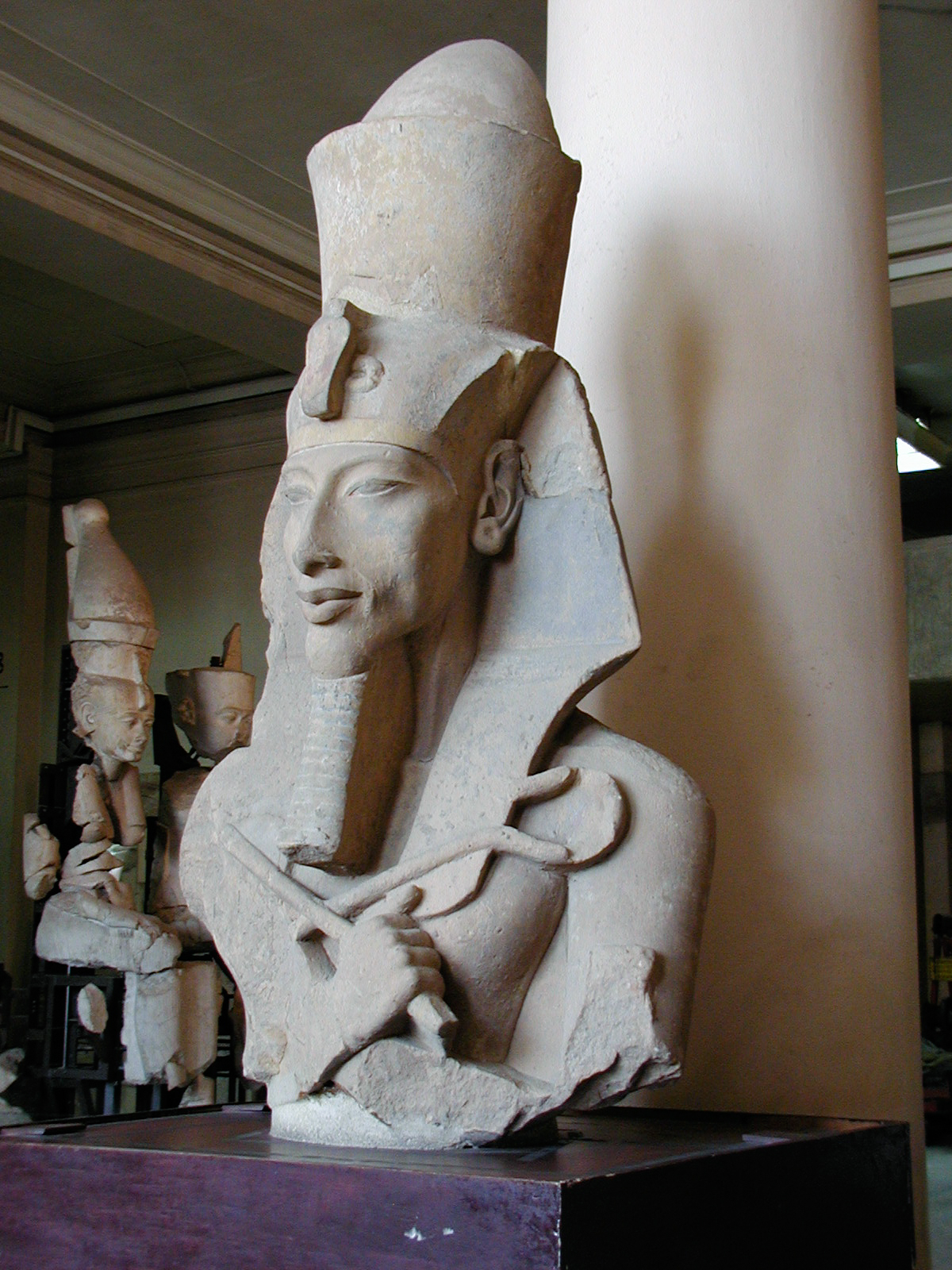
Every single civilization. And in every single one, the insistence by the priestly class on rituals and rules and complex systems leads to upheaval: the Brahman caste's focus on difficult rules led ordinary people to turn to Buddhism. I take the position that the heretic pharaoh's rejection of Amun for Aten was a calculated move to combat the extremely powerful Amun priesthood. Martin Luther took a radical--and printable--stance against indulgences. The fact that Calvinism almost immediately went down the same "angels dancing on the head of a pin" rabbit hole is par for the course. On the other hand, that push-back led to Methodism and views of universal grace.
 
The focus on minutiae and status and judgment based on position ("our" guys can do whatever they want; the "other" guys must be cancelled) in multiple religions and social orders has led to "hey, what about the spirit of the law?--what about basic principles?" upheavals. Just look at people's reactions to current-day Progressives!
 
Yet the move towards elitism, despite its consistent failures, is so predictable, I've decided that something really basic and Freudian is going on here--even when power and money are not on the table (well, not relatively on the table: the Amun priesthood was miles more powerful than any current academic religion). 
 
That is, a desire to regulate everything, including "fun" and "dissent," must be a basic human impulse towards the desire for guarantees: my safety will be assured
 
The personal risk demanded by Paul's Christianity and other early C.E. religions is...scary to people. The underlying theologies, like the Sermon on the Mount, entail hoping people will be decent and nice and accepting when obviously, often, they aren't, in the same way that trusting an adversarial legal system means sometimes the system makes mistakes.
 
The elite theocrats will argue that they are acting to prevent those mistakes, but I suggest that actually, they are so terrified of losing their status they convince themselves that their failure will equal society's failure (see Frasier).
 
And they aren't wrong. Loss of status often follows mistakes and risk-taking based on personal moral integrity. Arguably, this loss is the point of "turning the other cheek" and like-minded philosophies/theologies: let go of king of the mountain posturing. 
 
Loss of status for elites equates to loss of identity. They hold on, constructing increasingly elaborate social defenses, usually based in some way on the idea that they are society's salvation. 
 
Ironically, of course, from the long view, their success is society's failure. But that's in the very, very long run, so I suppose the cognitive dissonance here isn't entirely unexpected or, from the point of view of those who hold it, useless (for them).

Fairy Tales: Winter Solstice and More

I am not one of those people who gets bothered by religious holidays being "corrupted" by pagan rituals and/or commercialism. Nor am I bothered by the (often cynical) declaration that some group created a holiday or forced a holiday onto another holiday--as, for instance, the pronouncement (by offended non-Christians and offended Christians) that Christians moved Jesus's birthday to December to take advantage of pagan celebrations.

Of course, they did! Holidays aren't "pure," any more than anything else that is deemed "cultural." Holidays are amalgams of different customs and impulses and needs.

Frankly, the hunt for "pure" anything is more troubling to me than the supposedly corrupt whatever-it-is. 

I admit to also having little patience with people who want to read meaning back into a holiday. I think saying, "This here holiday is a mishmash of religious beliefs and new inventions and commercial ventures and nineteenth-century traditions" is far more interesting and satisfying than, "This holiday has deep meaning and to prove it, rather than simply being happy with that meaning right now, we will force that meaning back onto past events to create links that actually never existed." 

I feel this way about all holidays, including Halloween. 

Human desires exist before the rituals and celebrations those desires spawn--which means that a holiday is more likely the expression of some wish rather than a sui generis event that demands a certain response.

One consistent, human desire throughout the ages is a holiday or celebration or ritual at moments of seasonal change. The solstice, which occurs at different times in the two hemispheres, is one such moment. (Harvest is another.)

This year, the solstice occurred on June 21st in the Southern Hemisphere. It--the winter solstice--occurs tomorrow December 22nd in the Northern Hemisphere. 

Holidays and celebrations and traditions attach themselves to this time of the year, many of which have been around for longer than just about anything else--snowmen show up in cave paintings and medieval illuminations. 

The reasons for such marked attention--the need to celebrate--are understandable. 

However, I had a not-so-easy time finding a decent picture book about the winter solstice that wasn't similar to adult books about pets: a little too cloying to make me comfortable (all that meaning!). (Children's books about pets are far funnier.) 

I did find the following:

The Shortest Day: Celebrating the Winter Solstice by Wendy Pfeffer, illustrated by Jesse Reisch.

The book mentions the Swedish festival of light on St. Lucia's Day. When my parents lived on Peaks Island, a Swedish family on the island would visit them dressed in the appropriate garb and carrying food. My parents were quite touched by the visits. 

The book ends with a short but thorough scientific explanation of the solstice and some science experiments!

The Shortest Day by Susan Cooper, illustrated by Carson Ellis

The picture book is filled with lovely illustrations. The text is a poem by Cooper though there is a short (meaningful) note at the end, which contains the following felicitous passage: 

"The Yule and the evergreens of my poem come from Northern Europe, but the candles in those Christmas trees belong to the same family as the menorah candles of Chanukah or the oil lamps of Diwali. Christianity and many other faiths share their intention; they are the lights of hope, reaching for the triumph of good over evil." 

While the Bear Sleeps: Winter Tales and Traditions retold by Caitlin Matthews, illustrate by Judith Christine Mills

I was not entirely impressed by While the Bear Sleeps. The stories are not entirely engaging. However, the collection is diverse and includes the charming Baboushka, the story of the "fourth" wise woman who becomes a Russian type of Saint Nicholas. It also contains stories about Hanukkah, Kwanzaa, and Christmas, as well as the Winter Solstice. 

I was reminded, again, of when my parents lived on Peaks Island. In December, they would attend a holiday concert that included a choir, people in costumes, audience participation, and, at the end, a rousing sing-a-long of Handel's Hallelujah chorus. So much fun! 

The more holidays the better!  

And the more Muppets--!