Showing posts with label Classic Characters. Show all posts

Books to Movies: Homer's Odyssey

From A-Z List 2, I chose Homer for "Books to Movies."

The issue: How well do sagas translate to film? 

A classic film will have an arc--conflict, rising action, climax, final wrap-up. The arc is possibly one reason superhero films have been so popular in the early twenty-first century. It isn't that filmmakers can't make rambling films about the purpose of life and people contemplating the nature of string. But a movie is a narrow event, which means something should happen.

Odyssey with Armand Assante as Odysseus has a number of positive factors. Assante's Odysseus captures the character's almost modern disdain for his fellow leaders' vainglorious strutting (the attitude exists in the poem), his desire to remain home, his leadership capabilities, and his half-respectful/half-conman relationship with the gods, including the goddess Athena.

The problem is tone. The action sequences are quite good--but the switch back and forth between Odysseus and Penelope makes the events less adventure tales and more a series of acts of incredible misfortune--and the original epic never struck me that way.
 
Moreover, the series suffers from an investment issue. A text--even a told story--can operate somewhat differently. The audience can be told that only Odysseus is left standing and shrug at the idea. Whatever. But a movie gets viewers to care about Odysseus's scooby-gang...who all eventually die. 
 
The point where everyone died was when I ceased to care about the outcome (which I already knew, of course). Assante holds the series together through charisma and strong acting. But the script portrays him as a hero rather than a survivor--and a hero who can't get his crew home isn't much of one. 
 
My thoughts while watching: Since the script skipped 10 years at Troy, why not just skip the 10-year voyage? Why go through the motions of getting us to care about the team and then dispose of them all? If the focus is Odysseus, why not skip forward to the part where he returns home and gets rid of the suitors? 
 
In fact, Wishbone's version starts the story with Odysseus's escape from Calypso, precisely emphasizing the story of Odysseus retaking his home. The related Joe & friends arc seems a bit of a stretch but ultimately both parts emphasize taking back one's home turf. I had to wonder if the original Homer (some scholars now believe that Homer was a title given to multiple poets) created a homecoming story and others kept adding on bits!
 
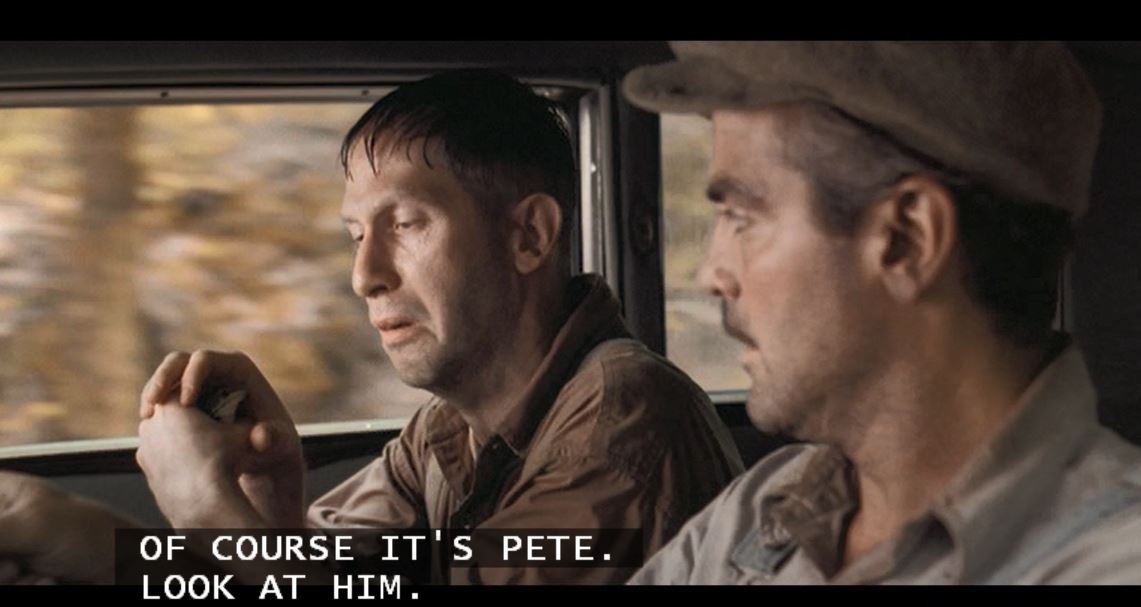
Of course, there is O Brother Where Aren't Thou, which combines saga and a narrative arc excellently. For one, it doesn't pretend it is doing anything else. It is a shaggy dog story, a homage to 1930s Americana music and settings, a comedy (definitely). Stephen Root shows up--what more needs to be said?! 
 
Most importantly, Odysseus--Clooney's Everett--is perfect. He IS what I imagine Odysseus to be: "Silver-tongued" (as the DVD cover states), level-headed, skeptical, a tad vain ("How's my hair?!), problem-solving, vaguely amoral, opportunistic, extroverted...less the hero-type and more the bargaining type. And he has an ex-wife who, like Penelope undoing her weaving, keeps her rather slippery ex-husband at arms' length. 
 
Not to forget Pete as a toad!
 

Slimy Characters: Dante's Whining Lovers

More villains!

Dante's Inferno is a masterpiece. Part of what makes it so impressive is the insight into human character. 

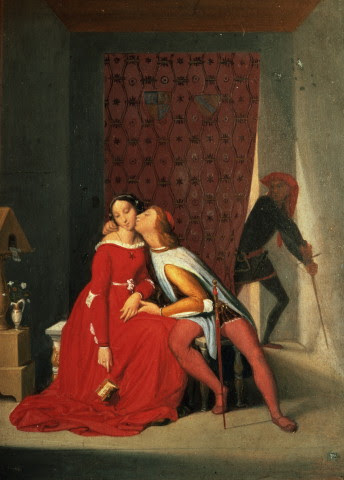
Dante confines adulterers to the second circle of hell. One of the adulterers, Francesca, argues that she and her husband's brother fell into an affair while reading about Launcelot and Guinevere. It sounds all very sermony and plausible--until one realizes that Dante isn't excusing the lovers. He has punished them.

And the fact is, Francesca is whinging. 

If one is looking for a non-slimy role model, Launcelot would not be it. As I write in Modred versus Launcelot:

Launcelot is such a great guy to hate. Launcelot is the quintessential spoiled kid who goes off to college or prep school or wherever and gets into trouble with some other spoiled kids. He may even be the ringleader, but it will never be clear; he will never own responsibility. And then they all get into trouble, and the other kids may even get expelled, but Launcelot goes and cries and says how SORRY he is and how he never meant it to get out of hand and isn't it too awful and it wouldn't have gone so badly if it hadn't been for that other guy (who told on them).

Dante was not blind to fundamental human nature. Passion and affection are not evil. As C.S. Lewis stated: Joy and affection and pleasure are the aspects that God adds to an affair. By the time the act occurs, the sin is long past. 

It is the self-justifications and blame-the-poetry arguments that keep Francesca's character in the second circle's rats-on-a-wheel windstorm. And yet Dante finds her actions less hopelessly damning than later sins since they at least look outward. 

Dante was a student of human nature par excellence. 

Fairy Tales: De Beaumont's Beauty & the Beast, Does Romance Blossom Due to Niceness or Mutual Interests?

Jeanne-Marie Leprince de Beaumont was not the first to produce Beauty & the Beast. The tale goes back to Cupid & Psyche, which de Beaumont acknowledged. She also based her tale on a much longer version by a fellow French woman, Gabrielle-Suzanne Barbot de Villeneuve.

In any case, de Beaumont deserves credit for delivering the best-known version of the tale. The abridgement is impressive in that she retains the classic elements without sacrificing context or, for that matter, psychology. The father doesn't agree to give up his daughter but, rather, intends to return to the Beast after saying farewell to his family. The sisters remain unnecessarily horrible (in other versions, they encourage Beauty to stay away from the Beast because they miss her) but their horribleness has a source, at least. They feel entitled to the lifestyle and wealth that their father lost. 

One major difference resides is the characterization of the Beast. The Beast does not have a temper but rather a mild, even soulful (depressing) attitude. He does ask Beauty to marry him. He also mopes away when she says no. (Seriously: he mopes.) 

In addition, he lacks what de Beaumont refers to as "wit." He is actually rather dull--as befits his "beast's" nature.

The first characterization makes the point that the Beast may look beastly but is in fact kind and non-pushy. 

The second characterization is harder to fathom outside of de Beaumont's time period. Nearly every retold version of the tale, including Disney's good and bad versions, makes the point that Beauty and the Beast become friends. They have something to talk about

But de Beaumont was coming out of the high-energy culture of salons and courts in France where being "witty," making clever jokes at other people's expense (think, Twitter), was all the rage. Her point: a loving heart from a non-intellectual bloke is a better choice than being someone's verbal whipping post. 

On the one hand, a non-shrewd Beast removes some of the worries over Stockholm Syndrome: Beauty isn't being forced to fall in love with a crazy, clever, insidiously charming whack-job of a kidnapper. 

On the other, at the end of de Beaumont's tale, I was at a loss to understand WHY Beauty would want to marry the Beast (in a modern version, she should just say, "Thank you" and go get a career). It seemed like she was forcing herself to rise to a socially acceptable definition of "good" rather than falling in love because she actually missed the bloke. 

Beauty & the Beast is a fantastic tale precisely because it raises the above issue. Unlike other tales in which the move up the ladder IS the reward, Beauty & the Beast tackles the state of the relationship itself. 

And that, of course, was de Beaumont's point.


When Writers Let Down Their Characters

Alan Shore's soap-boxing on Boston Legal gets tedious. Other than the (far more interesting) episodes where he defends murderers, he is often designated to be the "ranter" about contemporary issues in episode after episode. 

Most of the time, I tune it out. There are well-written exceptions, such as when Alan is arguing in favor of the right to die and loses his cool since he is thinking about Denny (who has Alzheimer's). Another is when Alan uses his fast-talking patter to convince a private school to accept a bright female student who doesn't smile as expected. 

The Supreme Court episode, however, was a huge let-down. 

James Spader is no mean actor. Before going before the justices, he conveys Alan's nervousness, his shock that he is being asked to speak before such an august body. He is a ranter, a patter-master, the guy who relies on shock and awe and personal story-telling to convince the jury. Now he has to make a judicious argument about law. 

It was an excellent opportunity to give Alan another side, to show that he has the pure unadulterated strength of will that one sees in characters like Mary McDonnell as Captain Raydor, or the more interesting possibility, to show that he is out of his depth and knows it. 

But no--the writers just gave him another very long rant that I fast-forwarded through because it was so entirely shallow and silly, like junior high students calling each other names. Oh, look, I made fun of a chief justice, ya ya ya.   

Here's what interested me more than the stupid speech:

I didn't hold it against the character.  

When Without a Trace was on, I loathed the Anthony LaPaglia character. Loathed him. And no amount of good writing or poor writing would have made any difference. 

On the other hand, I've always thought it was grossly unfair to accuse Worf of being a bad security officer when it was clearly the writers' fault that he kept missing the bad guys who beamed onto the bridge. Why blame Worf for lousy writing? 

I think the difference comes down to nothing more or less profound that a visceral reaction. 

It isn't (necessarily) the actor. Turns out I kind of like Anthony LaPaglia as long as he is being Daphne's brother. And I like Emma Watson even though I thought she was terribly badly cast as Beauty. 

The visceral reaction is whether or not I like the character. Anthony LaPaglia's character in Without a Trace has this hang-dog attitude that puts my back up. But even though I disagree with 60% of Alan Shore's politics, he is so ready to go fishing with Denny rather than blather on and on--and so willing to see himself as a kind of clown--I forgive him nearly everything.

And Worf is, well, Worf!

In any case, my reaction explains why characters can survive on their own--Sherlock survived even Conan Doyle's duds.

A True Mystery: Dr. Jekyll and Mr. Hyde

Kudos to Leanna Crossan for drawing Utterson
The Strange Case of Dr. Jekyll and Mr. Hyde by Robert Louis Stevenson is a mystery.

Like Dracula, the book is told almost entirely from the point of view of its non-titular characters. That is, the reader learns about Dr. Jekyll's problems second-hand through the observation and worries of his lawyer, Utterson.

(In pure Victorian fashion, Utterson determines that he is ever so worried about his friend and client but hey, people who are being blackmailed deserve their privacy!)

This approach is entirely in keeping with mystery literature. Arthur Conan Doyle's stories, unlike Columbo movies, almost never start with the action. They start with a witness/client arriving to relate the problem.

I happen to love this approach. And Loren Estleman wrote a book--Dr. Jekyll and Mr. Holmes--that tackles Stevenson's classic text in the same way. In fact, I would love to see a movie of Dr. Jekyll and Mr. Hyde that presents Utterson as the main character.

Very few of them do--most movies, even Barrymore's silent version (which is relatively close to the original)--use the final chapter/letter from Dr. Jekyll to move the cause (Dr. Jekyll's experiments) to the beginning of the movie. We don't discover WHY Mr. Hyde has such a mysterious hold over Dr. Jekyll. We watch Jekyll become Hyde.

The problem is that Jekyll is not all that interesting, however well-performed, especially since most versions excise his real motive in creating Hyde. It is not to rid "man" of his evil side. Rather, Jekyll wants to give his evil side freedom without remorse--and his good side freedom without doubt.

(It helps to note that Stevenson was raised in a Scottish Protestant conservative religious environment--which he rejected in adulthood. But it never really stopped haunting him.)

In fact, the book would make a good Criminal Minds episode as the Scooby Gang tracks down the ruthless, obviously sociopathic murderer of Carew (hey, there IS a Scooby episode that tackles the story). But it would mean focusing the audience's attention AWAY from the titular characters.

It is so much more interesting to keep the monster in the dark.

Holmes as Voyeur

In "The Crooked Man," Holmes and Watson
solve the mystery for their own benefit--not in
order to apprehend a criminal.
Watching Jeremy Brett's Adventures of Sherlock Holmes, I've been reminded all over again that these are action/adventures tales rather than detective stories. What is astonishing about the series' episodes, which are quite faithful to the original tales, is how often Holmes and Watson don't prevent the crimes. They arrive after people have been hung or kidnapped, attacked in their homes, even murdered.

Again, this is largely due to Doyle wanting to write action/suspense stories (as opposed to forensic examinations). Also, however, detection for the Victorians/Edwardians was not the same as it is for us. Historians of the murder mystery point out that detective stories increased by a tremendous degree in Victorianism's later years, specifically with (1) the advent of the "private" home; (2) the inception of the police.

That is, when society became more private--when the "family" moved indoors outside of the public gaze--obsession with what WAS going on behind closed doors grew. The policeman or detective (female and male) who crept inside was both an abhorrent and coveted figure: how awful that she/he would transgress family privacy; how wonderful that she/he can figure out what is really going on.

The point of the Doyle stories isn't so much that crime has been stopped or the criminal punished (contemporary concerns) but that the privacy of the home has been stripped away, the truth of the family revealed.

It's voyeurism--and maybe, in essence, all detective fiction is.

You think The National Enquirer is bad . . .

Nero Wolfe Redux

Nero refusing to leave his orchids.
When I first started Votaries over a decade ago, I split up my topics into separate blogs. The below post was originally posted with other posts about television (this was in the days before the "labels" feature).

Nero Wolfe

One of the great things about Timothy Hutton's Nero Wolfe [and the original Nero Wolfe, for that matter] is the morality of Nero Wolfe. It takes a bit of getting used to since it seems, on the surface, almost brutal.

On one occasion ["Prisoner's Base"], a woman comes to Nero Wolfe's brownstone. She wants to stay--in the same way she might stay at a fancy hotel (only safer). Wolfe rejects her proposition. Her attorney has offered Wolfe $10,000 to find her. But since she came to him of her own accord, he informs her that he will either (1) allow her to stay if she pays him an appropriate retainer ($10,000) or (2) give her 24 hours to run, and then follow her in order to obtain the $10,000.

She decides on (2) and is killed within 3 hours of leaving the brownstone. Wolfe sees no need to investigate: he is not responsible, has no client, and is peripherally involved. Archie disagrees and gets himself in trouble. Wolfe ends up resolving the case on Archie's behalf.

In an age still very much affected by chivalric impulses, Wolfe's proposition to the soon-to-be-murdered young woman seems callous (so it strikes Archie), but the more Nero Wolfe you watch [read], the more you realize that this hard self-interest is intrinsically honorable.

Debra Monk, a regular "player" on the show
In a later episode, Wolfe deliberately withholds evidence, to his own inconvenience, because the murder victim wished the evidence withheld, and he feels her (self-interested) choice (which got her killed) should be honored. The same episode contains one of my favorite pieces of Wolfe dialog. Speaking to his client, played by the marvelous Debra Monk, he states, "I agree with you that had you broken your promise [and told the police about the cylinder], Miss Gunther would not have been killed--but it was she who asked for the promise, so the responsibility is hers." 

Wolfe will take on clients and then release himself when a conflict of interest arises; in other words, he is not the type of detective to defend his clients out of personal liking no matter what; the one time he does defend a client despite lack of funds--a gardener--he does it because he wants the man to take care of his orchids, which the gardener can't do in jail.
Nero comforting Fritz

Wolfe will also defend a client for no money if he believes that he has an obligation (as he does with Fritz in "Poison a la Carte").

Likewise, he will withhold information from the police if he feels the information is not their business, yet he will respect a city ordinance not to enter his own study, simply because it is the law. He walks a fine line between deliberately subordinating justice to gain his own ends and satisfying justice to gain his own ends. And he never drifts off the line.

It is, overall, a consistent study of behavior that reflects, from what I have read and been told, Rex Stout's depiction of Wolfe in the books. The television series' plots (which are performed by the same "players") are simply a stylish backdrop against which Nero Wolfe and Archie argue over cases. Chaykin and Hutton pull this off (with more than adequate support from a stellar cast, including the marvelous Conrad Dunn) through rapid-fire dialog and fascinating reaction shots, but the complexity of Wolfe's integrity is the meat that the audience waits for. Without that underlying gritty hardheadedness, the show would be a more than adequate period piece but nothing more. It is the producers' willingness to keep Wolfe unpretty, unsympathetic and unsentimental that makes the show work. For 2 seasons at least!

Character Archetypes Continued

In a prior post, I discuss the power of archetypes. I end by admitting that stereotypes--as opposed to archetypes--often fall flat. I've read romance novels where the characters were little more than their labels--dominating hero, sweet heroine, wide-eyed innocent, reformed rake, damsel with hutzpah, perfect gentleman . . .

So what is the difference between an archetype and a stereotype, literarily speaking?

The archetype, as opposed to the stereotype, is all of a piece.

My positive example is Buttercup and Westley from Princess Bride. She is the ultimate damsel in distress. He is the ultimate romantic hero who will rescue the heroine at all cost.

Note that chin!
Buttercup: You can't hurt me. Westley and I are joined
by the bonds of love. And you cannot track that, not
with a thousand bloodhounds. And you cannot break
it, not with a thousand swords. And when I say
you are a coward, that is only because you are
the slimiest weakling ever to crawl the earth.

Buttercup being a damsel in distress does not prevent her having a steely determination, as when she pushes "Dread Pirate Roberts" off the hill or confronts her dastardly fiance (I don't write many reviews where I get to use the word "dastardly"). Robin Wright has a low voice (as opposed to a shrill one) and she uses it to advantage. She also has "speaking" eyes as when she gives Westley a level gaze in the fire swamp that clearly says, "You're just making the best of this situation, aren't you?" (see above).

Likewise, Westley's romantic hero persona doesn't prevent him from having a delicious sense of irony delivered with panache by Cary Elwes (see below).

And yet, they never break character. Buttercup doesn't deliver any karate chops or run screaming from the palace in a fit of madness. Westley, even dead, never forsakes his mission. Likewise, Buttercup's intrinsic toughness leads her to mock her fiance even at the wedding while Westley's devastating wit allows him to deliver an entirely convincing denunciation and challenge to the evil prince/king.

I think Shakespeare intended to go for
stereotypes in Taming of the Shrew. But
he's too good: he ended up giving us
archetypes and, therefore, people, instead.
In other words, assigning archetypes doesn't start and end with a single event or adhere only to the characters' personal relationship. It washes through all aspects of their lives and dovetails with prior behavior/events. Stereotypes, on the other hand, tend to remain consistent only so long as a character needs to be DOMINANT or TRUSTING or PUSHY or . . . whatever.

Because they remain whole and consistent, characters based on archetypes--Persephone, Luke Skywalker, Darcy & Elizabeth--remain memorable. More importantly, the psychology of their behavior makes sense. They don't do things because, hey, it's time for the MENTOR to give a speech, the VILLAIN to act threatening, and the HERO to demand a kiss while the HEROINE gets nervous.

The stereotype never moves beyond the annoying assumption that the reader will accept the behavior because, well, that's what a mentor or villain or hero or heroine does. The archetype, on the other hand, becomes the character becomes the behavior which confirms the archetype.

And archetypes are powerful! Well-crafted archetypes create interesting characters who capture their fans' hearts. They become more real than any amount of "well-roundedness" could possibly manage.

Character Archetypes

Archetypes have been famous since Jung help kick-start psychology and proclaimed them integral aspects of dreaming and storytelling. Of course, archetypes existed before Jung came along--as mythologists like Joseph Campbell have pointed out. The reason Jung is important is because Jung justified the use of archetypes, making them intellectually acceptable.

Despite Jung, conveyors of so-called literary fare  still tote the so-called "well-rounded" character--as opposed to the archetype. The "well-rounded" character is supposedly more substantive, better written, more interesting, more "realistic," and more demanding intellectually.

These effects are assumed. That is, literary types assume that the "well-rounded" character is achieving all these marvelous, literary things. But then literary types rarely stop and ask, "But does all this actually make for a better story?"

The power of the archetype is that it invites more reader participation, not less. 

An archetype is like a good metaphor or simile: it provides instant recognition alongside new insight, allowing the reader/viewer to say, "Hey, I know people like that! I never thought of them in this way."

Recognition is the first step: for characters and for metaphors/similes. If I write, "The knife was as sharp as the teeth of a Suvagian tiger," and you've never seen or spoken to a Suvagian tiger (probably because I made him up), the simile will fall flat.

One of my favorite examples of a recognizable simile comes from Longfellow's "The Wreck of the Hesperus":
Like a vessel of glass, she stove [broke by collapsing inward] and sank.
Imagine a glass bobbing in a sink full of water. It turns until it begins to fill. As it fills, it descends to the bottom of the sink.

This sinking glass is a recognizable, everyday image applied to a ship. In the poem, the simile becomes a slow motion moment in a series of fast-moving verses. It packs a wallop.

Archetypes accomplish the same thing by giving us recognizable personalities: The leader. The friend. The gossip. The bully. The tough guy. The tough gal. The mentor. The student.

Genre movies and books specifically offer the calm, wry friend; the cocked-eyed optimist; the troubled, angsty hero or heroine; the grouch; the steady planner; the inspired dreamer; the rival; the rival who tells the truth; the helper; the sarcastic helper; the damsel in distress; the damsel who appears in distress but can kick your butt and so on.

A free spirit and a grouch like Camille and Richard (Sara Martins and Ben Miller) from the initial seasons of Death in Paradise are instantly recognizable. They are also endearing. Most importantly, they invite the reader to discover more--why does this partnership work? How do these characters overcome their differences to solve cases? They are archetypes, so we know them. They are well-crafted archetypes, so we are led to ask, What makes them unique? How do they both fulfill and break their archetypes?

Archetypes invite writers and fans to speculate (with varying degrees of accuracy). As I mention elsewhere, the success of such speculations is often measured against the already givens. Readers will say about a piece of fan-fiction, "Yes, that sounds like them!" or "No, I don't think they would do that."  

Stereotypes, in comparison to archetypes, are similar to poor metaphors or similes: It was as cold as ice. It was as white as snow. Eh: been there, done that. The sense of recognition is slim, and nothing new is learned.

So what is the line between stereotype and archetype?

To be continued . . .