Showing posts with label Hills of Silver Ruins. Show all posts

Interview with the Translator, Hills of Silver Ruins: Taiki and Pacifism

Kate: Chapters 34 & 35 of Hills of Silver Ruins are very exciting! Chapter 34 specifically does a great job paying off Taiki's outsider status, namely Taiki does not behave as a Kirin is expected to behave. As Rousan states, "I don’t imagine there has ever been another kirin in the whole history of this world who inflicted such wounds with his own hand.”

Of course, from the beginning, even as a child, Taiki has demonstrated remarkable pragmatism—when he chose Gyousou, yet worried that his motives were entirely personal; when he forced himself to bow to Asen; and in Chapter 34, when he recognizes that his only hope is to fight his way to his emperor.

The Kirin is usually presented as pacifistic, abhorring violence and blood (quite literally). You address here why the Kirin is pacifistic (perhaps) in behavior but not necessarily in nature. (Or pacifistic in nature but not necessarily in behavior.)

Has Japan ever had peace movements dedicated to pacifism as in America? Flowers in rifles, that sort of thing? Was its isolationism connected to peace movements, as isolationism was in America and Britain (in some pockets)? Or is the Japanese attitude far more pragmatic: peace, to a point? (Leave us alone is not, after all, the same as We don't want to fight or pay for a fight.

Eugene: Japan's isolationism during the Edo period was enforced with a mailed fist. Tokugawa Ieyasu had observed how Oda Nobunaga armed himself with European weaponry to destroy the feared Takeda clan (Ieyasu took part in that battle). He subsequently wisely stayed out of Hideyoshi's ruinous invasion of Korea. And then in 1637, Ieyasu's grandson had to deal with the bloody (Christian) Shimabara Rebellion.

So while the Edo period is commonly described as "peaceful," that was the product of mostly effective rule and ruthless enforcement that did not shirk from punishing anybody who disturbed the peace (as all those samurai dramas make clear).

Today, the closest thing to flowers-in-rifles is the quasi-religious peace movement that grew out of the various post-war nuclear disarmament causes. In Japan, it punches way above its weight in PR terms because many politicians sign on for the photo ops and the favorable press coverage. They have little to lose. Japan will remain firmly ensconced beneath the "nuclear umbrella" provided by the United States.

Thanks to Article 9 of the Japanese Constitution (outlawing war as a means to settle international disputes), when it plays its cards right, Japan can have its peace cake and eat it too.

But Japan is not New Zealand and is located in a very dangerous neighborhood. Unlike Germany's Green party, the left in Japan, like the Tokugawa shoguns, have no illusions about what it takes to preserve the peace. So alongside the United States, Japan's SDF (self-defense forces) maintain the most powerful blue-water navy in the region. No serious Japanese politician contests that necessity.

Interview with the Translator: Hills of Silver Ruins, Shakespeare

Kate: From Chapter 33 of Book IV of Hills of Silver Ruins, Risai's attitude reminds me of Hamlet at the end of the play, when he finally accepts his fate: 

"Not a whit, we defy augury. There’s a special providence in the fall of a sparrow. If it be now, ’tis not to come; if it be not to come, it will be now; if it be not now, yet it will come. The readiness is all."


Shakespeare is ubiquitous in manga and Asian live-action series/films! In a recent Thai live-action series, the two characters act out a scene from Romeo & Juliet. They begin to argue about which character is supposed to say, "Wherefore art thou...?" until one uses the line to get back at the other: "Wherefore art thou a jerk?"

I own a manga series in which an art gallery is titled “The Nutshell” as a deliberate reference to “though I am bound in a nutshell” from Hamlet. And when I was a teenager, I saw a fantastic version of Shogun MacBeth live!

Shakespeare strikes a cord of high romance, related to knights, chivalry, and King Arthur's court. Is Shakespeare somewhat more "translatable" than the very Western, if popular, King Arthur and his knights? After all, King Arthur got turned into Camelot while Shakespeare retains that medieval bite--alongside the War of the Roses mess.  

Eugene: Thanks to men like Thomas Blake Glover, the enterprising Scotsman who armed the burgeoning rebellion against the disintegrating Tokugawa regime in the mid-19th century, the Meiji government closely aligned itself with Great Britain. The strictures of Victorian society certainly would have struck a familiar note at the time.

Well into the 20th century, many of Japan's political elites were full-blown Anglophiles, down to the clothes they wore. This may explain why the preferred formal western attire for Japanese men is the English morning coat.

It is not difficult to find events from the Sengoku period and the earlier Genpei War that match up with the kind of historical events that Shakespeare was mining for material. Akira Kurosawa adapted MacBeth in Throne of Blood and King Lear in Ran, both of which take place during the late Sengoku period.

The Heike Story, a recent adaptation of Heike Monogatari (the classic account of the Genpei War and the decline and fall of the Taira clan), has the feel of a grand Shakespearian tragedy.

Especially in Showa period dramas, it can seem that every girl's school in Japan has to put on a performance of Romeo and Juliet. In Hanako and Anne, an entire story arc is devoted to Hanako translating Romeo and Juliet for her BFF Renko to star in. (Though I've noticed of late that anime high school romcoms have taken a liking to fractured fairy tale versions of Cinderella.)

Interview with the Translator: Hills of Silver Ruins, Ukou's Death & War Crimes

Kate: Even though Asen is a bad guy, his disposal of Ukou is a relief. In saner times, the man would be held and tried for war crimes.

Do the Japanese have an opinion about war crimes, events like the Nuremberg Trials? Or is the preference to move on? After World War II, were any of the “old guard” left to put on trial or did they fade into the background?

Eugene: The Tokyo War Crimes Tribunal convened in 1946 and was intended to be a repeat of the Nuremberg Trials. It was a huge production, lasting twice as long as Nuremberg, but ultimately turned into little more than a show trial, with MacArthur leaning heavily on the scales to produce the outcomes he desired. The proposition that Tojo was analogous to Hitler was absurd, though if Tojo was guilty then so was Hirohito.

As John Dower notes, MacArthur's campaign to absolve Emperor Hirohito of responsibility "knew no bounds," rendering the whole business an exercise in selectively settling scores, not seeking justice.

As far as I'm concerned, Nuremberg is the exception that proves the rule that the whole concept of the "war crime" will inevitably succumb to "victor's justice." It falls into the same subjective witch hunt territory as "hate crimes," meaning all the stuff you did that I don't like. But taking the term at its face value, the purpose of a "trial" is to settle matters of justice and moral responsibility. So when the Tokyo Trials were over, the Japanese people by and large considered the matter resolved and put it behind them.

 In a 2006 survey conducted in Japan, "70 percent of those who were questioned were unaware of the details of the Tokyo Trials, a figure that rose to 90 percent among those who were in the 20–29 age group."

The "truth commission" approach is far superior. It is preferable in these circumstances to find out what happened and why than to affix blame. In a war, after all, every single person involved is "to blame."

An actual "war criminal" would be prosecuted according to the laws that governed his actions. A guy like Ukou would fall under the jurisdiction of the Imperial Army's Uniform Code of Military Justice and be court martialed accordingly. The problem is rarely a lack of laws on the books. Turkey's building codes aren't very different from Japan's. The difference in Japan is that they are enforced.

Interview with the Translator: Hills of Silver Ruins, Horror II

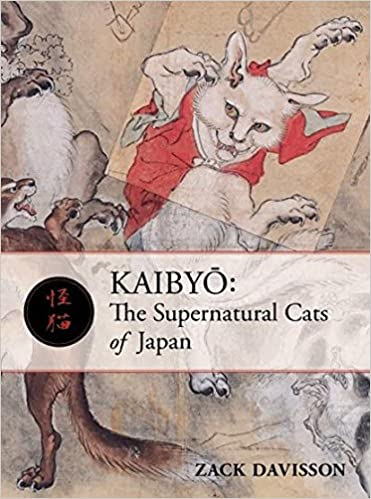
Kate: In Kaibyo: The Supernatural Cats of Japan, author Zack Davisson states, “[Y]ou have probably noticed when talking about Japanese yokai…you’ll usually hear about them in conjunction with the Edo period.” 

Hills of Silver Ruins comes across as late medievalism edging into early modern, the time period right before what is classically referred to as the Industrial Revolution, which anticipatory decades spawned Gothicism.  

Is the Edo period Japan’s Gothic period? Like in England, was the Edo period evoking a mix of nostalgia and glorification towards a diminishing past? What is the connection between the Edo period and supernatural/ghost stories, the look/feel of classical horror?

Eugene: The Edo period roughly coincided with the Elizabethan through early Victorian. The civil wars were over, the political situation had stabilized, and a middle class emerged. As you put it, the people of the period saw themselves emerging from an age of medievalism, which evoked "a mix of nostalgia and glorification towards a diminishing past." The evolving roles of the samurai are a good example, as the once-warrior class quickly turned into a hereditary civil service, who now had money and time on their hands

They were eager to be entertained. So basically there were a lot of Hans Christian Andersens running around supplying material to keep the writers, artists, and playwrights busy. In the process, they fictionalized popular historical events, codified the folklore, and created many cultural institutions that remain to this day. Like Shakespeare, kabuki was once entertainment for the masses, with ukiyo-e artists producing pin-ups and prints that celebrated famous kabuki actors. Now both are considered high brow.

Interview with the Translator: Hills of Silver Ruins, Horror I

Kate: Book II of Hills of Silver Ruins introduces the “haunted house” nature of Asen’s court. A horror element creeps through these chapters.

Parts of Ono's books are rather like suspense meets splatter-fest, especially considering Taiki's prequel (or "other-quel") The Demon Child. According to the manga I read, Japan has both suspense and splatter horror. Does the Hitchcock/Shyamalan suspense approach take precedence or gore? Do the two genres fall into distinct categories as in the United States (high versus low art) or do the folks who produced Godzilla have a more flexible view of horror?

Eugene: I don't know that any one horror genre takes precedence. There's something for everybody. When manga and anime started making waves outside of Japan a half century ago, the often explicit nature of the material quickly caught everybody's attention. The blood and gore has been there all along, with the "Pinky Violence" exploitation flicks taking off in the late 1960s. Anything Hollywood could do, Japanese filmmakers could do (on a fraction of the budget), except when they were actually forbidden by statute.

Observes Donalf Richie, "American pornography is kept forever on its elemental level because, showing all, it need do nothing else; Japanese eroductions [sic] have to do something else since they cannot show all."

On-screen violence wasn't prohibited so it flourished. Some critics point to the last scene in Sanjuro by Akira Kurosawa, during which a malfunctioning squib produced a spray of blood that afterwards became de rigueur.

The first Godzilla is an effective noir thriller. But it spawned the often goofy tokusatsu genre that probably compares well (in commercial terms) to the Hollywood comic book franchises, especially with A-list actors and directors now tackling what used to be B-movie material. "Spiritual horror" is also a well-established genre. When paired with feel-good outcomes, series like Noragami, Beyond the Boundary, and Natsume's Book of Friends bear comparison to Ghost, Ghost Whisperer, and Touched by an Angel.

Then there's the trend of taking an established genre like magical girl or isekai and turning it dark. Puella Magi Madoka Magica did this to perfection, though Magical Girl Lyrical Nanoha went there a decade earlier. I previously described Fruits Basket as Anne of Green Gables with every other chapter written by Stephen King. I think it'd be more accurate to describe Fruits Basket as dropping Anne Shirley into an early 19th century gothic romance, the crazy aunt in the attic and all that (but with a bunch of happy endings).

Interview with the Translator: Hills of Silver Ruins, Outlaws

Kate: Speaking of a dangerous environment, the outlaws introduced in Book 1 of Hills of Silver Ruins evoke the Wild, Wild West.

Americans look back on that time with fondness, emphasizing the independence and ignoring the starving-to-death factor. Ono is combining both, of course. The outlaws here are far more vicious and uncontrollable, although, like Elias's gang in Person of Interest, they can be honorable within specific parameters.

Is the "wild" past of Japan like the Catholic past for Protestant Englishers? Fascinating but please, none of it here? Are Ono's gangs more like the Japanese perception of yakuza (which can include its own code of honor)?

Are yakuza cowboys?

Eugene: It depends on the cowboys. Certainly not the "traditional" Hollywood Gene Autry cowboy. The analogy works better if you shift the historical references to the Lincoln County War and Billy the Kid. Those were Battles Without Honor and Humanity, which is also the title of the yakuza movie series produced during the 1970s. The series redefined the genre the same way that Sam Peckinpah did the western.

The modern yakuza came into their own during the Occupation when they took over and ran the black market. And fought each other for territory. The yakuza during this period compare well to the land gangs in Hills of Silver Ruins, as they assumed control over the entire local economy from the supply chains down to the retail level. And like the land gangs, they were a byproduct of government policies.

In the short span of time between the end of the war and the beginning of the Occupation, corrupt politicians and military officers stole billions and then resold their ill-gotten gains on the black market. It was a moral outrage, of course, but it would have been better for all concerned to regulate those markets rather than attempt to stamp them out. Society simply couldn't survive without the black markets.

To be sure, even at the time, they were seen as a necessary evil. Their persistent popularity has much to do with the ability of the police (and the groups themselves) to insulate themselves from the general population.

During the height of the Cold War, the yakuza also supported right-wing political factions that could be deployed against left-wing "agitators." Thus the yakuza also came to fashion themselves as a modern Shinsengumi defending "traditional values." Unsurprisingly, the Shinsengumi are hugely romanticized today, though they were more likely "a bunch of hitmen hired by a repressive regime."

But that Cold War is over, and over the past quarter century or so, the police have cracked down hard and pushed the yakuza further and further into the fringes (and at the same time into legitimate businesses). Now less of a threat unless expressly sought out, the Gene Autry version has reemerged in shows like The Way of the Househusband, The Yakuza's Guide to Babysitting, and Hinamatsuri.

One of the running jokes in The Way of the Househusband has Tatsu running into yakuza who have aged out of the business or whose organizations are simply no longer in business.

On the other hand, last year's ultraviolent (and well-received) Akiba Maid War, which restages Battles Without Honor and Humanity in 1990s Akihabara but makes all the participants cute girls from warring maid cafes, is a paean to the past. Like a yakuza babysitter, the dark humor rises from the juxtaposition of cute girls in frilly outfits mercilessly spilling blood like cinematic yakuza from fifty years ago.

Though even there, the series concludes with a present-day reminiscence about the 1990s as "way back then."

Interview with the Translator: Hills of Silver Ruins, History

Kate: The 12 Kingdoms series, including Hills of Silver Ruins, demonstrates a fascination with history. As good fantasy, Ono's world is true-to-life; the fantastical elements depend on consistent natural laws as do human advances and behaviors. 

I recently read a brief history of Japan for children. If anyone had asked me even three months ago, I would have assumed that Japan as a country stretched back as far as the Ancient Mediterranean Empires. I'm willing to bet that many people, who rely on general knowledge, would make the same assumption.

Is the perception of antiquity because the ancient and modern world are set side by side in Japan? Or is that Japan had those years of isolation; hence, "modern" for Japan is really recent (while for Westerners, "modern" is also kind of historical, starting with the end of Shakespeare's life)?

And do Japanese people share this perception—that Japan is really old—or are they busy exclaiming, "China is soooo much older!" and that accounts for the interest in China?

Eugene: I'd say that Japanese generally think of Japan as an old country that got new really fast. After all, compared to the United States, Japan is ancient. But several other factors play into this. First is that Japan can point to a cohesive polity that reaches further back than most of its European counterparts. As early as the Asuka period (538–710), there was an identifiable government, language, and culture of Japan.

Another key factor is the relationship with China, from which Japan borrowed its culture, orthography, and political organization. From the start, Buddhist institutions grafted themselves onto their Chinese (and Indian) counterparts and so could treat that ancientness as their own. In any case, there is plenty of hard evidence for home-grown ancientness, as the Jomon period dates from 6000–300 BCE.

For example, in the slice-of-life anime movie Laid Back Camp, the girls are restoring a run-down campground near Mt. Fuji when they discover shards of Jomon pottery. The project gets put on hold while archeologists excavate the site. This is considered a seamless part of Japanese history. The same applies to the thousands of "keyhole" burial mounds found across Japan that date to the Kofun period (300–538).

Where archeological evidence is lacking, myth will suffice, so the imperial line officially begins with Emperor Jimmu in 660 BCE, though there is little objective historical evidence for emperors that predate the Asuka period. Before that, we're in King Arthur territory. But like King Arthur, a really good myth almost qualifies as actual history.

Kate: Very interesting! On reflection, I decided that Japan offers a continuity that other places simply don't have. Anglo Saxon culture (500ish CE) became the determining culture of England with the Celts (1000 BCE) being the determining genetics. But in the meantime, there were the Romans and the Danes and the Normans, so that a later generation saw no connection between itself and, say, Stonehenge (there is no cultural or genetic connection) until nineteenth century nationalists began searching for a connection. Likewise, the cave paintings in France are older than just about anything but Werner Herzog's movie emphasizes a human connection rather than a French one.

Is Japan's uniqueness that it offers cultural memory--like the Middle East but without the grudges? 

Eugene: Japan as a coherent polity was in large part a product of the Genpei War (1180–1185) that ended the Heian period and the direct rule of the imperial household and moved the secular government far away from Kyoto to Kamakura. This separation of "church" and state not only preserved the imperial line but also the culture of the Heian period, which later shoguns could build upon to show how sophisticated they were. But for the most part, when it came to overthrowing the previous regime, "it's not personal, it's business." 
 
The link below is an example of how traditional culture in Japan (in this case, shrine visits and kimono) still permeates modern culture. It'd be sort of as if the majority of the population attended Midnight Mass, whether they were Catholic or not, and turned the experience into adorable pop art. 
 

Interview with the Translator: Hills of Silver Ruins, The Novel

Kate: Hills of Silver Ruins is the most recent novel in The Twelve Kingdoms Series by Ono Fuyumi. You have translated many of the others and are now working on the long-anticipated Hills of Silver Ruins

Does the book seem a culmination to the series?

Eugene: Hills of Silver Ruins is Fuyumi Ono's first Twelve Kingdoms novel since 2001, though she published a collection of short stories in 2013 that take place in the Twelve Kingdoms universe. Her previous novel, Zan'e in 2012, is in the contemporary horror genre (the other half of her oeuvre). Hills of Silver Ruins is a sequel to The Shore in Twilight.

Although Youko is the featured character that springs to mind, Taiki has actually commanded as much or more of her attention over the series. The epic Hills of Silver Ruins does feel like her swan song, though along with Hayao Miyazaki (whose absolutely, positively last film, How Do You Live? opens next summer), I wouldn't count out another installment down the road.

Kate: Does the book include recurring themes? 
 
Eugene: I see two themes playing out throughout the series. The first is how the divine interferes in human affairs. Though the cause and effect are more explicit than in our world, there are still those who see around them a mechanical universe that, once set in motion, does not need a god to continue operating.

Rousan appears to be carrying out an experiment that Shouryuu (the Imperial En) once mused about when he contemplated what he would do if he got bored with being emperor (since to abdicate is to die). What would happen if he threw a wrench into the gears of that mechanical universe? Would it self-correct and how? The conclusion (so far) is that the universe of the Twelve Kingdoms does indeed self-correct while making the maximum allowances for human agency.

In fact, Ono often inveighs against legalism as a basis for both life and political governance, which brings up the other theme: the difference between reigning and ruling.

Asen was so hellbent on reigning that he gave little thought to actually ruling (and he was a nihilist going in). I wonder if Ono was thinking of Ying Zheng, the brutal king of Qin, when she created Asen. I'm pretty sure Ying Zheng was an inspiration for Shoukei's father (the assassinated emperor of Hou) at the beginning of A Thousand Leagues of Wind.

Another historical reference that springs to mind is OdaNobunaga's assault on Mt. Hiei in 1571. It roughly parallels Asen's attack on Zui'un Temple. The real Nobunaga and the fictional Asen are two Nietzschean peas in a pod.

The most successful kingdoms are those where the emperor or empress reigns but doesn't try to run everything themselves or try to fix everything all at once. This was a major problem at the onset of the Meiji era. There's no disputing the need for reform but the ruling oligarchy moved so fast they triggered numerous revolts, culminating in the Satsuma Rebellion, that could easily have been avoided.

Gyousou fell into the same trap and even sent Taiki abroad so he could act with fewer checks and balances.

By contrast, Shouryuu once appointed a man to be province lord who was "so busily engaged in pilfering the public treasury he had no interest in plotting political conspiracies or leading insurrections." Because a greedy rich man worries him less than a Machiavellian interested in power for its own sake. Such lowly passions are easier to control with carrots and sticks.

On the other hand, especially in chapter 21 of book 4, Asen comes across as a funhouse mirror image of Saitama from One Punch Man. Asen defines himself in terms of his rivals. The breaking point came when he realized that his rivalry with Gyousou was entirely one sided. He awoke from his prolonged funk when Taiki showed up because Taiki became another player to compete with.

Kate: After multiple translated books and manga, do you find the translation process harder? Easier? 

Eugene: I'm considerably better as a translator than I was when I started out but Fuyumi Ono doesn't make it easy with her extensive use of Chinese and references to medieval Chinese culture. Vocabulary aside, she has a clear and comprehensible style. I usually read about half a dozen chapters ahead. I make so many notes along the way that I have to start writing while it's fresh in my mind.