Showing posts with label Eugene. Show all posts

Latest Publication: The Merman in Hiding

Merman in Hiding is now available on Amazon. 

Priest-detectives Rhys and Lider are currently on Earth. A family of Siphons or merpeople need them to locate a young man, Brae. The family believes Brae was kidnapped by another Siphon family to forcibly resolve a breach of promise suit.

As Rhys and Lider interrogate religious disciples, pharmaceutical representatives, and ex-lovers, they come to believe that Brae's disappearance encompasses something more  irrevocable than a broken heart. 

Rhys and Lider must discover Brae's whereabouts quickly since they are faced with an irrevocable choice of their own--and their future together.

Merman in Hiding is Book 3 in the Myths Endure on Mars Rhys & Lider Detective series. Anubis on Mars and Saint of Mars are available in one volume. The Wolf Boy Returns from Space is currently available as a single book.

The books follow a chronology. They do not have to be read in order.

I thank my brother Eugene here for his sci-fi suggestions. Any "good" science in these novellas (which are mostly story) is due to Eugene. Any dumb science is all on me. 
 
I also want to thank my brother Joe for discussing the philosophical and practical arguments that crop up in the final confrontation scenes at the end of the novella (think nutty psychologists in the early 20th century carrying out entirely unethical experiments). As with Eugene, any of the stronger arguments are due to Joe. Any "holes" in the arguments are mostly due to my characters (since certain characters would make certain kinds of arguments).     

Translation by Eugene Woodbury Available

Eugene completed a number of translations, most notably translations of Twelve Kingdoms novels. He understood that a translation is itself an art--not something that can be left to a machine. A translation needs to capture the tone and pacing of an original--as well as its allusions, even jokes!

In the past few years, he completed translations of Ranpo Edogawa's Boy Detectives Club books.

The first translation he made, The Space Alien, is now available on his blog.

The year is 1953. The Korean War is winding down. The Cold War is heating up. In 1952, the United States tested the first hydrogen bomb. In 1954, Godzilla will stomp onto the world stage. UFOs are appearing all over the world. And in Ranpo Edogawa’s latest young adult novel, five flying saucers zoom across the skies of Tokyo.

A day after that alarming incident, a woodsman stumbles out of the forest to report the landing of an alien spacecraft in the mountains southwest of Tokyo. A month later, Ichiro Hirano’s neighbor goes missing. He then reappears as abruptly as he vanished, claiming he was kidnapped by a mysterious winged lizard creature—

The same lizard creature that is now stalking the pretty and talented sister of Ichiro’s best friend. What in the world is going on? What do the aliens want? These are the kind of questions that only master sleuth Kogoro Akechi and the Boy Detectives Club can hope to answer.

Celebrating Eugene Woodbury

My oldest brother Eugene died at the beginning of this year. Today, June 8th, is his birthday. 

Tributes to Eugene can be found on his blog:

As I mention on his blog, I intend to republish his novel about his mission--Tokyo South--and several of his translations, which original works reside in the public domain. The republished novels will become available through his blog.

The photos are Eugene; Eugene and Kate; Eugene at the center with his siblings. 

M & N are for Enigma and Interview with a Translator, Part III

WRITING ABOUT JAPAN

Question: Hills' book reads rather like a tabloid in places--lots of "I spoke to the friend of the friend of the friend" conversations. On the one hand, I appreciate his willingness to treat his subjects as people rather than "inscrutable" members of a culture that is too refined and remote for a Westerner to write about. On the other hand, I feel like he consistently misreads situations or applies a single element of Japanese culture to a situation as if it was the only possible interpretation. Personality traits get attached to either Japanese heritage or Japanese cultural pressure.

For instance, Hills accuses Japanese culture of placing undue pressure on Masako to become a diplomat--then turns around and accuses Japanese culture of not giving her enough support as a woman in her ambition to become a diplomat. He insists that she is an outside-the-box thinker, even though her scholarly writing is fairly pedestrian--but that's also the fault of being forced to conform! It's a "heads you lose; tails I win" type of writing. Reading between the lines, it isn't all that obvious from the possible evidence that Masako was interested in having a career or all that ambitious in a scholarly way. (Despite the reputation of Harvard students as "ambitious.")

Is this approach typical of Western writers about Japan? Do the intellectuals make the same mistakes in the opposite direction? Or in the same direction (they are simply better at hiding it)?

Masako also attended Balliol in the late 80's.
She did not complete her thesis.

Eugene: Japanese popular culture does imbue the label "Harvard" with an almost holy status, right up there next to Tokyo University (Todai). Any introduction of a television personality like Patrick Harlan never fails to point out that he graduated from Harvard (and there's no denying the guy is whip smart, especially when it comes to language).

That item on the resume, like graduating from Tokyo University, establishes a whole host of expectations. I have no problem believing that Masako struggled with those expectations. Unlike Patrick Harlan, she couldn't (or couldn't bring herself to) take a sabbatical and bum around for a couple of years while she figured out what she wanted to do with her life.

When the brass ring shows up, the easy thing is push all the angst aside and just grab it. But that's pretty much true of everybody everywhere who has risen high enough up Maslow's Hierarchy of Needs that they can start looking for "meaningful work."

Japanese aren't the Borg but we are all products of our culture and rarely think to question it. Fish discover water last. It's always easier to point at those other people in that other culture. I think there are a whole lot of unhappy people in the Occident who can't divorce themselves from the culture that defines the boundaries of their lives and end up trapped by those expectations.

Like the nature versus nurture debate, splitting the difference is a good place to start. But that means half is on you.

The underlying fallacy here is ascribing an overly prescriptionist role to culture (or the government) in general. The culture (or the government or some other collective entity) is supposed to fix the social problem du jour. To be sure, collective action can address problems. But there is always a point at which the only viable solution is individual action and responsibility. 

In a quieter way than fans, many students support
the Imperial Family and the current era: Reiwa.
Question: Hills at one point speaks to Imperial family fans, who sound kind of nutty to me but then I've never gone in for the cult of the celebrity, even with Leonard Nimoy (or my own church leaders). Earlier in the book, he refers to Masako and her teenage girlfriends going everywhere they can to contact a well-known baseball star--they even end up going to a restaurant with him. It seems rather innocuous to me but then I grew up in the 1970s. Hills points out that current Western culture looks at this type of behavior negatively, especially in terms of teenage girls hanging out with an older man.

How is the culture of fans treated in Japan? Is the line between "fanboy/girl" and "wall of crazy/stalking" the same or different in Japan than in the West?

Eugene: Otaku still don't have a great image in Japan. Love, Chunibyo & Other Delusions begins with the protagonist desperately trying to shed that reputation. "Teenage girls hanging out with an older man" sounds just as weird in Japan as anywhere else. The soapy O Maidens In Your Savage Season concludes that teenage girls and older men should stick to their own peer groups.

And then there's the whole social phenomenon of enjo kousai, which tends to get treated in a moralistic and didactic manner by the same media that hyped it up.

Question: Ultimately, I can’t recommend Ben Hills’ book. Although the beginning comes across as fresh and potentially humorous, it grows increasingly unkind and even vicious. Hills seems to see himself as a defender of Masako but he comes across, instead, as a user who dismisses any element of her personality that interferes with his thesis. He argues that she was forced to be a certain way but he consistently dismisses evidence that she may in fact be the person that he rejects.

However, it is difficult to ignore Hills’ book when there are so few alternate sources! Are there sources about the royal family you could recommend instead? Writers about Japanese culture (yourself included!)?

Eugene: I think the biggest reason there is so little material about Japan's Imperial Family (scandalous or otherwise) is because they are so darn good at being boring and just doing their jobs. Aside from histories and maybe day-in-the-life accounts, I'm not sure what there is to write about. Coverage in the respectable press tends to read like a family Christmas card year-in-review.

Most of the time, it's the crazy people that end up in the news.

Peter Barakan
One of the best books about contemporary Japan is Embracing Defeat by John Dower. It lays down the necessary foundation for understanding the post-war era and the long post-war reign of Hirohito. 
 
I don't read much commentary these days but my current favorite is NHK World's Peter Barakan. To be sure, he's more of an informed and amiable guide.

When I can find the time, I'm going to read Emperor of Japan: Meiji and His World, 1852–1912. There was a whole lot more truly historic drama going on back then.

The NHK World productions that focus specifically on Japanese culture, geography, and everyday life can be quite good, such as Core Kyoto, Cycle around Japan, Japan Railway Journal, and Document 72 Hours. And for sheer educational cuteness, Kiyo in Kyoto.

I honestly believe you can learn a lot about modern Japan, and about how Japanese view themselves, from manga and anime. Not necessarily from the stories themselves, but from how the characters relate to each other and the greater society. For example, melodramas like A Silent Voice, Kaguya-Sama: Love Is War, My Teen Romantic Comedy SNAFU, Love, Chunibyo & Other Delusions, Hyouka, and even a contemporary fantasy like Interviews With Monster Girls. 

In Conclusion

Kate's conclusion regarding the particular biography and subject under review:
 
Putting all the evidence together, ignoring Hills' tone, and allowing for context, my take is that Masako was not particularly interested in being a diplomat. She returned to the academic world by attending Balliol (Oxford) in the late 1980s. I suspect that she found Oxford rather more like the Japanese working culture she'd left than the friendly American college life at Harvard she apparently greatly enjoyed (doctorate programs in the West being notoriously dog-eat-dog in an utterly "does anyone else really care?" insular way).

She returned to Japan in 1990 rather than completing her degree. She entered into marriage with Naruhito in 1992 (they met in 1986). I suspect that if she in fact suffers from clinical depression (which she likely does), it may have manifested in the late 1980s. Clinical depression is not caused by life being tough. It is caused by chemical imbalances that may be partly brought about as well as exacerbated by life circumstances. (And it cannot be "escaped" by running into something like marriage.)

In a way, I think my interpretation of available evidence is a sadder (though endurable) story than the one Hills tells. Masako isn't a victim of a demanding culture. And she isn't the type of person who truly breaks barriers, as Hills wants her to be. She's a naive, wealthy, and intelligent woman who struggled to find a place for herself in a culture where she already occupied a rank or standing layered with specific expectations, rather like the class occupied by nineteenth-century upper-class spinsters and Patty Hearst. Only she didn't head off to become an explorer. Or shoot up banks.

But my conjectures are conjectures--as are Hills'. There is little definitive proof in any direction, which arguably is true of all biographies. Individual motivations and desires and choices still remain locked in individual brains, and may not even be entirely understood there.

Regarding Interview with a Translator, I agree that manga and anime are great windows into Japanese culture. More to come in the future!

Thanks to Eugene for his insights! 

M & N are for Enigma and Interview with a Translator, Part II

CULTURE

Question: Western romances are filled with (unlikely) stories of commoners marrying into European royal families. In comparison I have encountered, to date, zero manga and light novels with this plot. Is the royal family in Japan too small to consider entering? Or are Japanese commoners wise enough to know that wanting to live like a royal is like wanting to submit to a form of slow torture? (I personally feel like this about European royalty too.) Or is the circumstance simply unimaginable?

Having been whittled down to the basics after the war, the Japanese Imperial Family is too small to make such stories plausible. In fact, that smallness has caused the biggest controversy involving the Imperial Family, too few male heirs. If you go back to the pre-war era, though, there's the story of Byakuren Yanagihara, the illegitimate first cousin of the emperor.

During the "Taisho Democracy," both the Imperial Family and the press were a lot less disciplined.

The modern heroine in a princess story is going to hail from a politically or economically powerful family, such as Kaguya in Kaguya-Sama: Love Is War, for example. In Fox & Wolf, Yuki is a direct descendant of the Matsudaira clan. That alone wouldn't make her noteworthy unless she did something interesting. Of course, Yuki does do something interesting, so then the press would say, "Hey! Look at who she's related to!"

Nobunari Oda is a direct descendant of the great 16th century warlord. That fact was only worth mentioning after he became famous as a skater.

Question: Hills makes the point that in many ways Japanese gender roles are still fairly conservative. Masako went from being a Harvard graduate who spoke several languages and played sports to being a "demure" Japanese wife. Some feminists would declare this an outrage. Do Japanese feminists view it the same way? Does Western feminism even translate into Japanese life? Manga heroines are plenty spunky enough. They also don't seem to view being a CEO as anything to get excited about. Since I don't either, what version of pro-women is at work here? 
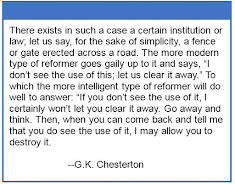
Japan is a thriving implementation of Chesterton's famous metaphor. Most Japanese most of the time are content to leave that fence right where it is. You could take all of Asia as an ongoing experiment to prove that progress doesn't require progressives.

If you look in Japan for analogues to social institutions and political philosophies prominent in the cultural west, you will find them. And they will echo all the things you expect to hear. But that doesn't mean they hold the same importance or have anywhere near the same influence. Or are even interpreted the same by most of the population. The label on the box doesn't dictate what's in the box.

Take vegetarianism. Or call it the Lost in Translation syndrome. Me thinks Hills wants to have his orientalist cake and eat it too.

Question: Despite Hills' desire to create a soap opera out of his subject's life, Masako married a truly good guy, an intelligent gentleman who tries to treat people well. Naruhito seems rather like his father but miles away from his grandfather. In fact, Naruhito is repeatedly described by nearly everybody interviewed by Hills as "nice." While Hills doesn't seem to know what to do with that adjective, I read it as a sincere compliment. I recently finished the latest volume of a manga series that is best described as "Lord of the Flies in a Japanese high school." Even in that series, the school trip is presented as an opportunity for people to form friendships, get along, and show kindness to each other. (Not exactly Carrie.) What's the Japanese cultural impact or importance of "niceness"? 

Perhaps the most important social value in Japan is "getting along." When you've got 120 million people living in a country the size of California, and only 10 percent of the land actually habitable, getting along counts for a lot. What makes yakuza so scary to the average Japanese is they violate your personal space and purposely make a point of not getting along, except with each other. Your gang defines the nature of personal relationships and the social rulebook.

The running joke in The Way of the Househusband is that, having quit the yakuza business, stay-at-home dad Tatsu hews to the middle-class social rules just like the rest of the housewives in his neighborhood, only with the zeal of the yakuza boss. The people who only knew the old Tatsu interpret everything he does as if he were still a yakuza, while the people who know him now accept him as one of them.

Question:
Hills argues, based on credible evidence (and Wikipedia agrees), that Masako suffered a nervous breakdown after the birth of her child, Aiko, and likely suffers from clinical depression. Although he attempts to create a single cause-and-effect explanation (the Japanese royal bureaucrats kunaicho forced depression on her by stamping out her personality and pressuring her to have a boy), clinical depression is not only multifaceted, in many cases, it has a connection to shifts in hormones. Hills does criticize the uncomfortable--and silent--reaction in Japan to mental illness. Hills doesn't help matters by behaving as though clinical depression is the most horrific event that could ever occur to Masako and solely the result of her not being allowed to be the free-spirited, working woman he wants her to be.

Does mental illness get discussed in Japanese manga/literature/film? Does it get turned into a raison d'etre as it does in Hills’ book and in much Western literature (shades of The Three Faces of Eve)? Is it looked at more holistically in Japan? Or is it largely ignored?

Hills is right that mental illness remains largely a taboo in "proper" Japanese society. Even when maladies like hikikomori become impossible to ignore, the admission that these people are wrong in the head becomes yet another wall between "normal" people and "abnormal" people, "normal" people being the ones who don't have these problems.

In Hanako to Anne, NHK's fictionalized biography of Anne of Green Gables’ translator Hanako Muraoka, the arranged marriage between coal tycoon Denemon Itou and Byakuren Yanagihara ("Renko" in the series) is depicted in a surprisingly even-handed manner.

While Renko's half-brother is a caricature of a villain who lacks only a mustache to twirl as he runs around being dastardly, Renko is depicted as being unwilling or unable to find common ground with the rags-to-riches Itou, a coarse man who cared not one whit for "high culture." In this war of the social classes, they're both sympathetic characters.

But Renko/ Byakuren had no choice in the matter and little idea of what she was getting forced into. Hills' version of Masako makes me scratch my head. How could somebody that smart be that clueless about the infamously imperious nature of the Imperial Household Agency going all the way back to the Meiji era?

Japan's imperial system was so thoroughly dismantled after the war that the Imperial Household Agency was left clinging tenaciously to whatever ground it had left. They fit to a T, William F. Buckley's definition of a conservative as "someone who stands athwart history yelling Stop." Still, there was surely room to negotiate. This isn't the Taisho era.

So I return to my Ozzie and Harriet explanation. Or perhaps the way Carlos Ghosn figured out too late that he wasn't the big boss of a big corporation he brought back from the brink, like Steve Jobs and Apple. Rather, he was a temporarily useful appendage in a Japanese institution and that Japanese institution would absolutely have the last word.

The Tom Selleck character in Mr. Baseball is a good example of somebody figuring that out before it was too late.


Interview with the Translator: The Bronze Devil by Ranpo Edogawa, Part I

Kate: As you mention in the introduction to The Bronze Devil, there are multiple clues in the novel that the events are taking place post-war (despite no direct references to the Occupation)—from the empty lots to the orphaned children to the backstory of some characters. What was Edogawa’s opinion of World War II? The Bronze Devil has a youthful, energetic, and optimistic feel. Is that attitude exclusive to Edogawa? In any way reflective of a general attitude at the time?

Eugene: I haven’t studied Edogawa enough to know what he thought about the war itself. One of his stories was banned by government censors but he remained active in his local neighborhood organization (he wasn’t a rabble rouser). He mostly wrote under a pseudonym during the war years and set aside his franchise Boy Detectives Club and Detective Akechi series. He was obviously taking a wait-and-see attitude.

The years immediately following the war were hard ones. The economy had literally burned to the ground. The “Reverse Course” starting in 1947 put the idealistic objectives of the Occupation on hold and focused on the economy. This included fiscal austerity measures to counter skyrocketing inflation. The effects were brutal in the short term but laid the foundation for Japan’s future economic growth.

In 1948, Japanese voters rejected plans to continue down the planned economy route—inspired by socialist-leaning New Deal bureaucrats in the Occupation—and voted in a slate of free-market economic conservatives, who have pretty much remained in power ever since. By the end of the decade, Japan’s economy had returned positive growth, even before the outbreak of the Korean War gave it a huge boost.


So in 1949, the year The Bronze Devil was published, things were looking up. This change in attitude is reflected in the “Showa drama” genre. The Showa drama takes place during the reign of Emperor Hirohito (1926-1989), with a focus on the post-war years. I am a big sucker for feel-good Showa dramas, in which the upward arc of the story parallels the economic recovery of Japan after WWII.

Interview with the Translator: The Bronze Devil by Ranpo Edogawa, Part II


Kate: A great many idioms in The Bronze Devil—as well as the antics of some of the characters—evoke magicians and the circus. Are magicians as popular in Japan as they are in America? Do some magicians get more attention than others? That is, does Japanese culture extol the David Copperfield approach (big elaborate tricks) or the classic stage magician (rabbits out of hats) or the sleight of hand magician (card tricks) or all of them? What about Penn & Teller—or are Penn & Teller a little too ironic/cynical?

Eugene: I’ve observed that Japanese don’t do the whole “dripping with irony” thing. It’s sand in the gears of a culture that depends so much on going with the flow. So I’d say the Penn & Teller approach is probably a bit too knowing and cynical. I do recall an episode of a police procedural in which the murder victim is a magician who had the audacity to reveal the secrets of other magicians.

Cyril Takayama: Japanese-American
magician: American background
meets cultural Japan. Kate thinks he'd
make a good Fiend in the movies!

In my limited Japanese television-watching experience, I haven’t seen many David Copperfield types. More old-school vaudeville-style magicians. Rabbits out of hats and simple sleight of hand and lots of banter. But the performances always seem to me as more variety show material than the main event.

That said, Edogawa’s stories very often center around elaborate David Copperfield tricks rather than “traditional” crimes. Stage and circus magic acts figure into many of his novels, where the crime is solved by figuring out the trick, not whodunit. A big part of Doctor Magic (1956), for example, consists of Edogawa explaining several stage magic and circus acts. I was familiar with the “tricks.” Though his readers probably were not.

Cyril Takayama reminds me of a certain personality type you see a lot on NHK World. The foreign hosts (varying in Japanese extraction from zero to one hundred percent) walk that fine line between being extroverted enough to attract a crowd and stand out in it but not so much that they become intimidating. It's the art of being comfortably foreign. If you can master it, it's a good gig to have.

Interview with a Translator: The Bronze Devil by Ranpo Edogawa, Part III


Kate: Edogawa often breaks the fourth wall (Dear Reader). This is common to a great deal of manga, in which even a somewhat self-contained story will include a tiny note from the mangaka, off to the side in a panel, about how the character feels about being a character in a manga. Of course, these types of asides are also fairly typical of a certain era and genre, such as E. Nesbit’s children’s fiction. Do Japanese authors break the fourth wall more often than western authors? Is it an ongoing staple of the fiction? Or does its popularity rise and fall as it does in the West?

Eugene: Serialized fiction like manga and light novels are still popular in Japan. By its very nature, serialized fiction creates an ongoing relationship between the writer and the reader. In the manga and anime Bakuman, about the creation and publication of a manga series, the manga artists constantly receive feedback from their readers, on whom their careers depend. I think this encourages the manga artist to engage in ongoing interactions with the audience. Social media long before the Internet.

Though in terms of Japanese authors in general, I don’t know if they break the fourth wall more often than western authors. 

 Kate: The chapter title for Chapter 6 is “Strange, Weird, and Bizarre.” The words have similar meanings in English but different connotations. That is, each word evokes different emotions and imagery. How important is connotation in Japanese? Connotation can rely heavily on cultural “insider” status, so a word like “slob” can mean something very different (and negative) to Greg’s mother in Dharma and Greg as opposed to Dharma’s parents. Does connotation carry such impact in Japanese fiction? Non-fiction? 

Eugene: The Japanese expression in the chapter title is kiki-kaikai (奇々怪々), which is defined in the dictionary as: “very strange, fantastic, amazing, bizarre, freakish.” I covered all the bases. Though I think “strange, weird, and bizarre” is a good way of summing up the sense of the phrase.

Broadly speaking, I’d say there is more denotation in English and more connotation in Japanese (although there’s plenty of both in both). So much meaning in Japanese rides on the social context and the social status of the speaker relative to the setting and to the audience. 

Consider all the consternation that occurs in romances about whether to attach an honorific to a name. Or to address someone using a first or a last name. And when it comes to expletives, the same exact word can be translated quite differently depending on whether a child or adult is speaking and who they are speaking to and whether honorifics are involved. 

Kate: Is another Edogawa translation coming? 

Eugene: For now, I’m working on Hills of Silver Ruins, a Pitch Black Moon. At over 1600 pages, it’s going to take a while. I may return to Edogawa after that. 

Interview with the Translator: Edogawa, English and Japanese Grammar

Kate: As your editor, I could not check your translation against the original. Other than raising questions about the plot and various characters, I focused on the rare occasions when I felt the text needed to clarify pronouns, eliminate passive voice, and rewrite dangling modifiers. I notice these specific issues in other translations that I own. Why do these problems seem so common in English translations of Japanese texts? What is the gap here between Japanese grammar and English grammar?
Eugene: English has SVO word order and Japanese is SOV (like German). But the real difference is that it is grammatical in Japanese to drop the subject and even the object when it is understood in context (no need for anaphora). As a result, much of Japanese is OV or just V. Add to this the sociolinguistics of indirectness, and the result is that Japanese favors what translates into English as the passive voice.

The translator has to backfill the missing elements to form grammatical English. Tracking down antecedents can be one of the hardest things about translating Japanese. Once you end up with grammatical English, the direct translation is often in the passive voice and really should be rewritten. But because the translator already knows the “meaning,” the surface-level grammar can “disappear.”

That’s why a translation needs a rigorous line edit before it gets a copy edit, even if the translation is 100 percent accurate.
Kate: The book has multiple loose ends, which did not escape your notice. As a writer yourself, how do you handle a book that you enjoy but has noticeable gaps. Is translation your primary concern? Are the plot holes ever an issue?
Eugene: The translator’s job is to best communicate what the author wrote or the best estimation of what the author wanted to say based on the text. While it may be helpful to add parentheticals to clarify what is in the text, it’s not the translator’s job to add information to the narrative that wasn’t there to begin with. If there’s a plot hole, the translator’s job is to translate the plot hole.

Especially at this point, having read only two of the novels in the middle of the Boy Detectives Club series, I don’t want to make any assumptions about authorial intent or get ahead of myself.

Of course, when it comes to adaptations and overseas localization, the “integrity” of the original work is up for grabs. The NHK anime of the Twelve Kingdoms squashed two storylines together and invented a male character out of whole cloth. The English dub of Detective Conan renamed the entire cast. But as long as the copyright holder agrees, well, let marketing lead the way. Though I disapprove of such modifications.

Granted, I prefer Blade Runner with the “original” voiceover that Ridley Scott loathed and removed in his director’s cut. Then again, I’ve yet to see a director’s cut that improved on the theatrical release. I guess sometimes the “suits” and the marketers know what they’re talking about.
Kate: Referring back to tone, the translation of Fumi Yoshinaga’s Ōoku: The Inner Chambers uses (at least in the early volumes) old-fashioned “thee” and “thou” verbiage. I have to admit, it kind of puts me off (I prefer her contemporary works). Is this a common translation approach—does Japanese have an equivalent to King James’ English? Do translators try to match it? Should they?
Eugene: The Ōoku was the rarefied women’s quarters of Edo Castle so this might be an attempt to reflect the hierarchal language of the court. To be sure, the language of the time was as distinct as Elizabethan English is from modern English, so this could also be an attempt to reflect that historical distance and the peculiarities of that social class.

My sociolinguistic stance is that historical characters should sound like they sounded to their contemporaries. NHK historical dramas split the difference, using certain terms and conjugations that are associated with “historical” Japanese, but not so much that the dialogue is rendered incomprehensible. A similar middle ground is what BBC and Hollywood historical dramas use: “Shakespeare with the hard stuff removed.”

Though as in the case cited above, simply getting the terms of address right—finding the right analogues for the honorifics—should often suffice. The dialogue can only withstand so much complexity. 
 Kate: In the past I’ve asked you what you would like to see translated. In general, what do you think DOES get translated? Do the choices reflect translators’ preferences? Their readers’ demands? The ease of translation? Length of text? What is popular in the moment? What seems most likely to transfer between cultures? How does a publisher decide?! 
Eugene: Educated guesses here.

What gets translated is whatever publishers think will sell and whatever they can afford to license. Or what they love. I’m referring to popular fiction as opposed to literary fiction, which exists in a different realm. In the latter case, the reputations of the author and translator will figure into the calculations, as do their professional and academic relationships, such as that between Van C. Gessel and Endo Shusaku.

Clouds Above the Hill, Ryotaro Shiba’s massive retelling of the Russo-Japanese War (think of it as Japan’s War and Peace) was translated into English at the expense of his publisher, who hired three translators to tackle the sixteen-hundred pages. This was a labor of love for the publisher, as I doubt the English translation will ever break even (though Shiba is a bestselling author in Japan).

Right now, the light novel is ascendant, in no small part because of the manga and anime tie-ins. Publishers are going to lean toward titles and authors and genres that are getting good press and good ratings. When GKids or Crunchyroll announce a bunch of licenses, publishers will be looking at all the marketing possibilities for those titles. I’m sure a lot of product packaging goes on too.

Makoto Shinkai does the novelizations for his own films. GKids has already acquired the North American rights for Weathering with You (the film). Yen Press published Your Name (the novel) so odds are they will get Weathering with You as well. I assume that publishers like Yen Press have stables of translators they work with, and that a translator who has worked with an author will keep working with that author.

Frankly, I have no real idea. I mean, Yen Press is co-owned by Kadokawa Corporation and Hachette Book Group, so they’ve got all kinds of access and very deep pockets. I’d love to get the low-down on how they leverage that access. But I don’t know, except that, at the end of the day, they still have to turn a profit.
 Kate: Thanks so much for the interview! It will be exciting to discover with The Bronze Devil what Kogoro Akechi and Yoshio Kobayashi do next!! 

Interview with the Translator: Space Alien by Ranpo Edogawa

Give a hearty Earthian welcome to The Space Alien by Ranpo Edogawa, translated by Eugene Woodbury! A new translation of a classic, The Space Alien was originally published in 2019. It will hopefully be made available on Eugene's website in 2026-2027. An introduction to Edogawa begins the book. These upcoming posts deal (mostly) with the translator and the art of translation.

The posts will cover the following: An Introduction to Edogawa & His Translator, The Genre, Boys' Adventure Stories, The Plot, and Language.

Kate: Where/when did you first come across Ranpo Edogawa’s works?
Eugene: Like Arthur Conan Doyle, Ranpo Edogawa is part of the zeitgeist. More people know of him than have read him. (At the other end of the literary spectrum, also true of Kenji Miyazawa.) He is referenced everywhere on Japanese television, from Antiquarian Bookshop Biblia's Case Files to Bungo Stray Dogs to the hugely popular Detective Conan.

Incidentally, Arthur Conan Doyle is no less a metaphysical presence. The titular character in Detective Conan goes by the pseudonym “Conan Edogawa.” Recent manga and anime titles include Holmes of Kyoto and the upcoming Kabukicho Sherlock.
Kate: What attracted you to this book specifically?
Eugene: Aozora Bunko (the Blue Sky public domain library, the Japanese version of Project Gutenberg) has all of his novels online. After reading Natsume Soseki’s Kokoro on Aozora Bunko, I was looking for lighter fare that’d be fun to translate. Edogawa’s young adult novels seemed a good place to begin and The Space Alien had an intriguing title.
Kate: What is Edogawa’s influence in media? 
Eugene: I compiled the following list of derived work from the Japanese Wikipedia entry for “Boy Detectives Club.” As with Sherlock Holmes, there’s always room for another adaptation.

A 1956 radio drama. Eleven movies released between 1954 and 1959. A television series from 1958 to 1960 (81 episodes). A television series from 1960 to 1963 (152 episodes). A 1968 anime series (35 episodes). A 1975 television series (26 episodes). A 1977 television series (26 episodes). A television series from 1983 to 1984 (47 episodes). A 2015 television series (11 episodes). A 2016 anime series (no end date).

Recent editions of the books were published by Poplar Books, in 26 volumes featuring original and revised covers, plus five volumes of stories by contemporary authors.

Kogoro Akechi brings to mind a less flamboyant version of Joe Shishido’s hard-nosed private eye in Detective Bureau 2-3. But the entire story structure of the Boy Detectives Club series is largely reflected in the Detective Conan series (ongoing since 1994, spinning off both animated and live-action series and movies), in which it is called the “Junior Detective League.”

It is easy to make one-to-one associations between the two series. The names of the Conan Edogawa and private detective Kogoro Mori are homages to Edogawa. One big difference is that Conan solves most of the cases but gives the credit to Mori, who functions as a kind of well-intentioned Lestrade. The “Black Organization” is more malevolent than the “Fiend,” their crimes are more violent and felonious.
Kate: Are you planning to translate more of Edogawa’s works? If so, which ones?
Eugene: I’ve started The Bronze Devil.
Kate: What other translations are you planning? 
Eugene: Fuyumi Ono’s massive new Twelve Kingdoms novel is scheduled for release this October and November in four volumes. Even after it’s published, I won’t be doing anything other than reading it for a while. But I plan to get around to it at some point.

Interview with the Translator: Words Words Words

From Holy Kaw
Kate: What accounts for the excessive passive voice and vague pronouns in poorer translations?
Eugene: It's mostly from translating Japanese too quickly and too literally.

Japanese advantages its close integration with the culture and society to "compress" the grammatical structure whenever possible, shifting most of the heavy lifting to the verb and a myriad of agglutinative conjugations at the end of the sentence.

Consider as well that the shadow of feudalism lasted into the 20th century. Along with it came the lexical complexity of marking status and using honorifics. Thus dropping the subject of a sentence became a desired efficiency. (Along with titles taking the place of pronouns.)

But the "compression" in Japanese is often "lossy," which is difficult to reverse because of lost information. Unlike English, which tries to pack all the available data into self-contained sentences (and uses subject placeholders like "it" to keep the structure intact), Japanese can scatter information all across the page.

From the perspective of English grammar, Japanese favors "passive" formations that skip the subject ("Mistakes were made"), and sees no problem in failing to mention the subject for another several paragraphs. A Japanese writer can easily create a page of third-person narrative that fails to clarify the sex of the POV character. That's hard to reproduce in English.

One translation "shortcut" is to have a native Japanese speaker do a rough translation and then have a native English speaker do the cleanup. The problem here is that the cleanup editor may have no way figuring out the antecedent to one of those vague pronouns.
Purple Prose
Kate: Some light novels have what is sometimes referred to as "purple prose"--it varies considerably from poetic to explicit. Do translators make a conscious choice which approach to take? Does the original text make the decision for the translator?
Eugene: I'd say the original text pretty much dictates the final product. There's always leeway in tone and word choices, but the explicitness of the terminology pretty well controls the explicitness of the prose.

Agatha Christie, Raymond Chandler, and Elmore Leonard wrote detective novels, but their use of "vocabulary," shall we say, is quite different. It mostly comes down to a matter of discerning the sociolinguistic milieu and the genre, and then deciding who the audience is.

 Harlequin novels turned
into manga by Japanese artists.

Or rather, figuring out who the author pictured as his readers. Once you get all those variables adjusted properly, so that you are writing in the same mindset for the same readers, you don't have to think about it that much.

Although there is always the challenge of making purple prose not sound so purposely purple.
Kate: In the previous interview, we discussed colloquialisms—the difficulty/necessity of translating figurative language between cultures versus letting the phrases/references stand. Some translators seem to fall back on clichés due to lack of imagination. Sometimes, however, the original writer appears to deliberately use a cliché. How does a translator recognize and handle clichés?
Eugene: In a very real sense, all language is a cliché or we couldn't understand each other. Like continents and species, language drifts and mutates. Before long, the past and the present (and the here and there) are miles apart and have adapted to quite different environments.

Language is thus a moving window that attempts to pin down usage within a certain time-frame in order to maximize comprehensibility. Most usage is effectively transparent. We process it without paying undue attention to the semantic and syntactical structure.

When we do start paying attention, that window starts moving. Some usage, like the subjunctive, dwindles away over the protests of a few stubborn grammarians. A lot is like fashion. Some usages never go out of fashion, and others can't go fast enough.

Stock Phrase
So there are expressions that last for centuries, while others, like bell-bottoms, get shipped off to the Salvation Army with a roll of the eyes. And maybe some creative soul will find a totally self-aware use for them that brings the cliché back to life again.

In Japanese, there is a whole category of what are called four character idioms, often adapted from Chinese. They are expressions compressed to their essence, like saying "Two birds one stone." A couple dozen would qualify as cliches. The rest can get quite arcane.

And as in English, Japanese has stock phrases. For the non-native speaker, it can be difficult to identify an ironic usage when it comes into play. Luckily, Japanese tend to avoid irony. But contemporary references can be just as tricky. You can at least look up historical allusions.
Kate: Speaking of allusions, they can crop up unexpectedly. As P.J. O'Rourke mentions, when Senator Kennedy mocked incumbent Vice President Bush during the 1988 Democratic Convention by asking, “Where was Bush [during Reagan’s scandals]?” the reporters watching immediately responded with, “At home, in bed, with his wife.”

Is the creation of contemporary allusions/slogans easier or harder to see in another culture? How “current” do you have to stay in order to “get” other cultures’ allusions?
Eugene: The most recent Godzilla movie apparently makes veiled references to Fukushima and the subsequent political storms. Those are easy enough as long as you keep up on the news. Harder are trends that truly are "socially constructed," that come and go like mayflies.

On the other hand, language that is to subjective would probably not be accessible to a foreign audience either, so translated too literally you could end up with translated language that isn't any more comprehensible. 
Kate: Different countries use different punctuation. For example, American quotations are double (“) on the outside, single (‘) on the inside; the reverse is true in much British literature. And when I was taking French literature, many of the books used <> to indicate a speaker speaking.

What do the Japanese do? Do you “translate” punctuation?
Introduction to Japanese Punctuation
Eugene: I've always found Japanese punctuation to be logical and comprehensible. Perhaps because there is no interference from the familiar conventions I already associate with Latin scripts, my brain maps punctuation marks pretty much on a one-to-one basis.

Japanese has adopted several punctuation marks directly from Latin script, including the exclamation point, question mark, parentheses, and the comma. And increasingly uses smart quotes (“…”) alongside the traditional kagi kakko (「…」 and 『…』).

Emphasis (italics) is indicated with a dot or comma next to (or above) each character (bouten, meaning "side mark").

NHK in particular likes using smart quotes rather like "air quotes." Kagi kakko remain the standard in narrative fiction and the usage is almost the same, although it is quite common for any dialogue enclosed in kagi kakko to be separated into its own paragraph.

Yes, this can at times make it easy to lose track of dialogue tags.
Kate: Is there any grand unifying theory that explains how language works? And does a grand unifying theory help the translator?
Eugene: Language universals do exist, but it's tricky getting from there to the "universal grammar" concepts pioneered by Noam Chomsky, that tie language to structures in the human brain that work exactly the same for everyone everywhere.

As a result, a "linguistic theory of everything" remains as elusive as it does for physicists, who end up with compelling explanations and neat ideas and no way to empirically test them.

Unfortunately, Chomsky was still all the rage when I was in graduate school so I had to study transformational grammar. This was Chomsky's attempt to create a calculus of language.

It is a useful tool for analyzing language but not necessary for creating real-world
Language is a grass-roots thing.
functionality or for describing how language actually works in the minds of the human beings using it.

But in the 1980s, Moore's Law was taking off. The revolution in computer technology triggered much wishful thinking that rules-based computing could solve all the difficult algorithmic problems that had eluded the more mechanical processes to date.

One of the goals of the Fifth Generation Computer project, initiated by Japan's Ministry of International Trade and Industry in 1982, was machine translation. It pretty much completely failed.

Simply consider the imprecision of rule-based grammar checkers. They're useful only when paired with human beings who can weed out all the false positives.

A chess or go program based on algorithms alone can play a pretty good game. But beating a smart human requires pattern recognition based on massive real-world data sets and machine learning systems. Saying "Oh, this resembles that" a billion times a second.

Pattern recognition is the key. It's at the core of all modern machine translation systems. It's what the human brain does best (so well we eagerly perceive patterns where they don't exist).

But, again, we can't confuse explanation with application, descriptions of how language works with prescriptions of how it ought to work. What's of actual use to a translator also involves universals but at a much higher level. I'm talking about story universals.

In other words, Joseph Campbell instead of Noam Chomsky. Less universal grammar and more monomyth. (Well, and you do need a good copy editor.)

Granted, art can get so abstract at one extreme, and so culturally-bound at the other, as to defeat reasonable attempts to identify the shared patterns. But neither is there a point in translating stories without universal appeal.
Ah, words are not enough . . . except, Thanks, Eugene!

Interview with the Translator: Light Novels Continued

Kate: Light novels seem to always have a psychological component, discussions of why people behave the way they do. Would you say that capturing inner beliefs is difficult in all writing, easier in Japanese, more difficult . . . ?
Eugene: It's probably easier in Japanese, as the writer is less likely to get bogged down in a morass of first-person pronouns. Japanese literature created the genre known as the "I-novel," and many works of poetry going back to the Heian period are intense first-person explorations of the psyche.

Anime series from Kanon to Madoka Magica can easily be interpreted as journeys through the mind of the protagonist, and Kokoro Connect makes this explicit. The entire last third of Natsume Soseki's Kokoro has "Sensei" explaining at length to the narrator why he is the way he is.

At the end of the day, when it comes to talking about yourself, it's the skill of the writer that makes the biggest difference.
Kate: People are people and relationships are difficult. In the romance light novels as in the American paperbacks I read, the difficulties rest on miscommunication, misunderstanding, and misreading. The ultimate desired outcome is closeness.

So far, so good: people are people. However, one difference seems to be that in Japanese light novels, the closeness is achieved by figuring out exactly how much power to give up while in American paperbacks, closeness is achieved by dismissing or supposedly rising above issues of power. Consequently, Japanese light novels seem closer to Jane Austen/nineteenth century literature with the ongoing negotiation of hierarchy, power, and money. Would you say this is a fair assessment of Japanese literature and society?
Popular series Emma by Kaoru Mori
tackles servant and master relations
in Victorian England.
Eugene: Yes, very much so. The Faulkner quote, "The past isn't dead. It isn't even past," is a good way to approach Japanese sociology. The feudal Edo period only ended in 1868 and it didn't really end until 1945 (if even then).

Feudalism arises out of the common denominators of human interaction. There will never be a "classless" society, so the gravity of feudalism will always exert a force. Ignoring it doesn't make it go away.

No, romantic love doesn't overcome it either. As C.S. Lewis has written at length, it is more likely to royally screw everything up. Candid discussions of power, money, and sex will prove more productive in the long run.
Kate: Regarding psychological trends, are the Japanese more nature or nurture oriented? Some American readers complain/point out that light novels are still (in the 21st century) filled with Freudian (“nurture-centered”) arguments. Is Freud popular in Japanese culture?
A trope in shojo and yaoi manga/
light novels is when one character
discovers how hard another works.
Eugene: Japan actually came up with its own sort-of-Freudian theory, that was energized by the Nihonjinron movement, which naturally proclaimed it uniquely Japanese. It was popularized in The Anatomy of Dependence by Japanese psychoanalyst Takeo Doi, published in 1971.
"Amae is the nominal form of the verb amaeru, which Doi uses to describe the behavior of a person attempting to induce an authority figure, such as a parent, spouse, teacher, or supervisor, to take care of him. The behavior of children towards their parents is perhaps the most common example of amae, but Doi argued that child-rearing practices in the Western world seek to stop this kind of dependence, whereas in Japan it persists into adulthood in all kinds of social relationships."
Amae is seen as arising out of "Japaneseness" rather than genes. Japanese are nurture oriented. Although "IQ" is mentioned all the time--brilliant detectives always have high IQs and attended institutions like Harvard and Cambridge--what matters for everybody else is the ganbaru variable.

A movie like Stand and Deliver belongs to its own genre in Japanese entertainment, epitomized by television series like Dragon Zakura. Almost the entire emphasis is on EFFORT. Shoulder to the wheel and nose to the grindstone, that's what success is made of.
Japanese can be VERY introspective. As my Japanese theory of everything goes, the mysteriousness of Japan is often simply the result of it being a country of introverts who rarely see the need to spill all their mental anguish to a shrink. The stigma of mental illness is pervasive.

That's what books with thinly-veiled fictional protagonists are for.

Again, we get back to the "ganbaru" mentality. People have problems because they're not trying hard enough not to have them.
From Culture Map by Erin Meyer
Kate: Some sociologists argue that Asians see things/people in terms of their relationship to their surroundings while westerners see the person as emphatically an individual. So a portrait of an Asian by an Asian would place that person in context while a portrait of an American by an American would focus on the face.

Almost all light novels I've encountered are heavy on dialog but also go out of their way to provide setting details--where exactly things are spatially in an apartment or business, city or country. Is this specifically Japanese (people/things in context) or a product of the light novel genre?
Eugene: It's a Japanese thing (granted, my sample size here is two).

Japanese television has the usual travel shows about adventurers venturing off the exotic locations along with the more sedate Rick Steves-style tourist guides. But there are a whole lot of shows that focus exclusively on Japan, including the relatively mundane.

NHK has a series on one or two-day mountain hikes (not climbing, hiking to the top of a hikeable mountain). And there are a ton of series about accessible railway travel from point A to point B, with hardly a tourist trap in site.

Granted, with 2000 years of recorded history, you can go anywhere in Japan and find something interesting to say about practically anything.

A show called Bura Tamori has a guy named Tamori (famous for hosting a pop music show a la Dick Clark), who walks around a city in Japan with a local historian and cartographer in tow and talks how the city grew to be the way it is. (I find stuff like that fascinating.)

 Asadora are always linked to a specific geographical settings. A five-minute addendum is appended to the end of every Taiga historical drama episode that explores the episode's past and present-day setting, how to get there and what to see.

 Then there's the "holy sites" phenomenon:
"When an anime is set in a certain locale, or even if background scenery strongly resembles a certain locale, that anime's fans will flock to the area to see the sights for themselves and buy local merchandise."
Kate: When you are writing/translating, does geography pose a problem? Do you rely on maps? You've lived in Japan—but of course, construction and new projects do change landscapes. How reliable is Google Maps? Did you go by memory or web images to write Serpent of Time and Fox and Wolf?
Mount Koya
Eugene: Geography is a big challenge and Google Maps is a massively useful tool. When I was writing Serpent of Time, Google Maps let me drive the same road that Ishibashi-san takes from Kii Kamiya to Kudoyama. I had visited the area in person, but hadn't taken that particular route.

I also made use of Meiji Era maps of Osaka and Wakayama published online by the East Asia Library at the University of California, Berkeley.

In Fox & Wolf, Google Maps let me I drive from Hiraoka shrine to Mt. Ikoma and then to the Ikoma Skyland Amusement Park. And when I was translating Demon City Shinjuku, Google Maps and Google Images helped to clear away the confusion on several occasions.