Showing posts with label Persuadable. Show all posts

The Awful Elliots in Persuasion and Persuadable

Speaking of villains...

In Persuasion by Jane Austen, the Elliots have to rent--or retrench (cut their budget)--because they are in debt. This does not mean that they are poor. But it does mean that they are living in the red.

This state of affairs has come about due to gross overspending by Sir Walter and Elizabeth. Of the family, however, only Anne appreciates what her father and sister have done. Even Lady Russell is more concerned with the Elliots' prestige than with the consequences of their actions. But the consequences of their actions to their community are huge.

Basically, Sir Walter and Elizabeth have created a state of affairs where they can no longer put money back into the estate; that is, as landlords, they can no longer repair their tenants' cottages, hire extra workers, or invest in any new technologies, developments, or expansions. 

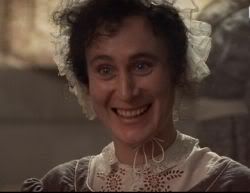
Based on Austen's original text, there is reason to believe that Mr. Shepherd has at least prevented Sir Walter from raising rents. Even so, the Kellynch tenants--who would have far less control over their livelihoods and employment than people do today--are now stuck working for the equivalent of a bankrupt company. The 1995 Persuasion film does an excellent job capturing the unimpressed faces of those tenants as Sir Walter and Elizabeth regally ride off to Bath.

Consider Pride & Prejudice when Elizabeth visits Pemberley and hears how much Darcy's tenants respect him; these glowing positive reviews means a good deal more than that Darcy is a nice guy. It means he is a good boss, a wise manager, a smart investor, an up-to-date farmer, etc. Darcy is the kind of estate owner that tenants want to get.

Mr. Shepherd, Sir Walter's estate attorney, and Mrs. Clay, Mr. Shepherd's daughter, are well-aware of Sir Walter and Elizabeth's perfidy. Although Mr. Shepherd and his family are members of the growing middle-class--and fundamentally town or city people--they are in a better position even than Anne to see and hear how the Kellynch estate affects their neighbors. When the main source of income for a community--agriculture--is materially damaged, everybody pays.

Consequently, Mrs. Clay in my tribute Persuadable has little pity for Sir Walter and his so-called problems. (The possible ambiguity of Mrs. Clay's remark about sailors' and workers' looks exists in the original text.)

Penelope [Clay] felt no sympathy for Sir Walter’s desperate financial straits, which had steadily worsened in the last few years (“Sir Walter is not a, ah, moderate man,” Penelope’s father had explained on the carriage ride over.) Why should she feel sympathy when the gold watch Sir Walter currently handled could pay several weeks of board and room and the bracelet on his daughter Elizabeth's wrist could pay a month’s worth of butcher’s bills? Only his middle daughter Anne dressed like a person who knew the value of a disappearing pound.

Penelope watched Kellynch Hall’s residents through half-lidded eyes. Sir Walter was an easy man to sway emotionally. Praise made him preen. Mockery of others made him puff out his chest. If she could tackle him absent his family and neighbors, she would have him to the altar in a fortnight.

Unfortunately, the friends and family were never absent. Penelope could handle Elizabeth, but she’d noticed a growing wariness from Anne: long, sideways glances when Penelope complimented Sir Walter; knit brows when Penelope extolled the beauties of Kellynch Hall.

In addition, the family’s great friend Lady Russell continued to treat Penelope like a clod of dirt tracked into a clean parlor.

This will be a long campaign, Penelope counseled herself. I should regard this as a chance to become acquainted with Sir Walter’s moods before marriage.

Currently, Sir Walter was blustering about having to rent Kellynch Hall while he and his daughters removed to Bath.

“The alternative is to retrench,” her father pointed out for the sixth or seventh time. Retrenching would mean staying at Kellynch Hall but seriously cutting expenses—no more four-horse carriage; fewer sponsored balls; no extraneous purchases. The entire neighborhood would witness Sir Walter’s and his daughters’ humiliation.

Sir Walter sighed and looked profoundly troubled. Sir Walter never stopped appearing astonished by the vagaries of life. It struck Penelope as an exhausting way to approach the world; luckily, being Sir Walter’s wife wouldn’t mean adopting his world-view.

“And there are currently many naval officers returning to England who would greatly appreciate a house like this.”

“A naval officer!” Sir Walter was aghast. Apparently, he was unaware that the navy had won the last war. “Such a man wouldn’t know how to behave in a manor like Kellynch Hall.”

“He would look over the premises and bless his good fortune,” Penelope said.

She caught a faintly resigned look on Anne’s face and smiled to herself. Anne disliked sycophancy.

“But,” Penelope continued, “I quite agree with my father that a sailor would be a desirable tenant. They are so neat and careful in their ways.”

“Perhaps. Perhaps. But the navy has brought persons of obscure birth into undue distinction. And life on the open seas terribly ravages the features.”

Sir Walter, in his mid-fifties, could justify a comparison based on appearance. He had straight shoulders and a patrician head that was only marred by a more button than beak-like nose. He was handsome, even if Penelope found his features rather dull—there was nothing memorable about so much regularity.

Elizabeth was nodding agreement with Sir Walter’s vapid criticisms. Elizabeth’s features were even more regular. The youngest daughter Mary was pretty in a shallow way. Only Anne, the middle daughter, made a person look and look again: puzzled by her seeming plainness, caught by the fineness of her bones.

But of course a woman like Anne was far more difficult to flatter.

“We are not all born to be handsome,” Penelope said to stop Sir Walter’s insipid, cruel comments about sailors’ looks. “All professions make their mark whether the physical labor of a soldier or the mental stresses of a lawyer. Only those of property continue to look personable after the flush of youth.”

Sir Walter beamed. Elizabeth nodded. Penelope’s father shook his head and rustled his papers. Only Anne gave Penelope a long bemused look. There had been as much criticism as praise in those words: what were Sir Walter’s cares and concerns (despite the horror of renting Kellynch Hall) compared to those of real working men?

It's Okay to Write About Marriage and Domestic Problems--Persuadable's Take on Mrs. Smith: Chapter 12

1995 Mrs. Smith--she does an excellent job
conveying Mrs. Smith's pleasure in life.
In Chapter 12 of Persuadable, Will Elliot visits Mrs. Smith.

Mrs. Smith is one of Austen's most interesting minor characters. She is a resilient widow whose once well-off late husband lost all his money to extravagance. Although her husband owned property in the West Indies, which could give Mrs. Smith a respectable income, that property is "encumbered" (used to pay off debts), and Mrs. Smith can't touch the "rents."

Based on this slim information, some literary analysts have criticized the Mrs. Smith character for her willingness to live off the slave trade (the West Indies property would likely use slaves); Jane Austen herself was not a supporter of slavery, and I was tempted to give Mr. Elliot noble reasons for not helping Mrs. Smith recover the property.

West Indies Map
That approach, however, would have been something of a cheat. One, Mr. Elliot is not the type of guy to invest himself in abstract causes overseas (anymore than he is the type of guy to lay out cash for what he considers an iffy proposition at best); two, Austen's text makes clear that Mrs. Smith's purpose is to convey information to Anne, not stand as a symbol of colonialism.

Of course, this brings up the issue of Austen's supposed ignorance of political and social issues. Frankly, this is such a stupid criticism of the writer that I have difficulty taking it even momentarily seriously; plus, at the risk of sounding like a ticked-off feminist, it is not an argument one often hears about male writers who focus on domestic plots. In any case, excellent biographies of Jane Austen, including Paula Bryne's The Real Jane Austen, have effectively disputed this characterization. Jane Austen was not only well-aware of currently political and social issues, she had immediate familial investments in many of them.

Setting aside the obvious refutation that fiction is deliberate creation and writers will focus how and where they choose, why do such analysts suppose wars and revolutions are carried out? Despite the unnerving and tunnel-vision attitudes of many activists, they are generally NOT carried out for the sake of more wars and revolutions. Rightly or wrongly, they are usually carried out to create a better life somewhere for someone. In other words, they are carried out so people can get married and not have to worry about soldiers cluttering up their living rooms.

In any case, I have always considered literary analysis that insists that all literature have an IMPORTANT MESSAGE to be trite to the nth degree. Well-fashioned prose has done more to keep the world turning than any so-called IMPORTANT bumper sticker.

A passage from Mr. B Speaks! addresses this issue from another perspective. An excerpt from Persuadable, Chapter 12 can be found on the Persuadable homepage. 
Gary (the literary analyst) rolled his eyes. “And, of course, romance novels always have perfect weddings.”

“Of course.”

“This whole novel [Pamela] is nothing but trite and shallow pandering,” Gary declaimed. “What about death, disease, poverty, slavery, racism—all the terrible issues of the eighteenth century? Hmm? I mean women couldn’t even vote! But no, we’re fixated on watching an inconsequential couple tie the knot.”

The judge glanced towards the characters’ table. Mr. B was still smiling faintly. He hadn’t flinched at being called “inconsequential.” Presumably, people of the eighteenth century were less obsessed with getting their “day in court” than people of the twenty-first.

The judge reminded himself not to chuckle at his own pun.

“People hid their heads in the sand,” Gary was still declaiming. “Just like they do today.”

The romance writer reviewer, Deborah, said, “That sounds like the end of a lecture,” and Gary reddened.

She was probably right—the man certainly loved to carp about stuff—but the judge didn’t want audience members giving the Committee for Literary Fairness any (more) reason to complain.

He said pacifically, “Different novels cover different topics.”

Leslie Quinn, the writer of popular non-fiction, agreed, “People in the eighteenth century still had to work, love, have children, get along. Those topics never go away.”

Dr. Matchel (another literary analyst) said, “But romance novels don’t deal with real domestic problems. They end with the wedding, giving readers the false impression that married life will be eternally happy. Escapist literature!”

"This novel doesn't end with the wedding," Mr. B's attorney pointed out, muttering, “What’s wrong with escapism?”

Deborah added, “Dark and depressing isn’t automatically profound.”