Showing posts with label One Punch Man. Show all posts

Voices in Various Venues

I recently mentioned Loid from Spy X Family as a great laid-back hero. 

I must mention the voices--Takuya Eguchi, Japanese, and Alex Organ, English. 

What amazes me about Alex Organ is that he is able to give Loid a dead-pan voice. A dead-pan voice! And yet it doesn't sound monotone. In fact, the voice sounds warm and kind. Even when he gets exasperated, he sounds more like  "guy trying to get by" than a zealot--which is largely the point. 

Like Scarecrow (Scarecrow & Mrs. King), Loid is a spy who actually IS better at the family stuff: he just doesn't know it yet. 

* * *

Max Mittelman
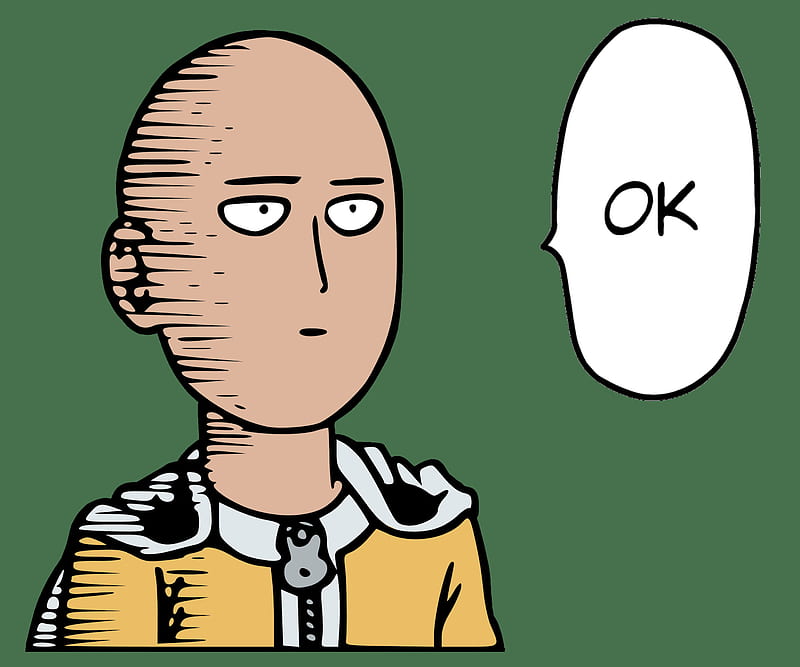
Saitama in One-Punch Man is excellently rendered in the English dub by Max Mittelman, who manages to capture the character's dry, laconic, "hey dude" personality in a light tenor. 

Makoto Furukawa

The voice is amusing by itself--but a great deal of the anime's humor arises from Saitama's tone paired with Genos's earnest, monotone and slightly deeper voice. The exchanges are quite amusing.

Genos is voiced by Kaito Ishikawa and Zach Aguilar.

Makoto Furukawa is the original Japanese actor for Saitama. Voices do not have to match up to image but in this case, I found the "hey, folks, wassup?" photos more than a little amusing. Maybe capturing the character IS all about mindset. 

* * * 

For World Voice Day, I decided to pay tribute to anime voice actors and post a short interview with Don LaFontaine, 1940 - 2008.

The anime voice actor for today's post is Adam Gibbs, who has an impressive resume in that field. He does the voice of Taichi Mashima in Chihayafaru. Gibbs' voice notably captures Taichi's personality, including the doubts, romantic longings, self-reflection, and leadership qualities. Taichi is a complex guy!

Don LaFontaine, of course, is That Announcer Guy From the Movies. 

What amazes me about the interview is the anecdote about how fast his voice changed and how extreme was the change. The other fascinating point was how his voice can cut through loud music and explosions--it doesn't get drowned out.

By all accounts, Don LaFontaine was as sweet and generous and good-natured as he appears in the interview.


Saitama as Genos's Protector

Several months ago, I read a comment (somewhere) that suggested that Genos coming along prevented Saitama from falling too far down the apathy rabbit hole. 

This is certainly true! One of my favorite scenes from the initial manga volumes and Season 1 of the anime is the "training session" in which Saitama refrains from punching Genos, then knuckles his forehead ("I'm hungry--let's get something to eat"). He may not have wanted a disciple--or a roommate--but contact with Genos brought Saitama into the Hero Association and has given him various reasons (other than "where is all that noise coming from?") to investigate and help out others. If nothing else, contact with Genos fills Saitama's day!

However, Volume 25 confirms the other side of the equation: Saitama has saved Genos. 

Take Genos's situation. Orphaned; obsessed with his mission; almost deliberately recruited by the Hero Association (they wait for Genos to apply but those scenes imply that reaching out to Genos was only a matter of time) yet also distrusted and misused; on his own at age 19 except for an aging and increasingly concerned doctor--Genos is, unfortunately, almost the perfect patsy.

Give him a strong enough authority figure, like Metal Knight, and he might just have followed along in the other's footsteps. 

Dr. Kuseno checks out Saitama for exactly these reasons: he wants someone kind and non-nefarious to look out for this terminally self-destructing young man. 

Saitama's "que sera sera" philosophy is Genos's salvation. He doesn't try to mentor Genos since he feels entirely inadequate on that score. He rarely interferes in Genos's business. He rescues Genos on occasion but only after Genos has gone as far as he can. He follows Genos's lead with only minimal complaints. He focuses Genos on the mundane and day-to-day, like a sale at the local market.

Consider that Superman and Batman--a strong angst-filled relationship!--are almost constantly interfering in each other's "important" business since their philosophies and personalities create automatic tension. They can't leave well enough alone.

Saitama leaves Genos to be Genos. The result is that Saitama does not take advantage of Genos.

Consequently, in Volume 25, Genos can tell the powers-that-be with utter confidence and of his own volition, "I will not take orders. I follow someone else." 


Stargate & the Mary Sue: Why Daniel Isn't One

Literature Devil tackles what makes a Mary Sue character, sometimes male, often female. What makes a character a Mary Sue is debatable. Generally, as the attached video proposes, the Mary Sue is already good at everything. Doesn't have to learn. Doesn't have to grow. Doesn't have to make choices. Doesn't have to improve. Doesn't make mistakes. Instantly knows the right answers. Rises above the other characters by label, rather than merit and attainments. 

I postulate an additional definition. Recently, while rewatching Stargate (1994) for the fifth or sixth or seventh time, I noted that Daniel walks in and solves the initial inscription immediately. A ha: a genius!

So why is he less annoying than, say, Wesley on Star Trek: TNG?

The reason? He pays a price to get where he is. And he pays the price voluntarily. 

That is, Daniel is introduced to the viewer when he is trying to convince a group of fellow archaeologists of the "true" date of the pyramids. He waffles when asked, "So who do you think built the pyramids?" but sticks to his argument. His argument, moreover, is clearly the result of much study, as evidenced by the books and notebooks he lugs around. Despite his education, he still struggles to decipher the hieroglyphics on the capstones, evidenced by many sleepless nights. 

Moreover, his blithe assurance that he will be able to figure out the hieroglyphics on the other side of the Stargate turns out to be wrong. He is reliant on others to help him find the "tablets" so he can make the final link. This team trope from the movie is fully utilized in Stargate SG-1. 

Struggles without cost, I propose, is one of the problems of the Mary Sue. When a character doesn't have to risk in order to excel, the character is being applauded simply for existing/enduring, often (these days) for having the correct and proper and acceptable type of existence/endurance. (The ability to "endure" is a good quality that has been lifted to abnormal heights of reverence. It's one quality, not all of them.)

Another great example of a non-Mary Sue is Blizzard in One-Punch Man. Although gifted with enormous powers, she has taken a hard look at her circumstances. Amai Mask will never let her rise to "S" class. Does she struggle in the mid-"A"-range or stay at the top of the "B" level and shore up her position? 

Saitama listens to her more than he does her more powerful and constantly irritated sister. Despite his unstoppability, Saitama has a lovable weakness for drifters (mostly due to "been there done that still doing that" empathy). While he is rather at loose ends, he appears to respect those who make concrete choices, even if the choices aren't the best ones and not ones he would make  himself. (He argues with Blizzard; he also leaves her be.) Choice indicates risk, which Saitama no longer feels. Risk indicates the character willingly pays a price, even if--in the case of Daniel--the price is self-imposed exile from his profession.  

Getting Rid of the Parents: Saitama and Genos in One-Punch Man

One of the rules of fantasy is "Get rid of the parents." If one intends to send children off on an adventure, there must be a dearth of parental figures snapping, "Get away from that wardrobe! There are hangers in there! You'll poke your eye out!" 

In One-Punch Man, Saitama must be gotten out of the way. Otherwise, many heroes would not have a chance to showcase their talents. In fact, Volume 23 of the series only has two minor appearances by Saitama (who went underground to stop the annoying noise--that is, the monsters--near his apartment). Most of the volume focuses on other heroes, such as Zombieman.

Getting rid of Saitama may be obvious. What is interesting is that to allow other heroes to shine, Genos also has to be temporarily out of commission. 

For one, when Genos is someplace, Saitama usually shows up eventually. But there is another reason. Although Saitama and Genos are quite different in personality, they are similar in one sense: when they set out to tackle a monster, they don't stop. 

Saitama doesn't stop in part because he doesn't need to--one-punch and it's over. However, scenes with Saitama when he still had his hair suggest that he was as impulsive and relentless as Genos. He got up and kept going. 

Genos never stops. Legs gone. Half his face gone. All his metal parts showing, he keeps going. In a pinch, he would likely blow himself up. 

Both heroes are lacking the calculating self-interest of the other heroes. This self-interest isn't bad. It's normal. Metal Bat, for instance, will alter his trajectory based on his little sister's demands. 

In other words, King's complaint that Saitama doesn't appear to have the capacity to get himself out of his rut--to go on vacation, for example--applies to Genos as well. They are both somewhat tunnel-visioned, though in quite different ways. 

In order to give less tunnel-visioned heroes opportunity to show their stuff, Saitama and Genos need to be elsewhere. 


One-Punch Man: The Powerful Generous Morality of Que Sera Sera

One of the most charming relationships in One-Punch Man is Saitama's relationship with King. King is a Class-S hero who became that type of hero largely by accident--in fact, he appears to have become Class-S in large part due to Saitama, Saitama's deeds being mistaken for King's. 

King doesn't want to be a hero. He tries to get out of hero situations. In many cases, he sneaks away. 

Saitama is one of the few who figures out King's actual personality and perspective. The 29-year-old man would rather play video games and has a soft spot for cute ones (though he will play just about anything--and beat everyone, including Saitama).

Saitama, by Volume 23, is slowly collecting a Scooby gang, though he appears unaware of the fact. Although Genos appointed himself Saitama's disciple, King is largely--and unexpectedly--Saitama's recruit. It is Saitama who begins to hang out with King and then pull him into various adventures. 

It is never entirely clear what Saitama thinks of King's position and attitude--except that Saitama seems to entirely accept it. He doesn't expect King to fight. Unlike Saitama's treatment of Child Emperor--Saitama hangs back until he is sure Child Emperor can succeed on his own, though he does take out the multi-headed dragon monster chasing them--Saitama never forces King to do what King doesn't want to do. 

However, he does rather cleverly employ King. One of the funniest aspects of King is that his reputation "proceeds him," as the saying goes. The most benign comments by King will be perceived as meaningful and threatening by those he meets, including villains.

Consequently, when Saitama goes to confront Centichoro and help Genos, he convinces King to "front" for him. 

It produces one of my favorite images in the manga series. (See below.)

Interestingly enough, there is some indication that King may have more moral influence on Saitama than anyone else. That is, the hero who doesn't want to be a hero may be the one person Saitama might actually listen to. 

Saitama allows that others have their own opinions--he just doesn't see the point of most other people's advice. King's honest appraisal of his own abilities and interests lends him some gravitas. Saitama takes him seriously precisely because King doesn't pretend anything to himself. Que sera, sera.  

Saitama & Genos: Superman & Batman

In some ways, Saitama and Genos from One Punch Man are a similar pairing to Superman & Batman. Saitama is the strongest man in the world, virtually unstoppable. He is also fairly upbeat, at least on the surface. (His inner doubts and underlying apathy are a natural consequence of his unstoppability--and a dilemma I wish writers would give Superman.) Genos, on the other hand, has a dark backstory (in 20 words or less) and a degree of impetuosity. He also depends on machines and an "Alfred" to confide in. 

There are multiple differences, of course, especially since Genos undisguisedly looks up to Saitama, even to the point of moving in with him. ("Absolutely not," Saitama says. "Oh, you'll pay rent. Gotta toothbrush?")

But the major difference, to me, is something inherent to the franchise, namely, neither Genos or Saitama are expected to do everything, not even Saitama. 

That is, Saitama is limited in one very important way: he can only fight where he is, when he is, and if he knows about the threat. When the arena gets invaded by monsters, Saitama is in the bathroom. He gets out only after Suiryu is practically pulverized.

The reality here is also true with Superman & Batman. Lois & Clark has a decent episode in which Lois, temporarily a superhero, gets upset when she realizes that stopping to help in one crisis will prevent her from helping in another, no matter how fast she is. 

The difference is that One Punch Man assumes that, of course, heroes can't be everywhere at once. When the alien ship comes to conquer Earth, a few S heroes are on the ground; Tornado is doing her thing while getting irritated; a few C and B heroes are helping survivors. Genos, in the anime, is supervising Child Emperor. Saitama is the only hero on board the ship, where he wanders around trying doors and saying, "Hey, where's the head boss?" 

He finds him and defeats him. The point is, he can't do that AND manage the stuff on the ground. 

This assumption is so embedded that when Handsome Kamen Amai Mask shows up and castigates the heroes' failure to prevent all the devastation, the response isn't shame but disgust at his ego. He isn't totally wrong; others, including Iaian, have pointed out that organizing superheroes is like herding cats. But he is in no position to criticize since he wasn't there.

Genos and Saitama don't bother to argue (Saitama is still on the ship). One does the job one can. One does the job of the moment. A hero is a hero for coping, not for being all things to all people. 

Saitama's consistent refusal to use his powers to bargain for special treatment is part of this reality--and indicative of Saitama's inherent moral code, of which he seems largely unaware. A great many things end up on his To-Do list because they occur in front of him--or because Genos got himself into trouble. And the fact is, "It's in front of me" is the ultimate reality. Saitama only knows what he knows.  

Hence, the difference to Superman and Batman. Criticisms of Saitama by fans and non-fans seem to be mostly based on him not having the "proper" superhero attitude (like those DC guys). He is supposed to run around and tackle all the problems! He is supposed to fret about what he didn't do! Oh, the angst! He is supposed to know where he is going all the time, every time, on every occasion! He is supposed to be suave and elegant, as Amai Mask proposes. 

In terms of "output," he does as much as Superman and Batman. He simply pretends a lot less.

In sum, Genos and Saitama are limited, and they expect to be limited. 

It makes them, for all the monster-killing stuff, more relatable than many superheroes. 

It likely helps that their reactions are delightfully pure young male.