|
| Graphs I created for my thesis--I argue |
against the middle view.
|
Despite some current political thought, culture is the product of individuals.
That isn't a political position. It is reality. Whether we like it or
not, we are born into individual bodies with individual minds (in fact, in a perfect world with lots of funding, every individual would receive an individual health work-up since even our bacteria is not all the
same).
Shows, genres, movies, franchises attract particular and specific
writers and directors, crew members and cast members. Together, they
create a work with a certain aura/theme/look.
Interestingly
enough, sometimes those writers, directors, etc. move on to other shows
but rarely en masse; no matter how many of them move together, the new arrangement of people will result in a show
with a different aura/theme/look than the previous show.
As
Hollywood has discovered, you can't simply recreate an aura/theme/look
by pulling together all the supposedly similar elements. Recent Star
Trek will never be able to recreate original Star Trek, no matter how
many of the same elements are slotted into place. A group of individuals
did something: it can never be done quite the same way again.
I'm not going to argue here whether one is better than the other--merely, it is not the same.
Genres and shows and franchises gain auras, which extends
to the types of scripts that get submitted, the actors who get hired,
the ideas that get encouraged. Some of this can be deliberate--the sort
of top-down determinations that get social alarmists all alarmed
(mostly, as far as I can tell, because they aren't in charge of the top-down determinations)--but a lot of these decisions come from everyday decisions made by individuals involved in an artistic enterprise.
 |
| I saw this version of Corialanus live. Still don't |
|
| get the plot but wow! these scenes were amazing. |
|
Judi Dench famously dislikes watching herself on film (though she went to see herself in the Bond films since her husband and daughter were fans). The reason: film is static; it's one performance kept forever. On stage, every performance every night is different. The theater experience is not just the actors and crew but the audience: a unique experience each time.
I can attest to this: one of the best theater experiences I've ever had was seeing an off-Broadway production of Into the Woods as a college student. The audience was perfect. Everyone was excited but respectful. The energy was fantastic. People cheered, sighed, applauded, laughed... Afterwards, even the cast said, rather wonderingly--it was Utah--"This is one of the best audiences we've ever had."
 |
| The right people came together in the right way: |
| perfection! |
Even though film productions don't create the same individuals-joined-together experience as the theater--for one, film scenes are rarely filmed in order--it is useful to remember that the experience of filming a scene is also carried out by individuals. There's a reason that Christian Bale (inappropriately though understandably) lost his cool when a crew member traipsed across the set during filming. And there's a reason that Hugh Jackman stopped in the middle of a stage performance and instructed an audience member to shut off his or her cell phone. Over-the-top reactions maybe but they get to the heart of the matter:
Culture is about individuals. I am doing something here.

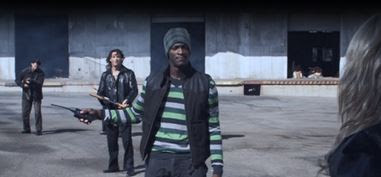 Another type of physical acting is the actor who knows how to move. Keanu Reeves, for all the criticisms he receives regarding his inability to "emote," is a beautiful creature to watch.